Credit Score Errors 2026: Identify & Fix Common Mistakes

In the evolving financial landscape of 2026, a healthy credit score remains an indispensable asset. It’s the silent gatekeeper to loans, mortgages, credit cards, and even rental agreements or employment opportunities. However, even with technological advancements, credit score errors continue to plague consumers, often without their immediate knowledge. These inaccuracies can severely impact your financial standing, leading to denied applications, higher interest rates, and unnecessary stress. Understanding the most common pitfalls and, more importantly, knowing how to rectify them is crucial for maintaining your financial well-being. This comprehensive guide will delve into the four most prevalent credit score errors anticipated in 2026 and provide you with actionable strategies to identify, dispute, and ultimately fix them.
The Pervasive Threat of Credit Score Errors in 2026
The digital age, while offering convenience, also presents new avenues for data discrepancies and identity theft, making the vigilance against credit score errors more critical than ever. Credit reporting agencies process billions of data points annually, and with such vast volumes, mistakes are inevitable. These errors aren’t just minor annoyances; they can have profound, long-lasting consequences on your financial life. Imagine being denied a mortgage for your dream home or facing exorbitant interest rates on a car loan, all due to an error that wasn’t even your fault. This is the reality many face when credit score errors go unchecked.
The good news is that you have rights under the Fair Credit Reporting Act (FCRA), which mandates that credit reporting agencies and information furnishers (like banks and lenders) report accurate information. This means you have the power to challenge and correct inaccuracies. However, exercising this power requires knowledge, persistence, and a systematic approach. Let’s explore the most common types of credit score errors you’re likely to encounter in 2026 and how to effectively navigate the resolution process.
Error 1: Incorrect Personal Information and Identity Theft
One of the most fundamental yet impactful credit score errors involves incorrect personal information. While seemingly innocuous, a misspelled name, an outdated address, or an incorrect Social Security number can lead to mixed files, where your credit history is combined with someone else’s. More alarmingly, this category also includes fraudulent accounts opened due to identity theft.
What to Look For:
- Mismatched Names: Check for variations of your name (e.g., John Doe vs. Jon Doe), maiden names if applicable, or names associated with others.
- Incorrect Addresses: Ensure all listed addresses are ones you have genuinely resided at.
- Wrong Date of Birth or Social Security Number: These are critical identifiers; any discrepancy should be investigated immediately.
- Accounts You Don’t Recognize: This is a red flag for identity theft. Unfamiliar credit cards, loans, or even collection accounts could indicate someone has used your personal information.
- Duplicate Accounts: Sometimes, a single account might be listed multiple times, either by mistake or as an attempt to inflate your debt.
How to Fix It:
- Obtain Your Credit Reports: You are entitled to a free copy of your credit report from each of the three major bureaus (Equifax, Experian, and TransUnion) annually via AnnualCreditReport.com. In 2026, it’s advisable to check them even more frequently, perhaps every few months, to catch errors early.
- Highlight the Errors: Clearly mark all incorrect personal information or unfamiliar accounts on each report.
- Gather Supporting Documentation: Collect any documents that prove the information is incorrect or that you are not responsible for certain accounts (e.g., utility bills for addresses, government-issued IDs for name/DOB, police reports for identity theft).
- Dispute with Credit Bureaus: Each credit bureau has an online dispute process, a mailing address, and a phone number for disputes. Provide all necessary details and supporting documents. Be specific about what information is inaccurate and why.
- Dispute with the Creditor/Furnisher: If an account is fraudulent or inaccurate, also contact the creditor directly. They have an obligation to investigate and correct errors.
- Follow Up: Keep detailed records of all correspondence, including dates, names of people you spoke with, and copies of documents sent. Follow up regularly to ensure your dispute is being processed.
- Consider a Fraud Alert or Credit Freeze: If identity theft is suspected, place a fraud alert on your credit reports and consider freezing your credit to prevent further unauthorized accounts from being opened.
Error 2: Incorrect Account Status or Payment History
Your payment history is the most significant factor in calculating your credit score. Even a single incorrectly reported late payment can drastically lower your score. This category of credit score errors is particularly damaging because it directly impacts the core of your creditworthiness.
What to Look For:
- Late Payments Incorrectly Reported: Ensure all payments are accurately marked as on-time. A 30-day late payment can drop your score significantly.
- Accounts Incorrectly Marked as Delinquent or in Collection: Verify that accounts you’ve paid off or are current on are not showing a negative status.
- Closed Accounts Reported as Open (or vice versa): An account you closed years ago might still appear as open, or an open account might be incorrectly listed as closed, impacting your available credit.
- Incorrect Dates: Check the dates accounts were opened, closed, or when payments were made.
- Re-aged Debt: This occurs when an old debt, which should be close to falling off your report, has its "date of last activity" reset, making it appear newer and prolonging its negative impact.
How to Fix It:
- Review Account Statements: Compare your credit report information with your personal financial records, such as bank statements, credit card statements, and loan payment confirmations.
- Contact the Creditor First: If you find an incorrect payment status, contact the creditor or lender directly. Sometimes, it’s a simple clerical error they can quickly correct. Provide them with proof of payment.
- Dispute with Credit Bureaus (if necessary): If the creditor doesn’t resolve the issue, or if you prefer, dispute the error with each credit bureau. Clearly explain the discrepancy and provide all supporting documentation, such as bank statements showing the payment or correspondence from the creditor acknowledging the error.
- Be Persistent: If your initial dispute is denied, don’t give up. You can appeal the decision or resubmit the dispute with additional evidence.
- Understand Your Rights: Remember that under the FCRA, credit bureaus must investigate your dispute within 30 days (45 days in some cases) and remove or correct any inaccurate information.
Error 3: Incorrect Account Balances or Credit Limits
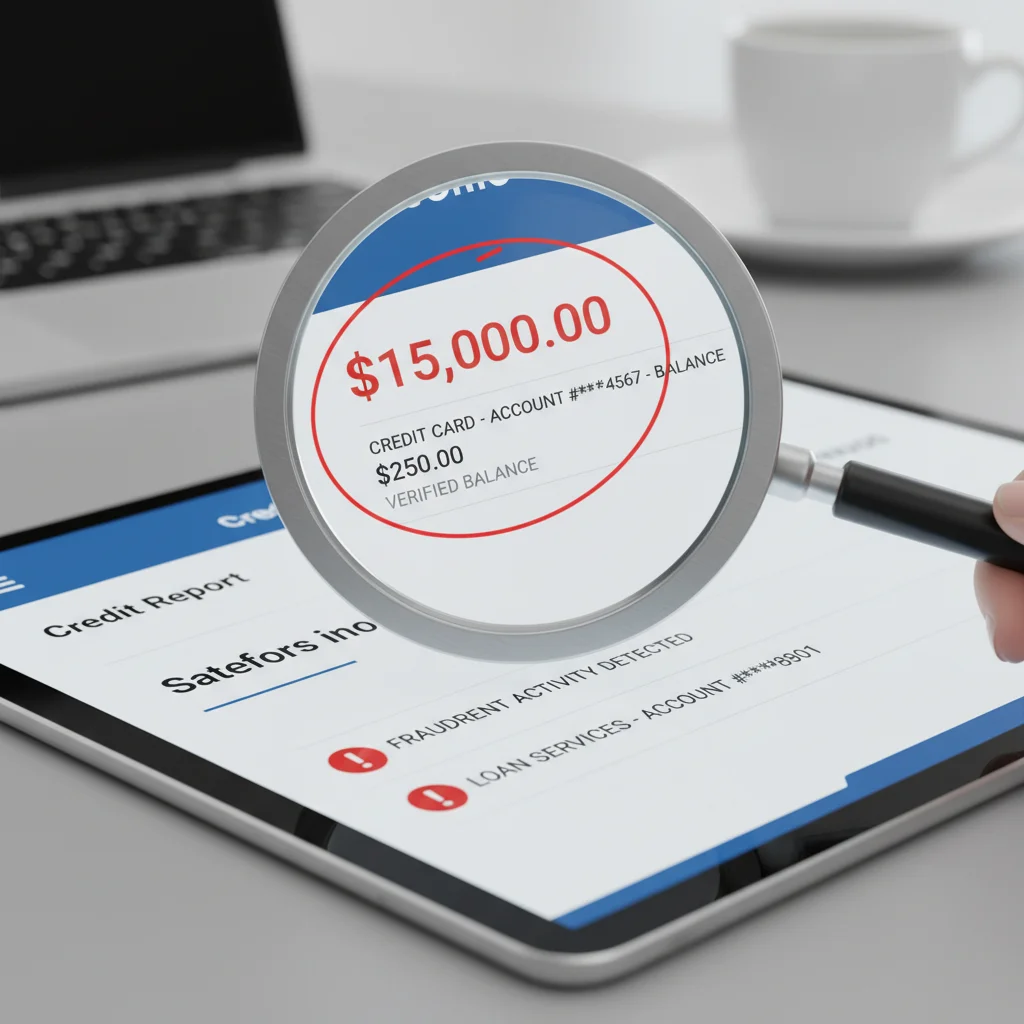
Your credit utilization ratio – the amount of credit you’re using compared to your total available credit – is another critical factor in your credit score. Incorrectly reported balances or credit limits can artificially inflate this ratio, making you appear riskier to lenders, even if you pay your bills on time. This type of credit score error can subtly but significantly drag down your score.
What to Look For:
- Higher-Than-Actual Balances: An account balance might be reported higher than what you actually owe, especially if a recent payment hasn’t been reflected.
- Lower-Than-Actual Credit Limits: Your credit limit might be reported as lower than it truly is, which can make your credit utilization appear higher.
- Accounts Showing Zero Balance When They Have One: While less common, this can also be an error, though it usually benefits your score.
- Incorrect Loan Amounts: For installment loans, verify the original loan amount and remaining balance are correct.
How to Fix It:
- Compare with Statements: Cross-reference the balances and credit limits on your credit report with your most recent account statements from your creditors.
- Contact the Creditor: If there’s a discrepancy, contact the creditor first. Often, it’s a reporting lag or a simple mistake that they can rectify. Provide them with copies of your statements.
- Dispute with Credit Bureaus: If the creditor is unresponsive or unable to correct the error, dispute it with the credit bureaus. Attach copies of your account statements and any communication with the creditor.
- Monitor Your Utilization: Even if there are no errors, regularly monitor your credit utilization. Keeping it below 30% (and ideally below 10%) can significantly boost your score.
Error 4: Outdated Information That Should Have Been Removed
Negative information on your credit report doesn’t stay there forever. Most negative items, such as late payments, collections, and charge-offs, should fall off your report after seven years. Bankruptcies typically remain for seven to ten years. If outdated negative information persists on your report, it constitutes a significant credit score error that needs immediate attention.
What to Look For:
- Expired Negative Entries: Check the "date of last activity" or "date opened" for all negative items. If they are older than seven years (or ten for bankruptcies), they should no longer be on your report.
- Paid Collections Still Showing as Unpaid: Even if a collection account is paid, it should be updated to reflect its "paid" status. If it’s old and paid, it might be eligible for removal.
- Hard Inquiries Older Than Two Years: Hard inquiries, which occur when you apply for new credit, typically stay on your report for two years and then should disappear.
How to Fix It:
- Identify the Age of the Entry: Determine the exact date the negative item should have been removed. This is usually seven years from the date of the first delinquency that led to the negative status (not from when it was sent to collections).
- Dispute with Credit Bureaus: If you find an item that has overstayed its welcome, dispute it with the credit bureaus. Clearly state that the information is outdated and should be removed according to FCRA guidelines.
- Provide Proof (if available): While the burden of proof for accuracy lies with the furnisher and credit bureau, providing any documentation (e.g., old account statements, discharge papers for bankruptcy) can expedite the process.
- Be Patient but Persistent: It might take a few rounds of disputes to get outdated information removed. Keep meticulous records of all your interactions.
Proactive Steps to Prevent Credit Score Errors
While fixing existing credit score errors is essential, taking proactive measures can help prevent them from occurring in the first place. Think of it as preventative medicine for your financial health.
Regularly Monitor Your Credit Reports and Scores:
- AnnualCreditReport.com: As mentioned, this is your official source for free annual reports from all three bureaus. Stagger your requests throughout the year (e.g., Experian in January, Equifax in May, TransUnion in September) to keep a continuous watch.
- Credit Monitoring Services: Many banks and credit card companies offer free credit monitoring services that alert you to significant changes or new accounts. Paid services often provide more comprehensive monitoring and identity theft protection.
- Review Account Statements: Regularly scrutinize your bank and credit card statements for any unauthorized transactions or discrepancies.
Protect Your Personal Information:
- Secure Passwords: Use strong, unique passwords for all your online financial accounts and enable two-factor authentication whenever possible.
- Be Wary of Phishing: Be cautious of unsolicited emails, texts, or calls asking for personal financial information. Legitimate institutions rarely ask for sensitive data this way.
- Shred Documents: Properly dispose of financial documents that contain sensitive information.
- Public Wi-Fi: Avoid conducting financial transactions on unsecured public Wi-Fi networks.
Communicate with Creditors:
- If you anticipate difficulty making a payment, contact your creditor immediately. They might be willing to work with you to avoid a late payment being reported.
- Keep records of all communications, especially those related to disputes or payment arrangements.
The Dispute Process: A Step-by-Step Guide
When you discover credit score errors, initiating a formal dispute is your primary recourse. Here’s a detailed breakdown of the process:
Step 1: Gather Evidence
Before you contact anyone, compile all relevant documents. This includes copies of your credit report with the errors highlighted, bank statements, canceled checks, payment confirmations, original loan documents, and any correspondence with the creditor about the account in question.
Step 2: Dispute with the Credit Bureaus
You can dispute errors online, by mail, or by phone. Online disputes are often the quickest, but mailing a certified letter with a return receipt provides undeniable proof of submission.
- Online: Visit the dispute section of each credit bureau’s website (Equifax, Experian, TransUnion). Follow their instructions, providing details about the error and uploading supporting documents.
- By Mail: Write a clear, concise letter explaining the error. Include your full name, address, and Social Security number. Attach copies (not originals) of your supporting documents. Send it via certified mail with a return receipt requested.
- By Phone: While possible, it’s generally less advisable for complex disputes as you won’t have a written record of the conversation.
The credit bureau must investigate your dispute within 30 days (or 45 days if you submit additional information during that period). They will contact the information furnisher (the creditor) to verify the information.
Step 3: Dispute with the Information Furnisher (Creditor)
While disputing with the credit bureaus, it’s also wise to contact the creditor directly. Sometimes, they can correct the error faster than the bureaus. Send them a letter explaining the discrepancy and provide supporting documentation. If they acknowledge the error, ask them to notify all three credit bureaus.
Step 4: Review the Results of the Investigation
After their investigation, the credit bureau will send you the results. If the information is found to be inaccurate or unverifiable, it must be removed or corrected. You should also receive a revised copy of your credit report.
Step 5: What if the Dispute is Denied?
If the credit bureau determines the information is accurate, or if they deny your dispute, you have further options:
- Resubmit with More Evidence: If you have additional documents or information, resubmit your dispute.
- Add a Statement to Your Report: You have the right to add a brief statement (100 words or less) to your credit report explaining your side of the story regarding the disputed item. This won’t remove the item, but it can provide context for future lenders.
- Contact the Consumer Financial Protection Bureau (CFPB): The CFPB can mediate disputes and ensure credit bureaus and furnishers comply with the FCRA.
- Seek Legal Counsel: If you believe your rights under the FCRA have been violated, consult with a consumer law attorney.
The Impact of Credit Score Errors on Your Financial Future
The ramifications of unaddressed credit score errors extend far beyond denied credit applications. A lower credit score can translate to:
- Higher Interest Rates: For everything from credit cards to mortgages, a lower score means you’ll pay more in interest over the life of the loan.
- Increased Insurance Premiums: In many states, insurance companies use credit-based insurance scores to determine premiums. Errors can lead to higher costs.
- Difficulty Renting: Landlords often check credit reports, and negative marks can make it harder to secure housing.
- Employment Challenges: Some employers conduct credit checks, especially for positions involving financial responsibility.
- Higher Utility Deposits: Utility companies may require larger security deposits if your credit score is low.
By actively monitoring your credit reports and promptly addressing any credit score errors, you are not just fixing a number; you are safeguarding your financial future and ensuring you have access to favorable terms and opportunities when you need them most. In 2026, where economic stability can shift rapidly, a strong, accurate credit profile is your best defense.
Conclusion: Empowering Yourself Against Credit Score Errors
The landscape of personal finance in 2026 demands heightened awareness and proactive engagement from consumers. While the possibility of encountering credit score errors is real, you are not powerless. By understanding the four most common types – incorrect personal information/identity theft, incorrect account status/payment history, incorrect balances/credit limits, and outdated information – you arm yourself with the knowledge to spot these discrepancies.
More importantly, this guide has provided you with a clear, step-by-step roadmap for disputing and fixing these errors. Regular credit report checks, diligent record-keeping, and persistent communication with credit bureaus and creditors are your most potent tools. Remember, your credit score is a reflection of your financial responsibility, and ensuring its accuracy is a fundamental part of maintaining your financial health. Take control, stay vigilant, and protect your credit score from the pervasive threat of errors in 2026 and beyond.