The financial landscape is ever-evolving, and at the heart of personal finance lies your FICO Score. This three-digit number is a powerful gatekeeper, influencing everything from mortgage rates and car loans to insurance premiums and even rental applications. As we approach 2026, significant shifts are on the horizon for how these crucial scores are calculated. Understanding these FICO Score Changes 2026 is not just about staying informed; it’s about proactively managing your financial health and ensuring you’re well-positioned for future opportunities.
For decades, FICO has been the gold standard for credit scoring, continuously refining its models to reflect economic realities and consumer behavior more accurately. These periodic updates are designed to provide lenders with a clearer picture of an applicant’s creditworthiness, but they can also introduce new challenges and opportunities for consumers. The FICO Score Changes 2026 are no exception, promising to reshape how various financial activities impact your score. This comprehensive guide will delve into the five latest and most impactful changes, offering detailed insights into what they mean for you and how you can adapt to maintain a strong credit profile.
Understanding the Foundation: What is a FICO Score and Why Does it Matter?
Before we dive into the specifics of the FICO Score Changes 2026, let’s briefly revisit what a FICO Score is and why it holds such sway over your financial life. FICO, which stands for Fair Isaac Corporation, developed the first credit scoring system in the late 1980s. It’s a numerical representation of your credit risk, based on information in your credit reports from the three major credit bureaus: Experian, Equifax, and TransUnion.
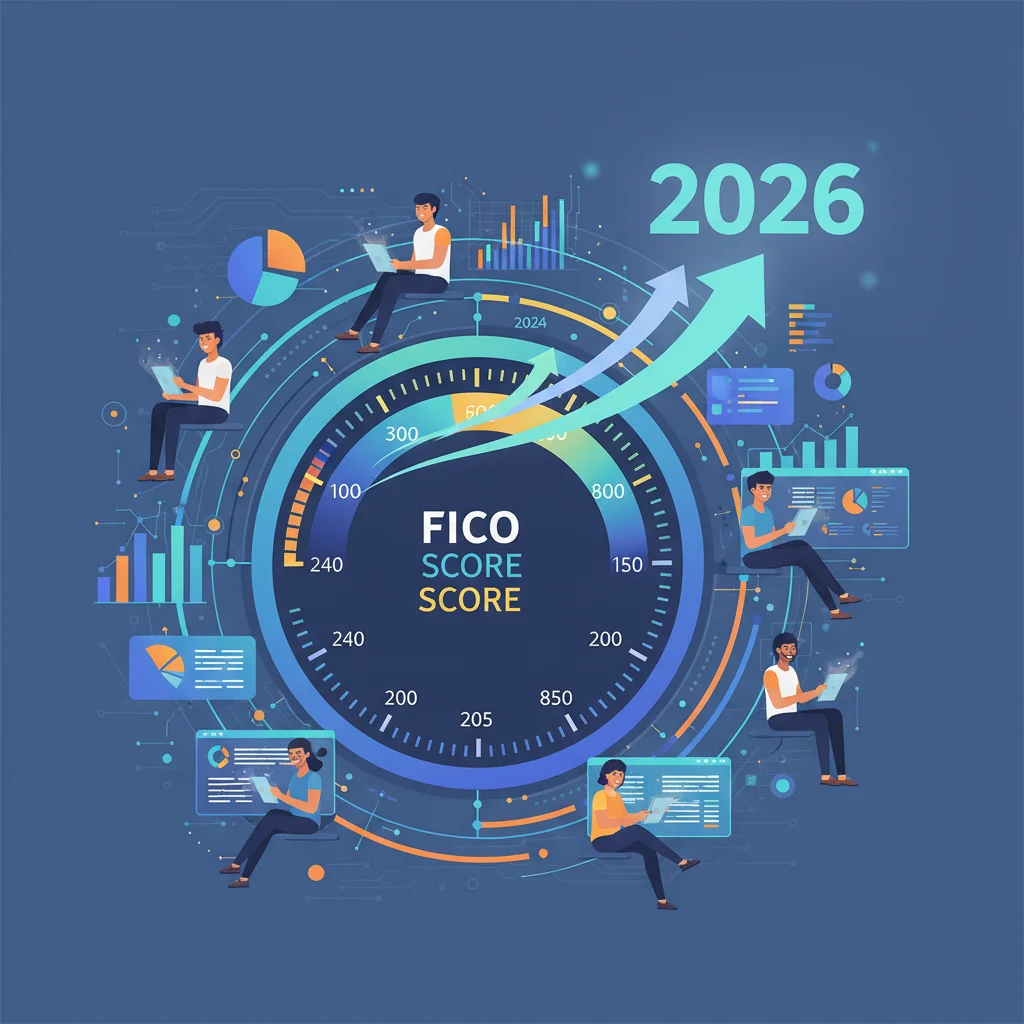
Your FICO Score ranges from 300 to 850, with higher scores indicating lower risk. Lenders use this score to quickly assess the likelihood that you’ll repay your debts. A higher score often translates to:
- Lower interest rates: Saving you thousands over the life of a loan.
- Easier loan approvals: Making it simpler to get mortgages, car loans, and personal loans.
- Better credit card offers: Access to premium cards with rewards and benefits.
- Lower insurance premiums: In many states, credit scores can impact auto and home insurance rates.
- Easier rental applications: Landlords often check credit scores as part of their screening process.
- Access to better employment opportunities: Some employers, particularly in financial roles, may review credit history.
The FICO scoring model considers several key factors, each weighted differently:
- Payment History (35%): Your record of on-time payments. This is the most significant factor.
- Amounts Owed (30%): How much debt you have relative to your credit limits (credit utilization).
- Length of Credit History (15%): How long your credit accounts have been open and how long it’s been since you used certain accounts.
- New Credit (10%): The number of recently opened credit accounts and recent credit inquiries.
- Credit Mix (10%): The variety of credit you have, such as credit cards, installment loans, and mortgages.
These percentages provide a general guideline, but the exact impact of each factor can vary based on your overall credit profile. As FICO refines its models, these weightings and the specific data points considered can shift, leading to the FICO Score Changes 2026 that we’ll explore in detail.
The Driving Force Behind FICO Score Changes 2026: Why the Updates?
FICO doesn’t update its scoring models arbitrarily. These changes are typically driven by several factors:
- Evolving Consumer Behavior: How people use credit changes over time. The rise of new financial products, digital banking, and shifting economic conditions all influence how consumers manage their debt. FICO aims to capture these trends accurately.
- Technological Advancements: Improved data analytics and machine learning allow FICO to identify more nuanced patterns and predictive indicators of credit risk.
- Feedback from Lenders: Lenders are FICO’s primary clients, and their feedback on the predictive power of current models is crucial. If certain aspects are no longer as effective at predicting default, FICO adjusts.
- Regulatory Environment: Changes in financial regulations can also necessitate updates to scoring models to ensure compliance and fairness.
- Addressing "Credit Invisibles": There’s a growing recognition of the need to score individuals who have little to no traditional credit history. Newer models often incorporate alternative data to help these "credit invisibles" gain access to credit.
The FICO Score Changes 2026 are likely a culmination of these forces, aiming to create a more precise and inclusive credit scoring system. For consumers, this means that strategies that worked in the past might need to be re-evaluated to optimize their scores under the new models.
The 5 Latest FICO Score Changes for 2026: What You Need to Know Now
While the exact details of FICO’s future models are often kept under wraps until closer to their release, industry experts and previous FICO updates provide strong indicators of the directions these changes will take. Based on current trends and announced initiatives, here are the five most significant FICO Score Changes 2026 you should be aware of:
Change 1: Increased Emphasis on Trended Data
One of the most impactful FICO Score Changes 2026 is the likely increased reliance on "trended data." Historically, credit reports primarily showed a snapshot of your credit accounts at a specific point in time, usually the last reported statement balance. Trended data, however, provides a more dynamic view, showing your payment behavior and credit utilization over a longer period, often 24 months or more.
What it means: Instead of just seeing your current credit card balance, lenders will see how your balance has fluctuated month-to-month. Did you pay down your entire balance each month, or did you carry a balance? Did your minimum payment increase or decrease over time? This historical context offers a more nuanced understanding of your financial habits.
Impact on your score:
- Positive: If you consistently pay your credit card balances in full or significantly pay them down each month, even if you use a large portion of your credit limit, this trended data will work in your favor. It demonstrates responsible credit management.
- Negative: If you frequently carry high balances, only make minimum payments, or see your balances steadily increase, this could negatively impact your score more significantly than it would under older models.
How to prepare: Focus on reducing your credit card balances consistently. Aim to pay off your cards in full every month. If that’s not possible, try to pay more than the minimum and show a downward trend in your outstanding debt. This proactive approach will be crucial under the new FICO Score Changes 2026.
Change 2: Enhanced Treatment of "Buy Now, Pay Later" (BNPL) Services
The rise of "Buy Now, Pay Later" (BNPL) services has been meteoric, especially among younger consumers. These services allow consumers to split purchases into several interest-free installments. The challenge for credit scoring models has been how to incorporate this relatively new form of credit, as many BNPL providers didn’t traditionally report to credit bureaus.
What it means: The FICO Score Changes 2026 are expected to provide a clearer framework for how BNPL activity is reported and factored into your score. Some BNPL providers are already beginning to report payment data, and FICO’s new models will likely integrate this information more systematically.
Impact on your score:
- Positive: Consistently making on-time payments for your BNPL arrangements could positively contribute to your payment history, especially for those with thin credit files.
- Negative: Missing BNPL payments or having multiple active BNPL loans could be viewed as an increased risk, potentially lowering your score. Excessive use of BNPL, particularly if it leads to overextension, might also be flagged.
How to prepare: Treat BNPL payments with the same seriousness as traditional loan or credit card payments. Ensure you make all payments on time. Avoid taking on too many BNPL plans simultaneously, as this could suggest financial strain. Monitor how your BNPL activity appears on your credit report, as reporting practices can still vary.

Change 3: Refined Assessment of Medical Collections
Medical debt has long been a contentious issue in credit reporting. Unlike other forms of debt, medical bills often arise from unforeseen circumstances and can be confusing to navigate, leading to collections even for those who are otherwise financially responsible. Recent changes have already removed paid medical collections from credit reports and prevented new medical collections under $500 from appearing. The FICO Score Changes 2026 are anticipated to further refine this approach.
What it means: FICO’s newer models are designed to differentiate between medical debt and other types of debt, recognizing the unique nature of medical collections. This often means medical collections carry less weight or are ignored entirely if they meet certain criteria.
Impact on your score:
- Positive: If you have unpaid medical collections, especially those under a certain threshold or those that are actively being paid down, their negative impact on your score is likely to be reduced or even eliminated under the new models. This can be a significant boost for many consumers.
- Negative: While the impact is lessened, very large, unpaid, and long-standing medical collections might still have some negative influence, though likely less severe than other types of collections.
How to prepare: Continue to monitor your medical bills closely. Challenge any inaccuracies and work with providers and insurers to resolve outstanding balances. While the new models are more forgiving, preventing medical collections in the first place is always the best strategy. Understand your rights regarding medical debt reporting.
Change 4: Greater Nuance in Public Records and "Dirty Data" Exclusion
Public records, such as bankruptcies, foreclosures, tax liens, and civil judgments, have historically had a severe and long-lasting negative impact on FICO Scores. However, there’s been a trend towards excluding certain public records if they contain incomplete or inaccurate identifying information, often referred to as "dirty data."
What it means: The FICO Score Changes 2026 are expected to continue this trend, focusing on the accuracy and completeness of public record data. This means that if a public record entry on your report lacks sufficient identifying information (e.g., date of birth, Social Security number), it may be less likely to be factored into your FICO Score.
Impact on your score:
- Positive: Consumers who have inaccurate or incomplete public records on their reports may see an improvement in their scores as these items are discounted or ignored. This provides a fairer assessment for those whose records might have been erroneously reported.
- Negative: For those with accurately reported public records, the negative impact will still be substantial, though the overall trend is towards greater data integrity.
How to prepare: Regularly obtain and review your credit reports from all three major bureaus (Experian, Equifax, TransUnion). Look for any public record entries and verify their accuracy. If you find errors or incomplete information, dispute them immediately with the credit bureau. This diligence is always important, but even more so with the coming FICO Score Changes 2026.
Change 5: Increased Weight on "Credit Seeking" Behavior
The "New Credit" category, which accounts for 10% of your FICO Score, already considers recent credit inquiries and newly opened accounts. However, the FICO Score Changes 2026 are likely to refine how "credit seeking" behavior is interpreted, potentially giving more weight to certain patterns.
What it means: FICO models are becoming more sophisticated at identifying patterns that suggest a consumer is aggressively seeking new credit, which can be a red flag for lenders. This isn’t just about the number of inquiries, but the type of credit sought, the frequency, and the timing relative to other financial events.
Impact on your score:
- Positive: If you maintain a stable credit portfolio and only apply for new credit judiciously when needed, this change will likely have a neutral or even slightly positive effect, as it highlights responsible credit management.
- Negative: Opening multiple new credit accounts (especially credit cards) in a short period, or having numerous hard inquiries without opening new accounts (suggesting you were denied), could be viewed more negatively. This signals potential financial distress or an inability to manage existing credit.
How to prepare: Be strategic about applying for new credit. Only apply for loans or credit cards when genuinely necessary. Space out your applications to avoid appearing desperate for credit. If you’re rate shopping for a mortgage or auto loan, be aware that inquiries for the same type of loan within a short window (typically 14-45 days, depending on the FICO model) are usually counted as a single inquiry, minimizing the impact. This strategic approach will be essential to navigating the FICO Score Changes 2026.

Preparing for the FICO Score Changes 2026: Actionable Steps
Understanding these upcoming FICO Score Changes 2026 is the first step; taking proactive measures is the next. Here’s a comprehensive plan to ensure your credit remains robust:
1. Regularly Monitor Your Credit Reports
This cannot be stressed enough. You are entitled to a free credit report from each of the three major bureaus once every 12 months via AnnualCreditReport.com. However, many credit card companies and financial institutions now offer free credit monitoring services, allowing you to check your reports more frequently. Review your reports for:
- Accuracy: Are all accounts yours? Are balances correct?
- Errors: Look for incorrect payment statuses, duplicate accounts, or fraudulent activity.
- Public Records: Ensure any public records are accurate and complete.
- Trended Data: While you won’t see the full trended data on a standard report, you can infer trends by checking your balances over time.
Dispute any inaccuracies immediately. Correcting errors can significantly boost your score, especially with the increased focus on data integrity in the FICO Score Changes 2026.
2. Prioritize On-Time Payments
Payment history remains the most critical factor (35% of your score). With the increased emphasis on trended data, consistent on-time payments will be even more valuable. Set up automatic payments for all your bills to avoid missing due dates. If you’re struggling, contact your creditors before a payment is missed to discuss options.
3. Manage Credit Utilization Diligently
Credit utilization (amounts owed) is the second most important factor (30%). Aim to keep your credit card balances as low as possible, ideally below 30% of your total credit limit. For an optimal score, many experts recommend keeping it under 10%. With trended data becoming more prominent, consistently paying down balances will reflect positively.
- Pay down debt: Focus on high-interest credit card debt first.
- Don’t close old accounts: This can reduce your overall credit limit and shorten your credit history, negatively impacting utilization and length of credit history.
- Request credit limit increases: If your income has grown and you use your credit responsibly, a higher credit limit (without increasing your spending) can lower your utilization ratio.
4. Be Mindful of "New Credit" Applications
As FICO models become more sophisticated in assessing "credit seeking" behavior, exercise caution when applying for new credit. Only open new accounts when necessary and space out your applications. Hard inquiries stay on your report for two years, though their impact diminishes over time. The FICO Score Changes 2026 will likely penalize aggressive credit-seeking more.
5. Diversify Your Credit Mix (Responsibly)
Having a mix of credit types (e.g., credit cards, installment loans like mortgages or auto loans) can positively impact your score. However, don’t open accounts solely for the sake of diversification. Only take on new credit if you genuinely need it and can manage the payments responsibly. For those with thin credit files, a secured credit card or a small personal loan can be a good way to build a healthy credit mix.
6. Understand and Manage BNPL Usage
If you use BNPL services, ensure you understand their terms and payment schedules. Treat these payments with the same priority as any other debt. While the reporting of BNPL is still evolving, the FICO Score Changes 2026 suggest it will become a more integrated part of your credit profile. Missing payments could hurt your score.
7. Address Medical Debt Proactively
While the new models are more forgiving towards medical collections, it’s always best to resolve them. Negotiate with providers, check with your insurance, and if a bill goes to collections, understand your options for payment plans or dispute resolution. The less negative information on your report, the better.
The Long-Term Impact of FICO Score Changes 2026
The FICO Score Changes 2026 are not just minor tweaks; they represent a continued evolution in how creditworthiness is assessed. These updates are designed to make FICO Scores even more predictive of future financial behavior, which benefits lenders by reducing risk and, ideally, benefits responsible consumers by offering them better terms.
For consumers, the overarching theme is a move towards a more holistic and dynamic view of credit behavior. Simply having a good snapshot of your credit isn’t enough; demonstrating consistent, responsible financial habits over time will become increasingly important. This means that quick fixes for your credit score will be less effective, and a sustained commitment to sound financial practices will yield the best results.
The emphasis on trended data, for instance, underscores the importance of not just paying your bills on time, but also managing your credit utilization actively throughout the month, rather than just waiting for the statement closing date. Similarly, the nuanced approach to BNPL and medical debt reflects a recognition of modern financial realities and seeks to provide a fairer assessment for a wider range of consumers.
Ultimately, these FICO Score Changes 2026 reinforce the timeless principles of good credit management: pay your bills on time, keep your debt low, and only borrow what you can comfortably repay. By staying informed and adapting your strategies, you can ensure these changes work in your favor, opening doors to better financial opportunities in the years to come.
Conclusion: Navigating Your Financial Future with Confidence
The world of credit scoring is complex, but understanding the impending FICO Score Changes 2026 is a critical step towards maintaining and improving your financial health. These updates reflect FICO’s ongoing commitment to creating more accurate and predictive models, incorporating new data and refining how existing information is weighted.
By focusing on consistent, responsible credit behavior – prioritizing on-time payments, managing credit utilization effectively, being strategic about new credit applications, and proactively addressing any financial challenges – you can position yourself for success. The shift towards trended data and the refined treatment of BNPL and medical collections mean that a dynamic, long-term approach to credit management will be more rewarded than ever before.
Don’t wait until 2026 to start preparing. Begin monitoring your credit reports regularly, understanding your current FICO Score, and implementing the actionable steps outlined in this guide. Your FICO Score is a reflection of your financial reliability, and by proactively adapting to these changes, you can ensure it continues to open doors to favorable lending terms and a secure financial future. Stay informed, stay diligent, and take control of your credit journey.