2026 Guide: Disputing Credit Report Errors to Boost Your Score

The 2026 Guide to Disputing Credit Report Errors: A Step-by-Step Process to Correct Inaccuracies in Under 60 Days
Your credit report is more than just a document; it’s a financial passport that dictates your ability to secure loans, rent an apartment, and even get certain jobs. A clean and accurate credit report is paramount for financial well-being. However, errors are surprisingly common, and a single inaccuracy can significantly impact your credit score and financial opportunities. This comprehensive 2026 guide will walk you through the essential steps to effectively dispute credit errors, ensuring your report reflects your true financial history and helping you achieve corrections in under 60 days.
Understanding the Importance of an Accurate Credit Report
Before we delve into the ‘how-to,’ let’s reinforce the ‘why.’ Your credit report is a detailed summary of your credit history, compiled by three major credit bureaus: Experian, Equifax, and TransUnion. Lenders, landlords, and even employers use this report to assess your financial responsibility. A high credit score, built on an accurate report, signals to these entities that you are a reliable borrower. Conversely, errors such as incorrect payment statuses, fraudulent accounts, or outdated information can unfairly lower your score, leading to:
- Higher interest rates on loans and credit cards.
- Denial of credit applications.
- Difficulty renting an apartment.
- Increased insurance premiums.
- Even missed job opportunities in some sectors.
The good news is that federal law, specifically the Fair Credit Reporting Act (FCRA), grants you the right to dispute credit errors and have them investigated and corrected. This guide will empower you to exercise that right effectively.
Step 1: Obtain and Review Your Credit Reports Annually
The first and most crucial step in identifying and correcting errors is to regularly obtain and meticulously review your credit reports. You are entitled to a free copy of your credit report from each of the three major credit bureaus once every 12 months. The official source for these free reports is AnnualCreditReport.com. Be wary of other websites that claim to offer ‘free’ reports but may come with hidden fees or subscriptions.
Why Review All Three Reports?
It’s vital to check all three reports because not all creditors report to all three bureaus. An error might appear on one report but not another. By reviewing all three, you maximize your chances of catching every inaccuracy. Look for:
- Incorrect Personal Information: Misspellings of your name, wrong addresses, or an incorrect date of birth.
- Accounts You Don’t Recognize: This could be a sign of identity theft.
- Incorrect Account Status: An account you paid off still showing as open or delinquent.
- Duplicate Accounts: The same account listed multiple times.
- Incorrect Balances or Credit Limits: Discrepancies in the reported amounts.
- Outdated Information: Negative information (like bankruptcies or foreclosures) that should have been removed after the legally mandated time frame (typically 7-10 years).
- Incorrect Payment History: Late payments reported when you paid on time.
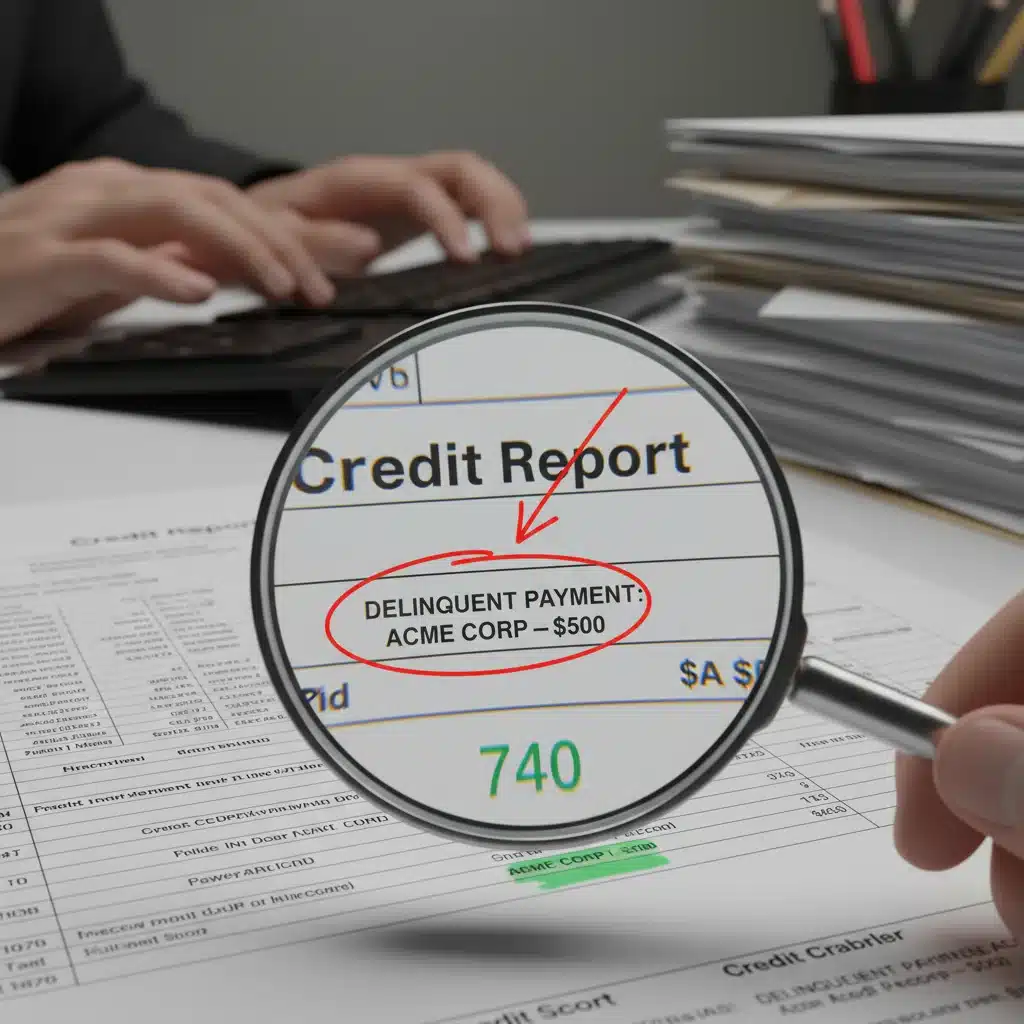
As you review, make a detailed list of every error you find, noting the specific account, the nature of the error, and the credit bureau reporting it. This meticulous documentation will be invaluable when you dispute credit errors.
Step 2: Gather Supporting Documentation
Once you’ve identified the errors, the next step is to gather any evidence that supports your claim. The more documentation you provide, the stronger your dispute will be. This could include:
- Copies of canceled checks or bank statements showing on-time payments.
- Statements from creditors showing a zero balance or correct account status.
- Court documents if the error relates to a bankruptcy or judgment.
- Police reports if you suspect identity theft.
- Correspondence with creditors about specific accounts.
- Any documents that prove your correct personal information.
Organize these documents clearly. You’ll be sending copies, never originals, so make sure to keep your original records safe. This evidence is crucial for successfully addressing and resolving issues when you dispute credit errors.
Step 3: Initiate Your Dispute with the Credit Bureaus
With your list of errors and supporting documentation in hand, it’s time to formally initiate the dispute process. You can dispute credit errors with each credit bureau online, by mail, or by phone. While online disputes might seem faster, sending a dispute letter via certified mail with a return receipt requested provides a clear paper trail, which can be essential if further action is needed.
Disputing Online:
Most credit bureaus offer an online dispute portal. This can be convenient, as you can often upload supporting documents directly. However, some consumer advocates suggest that online disputes may limit your ability to fully explain your case or attach extensive documentation. Ensure you keep screenshots or printed copies of your online submission for your records.
- Experian: Experian Dispute Center
- Equifax: Equifax Dispute a Report
- TransUnion: TransUnion Dispute Your Credit
Disputing by Mail (Recommended):
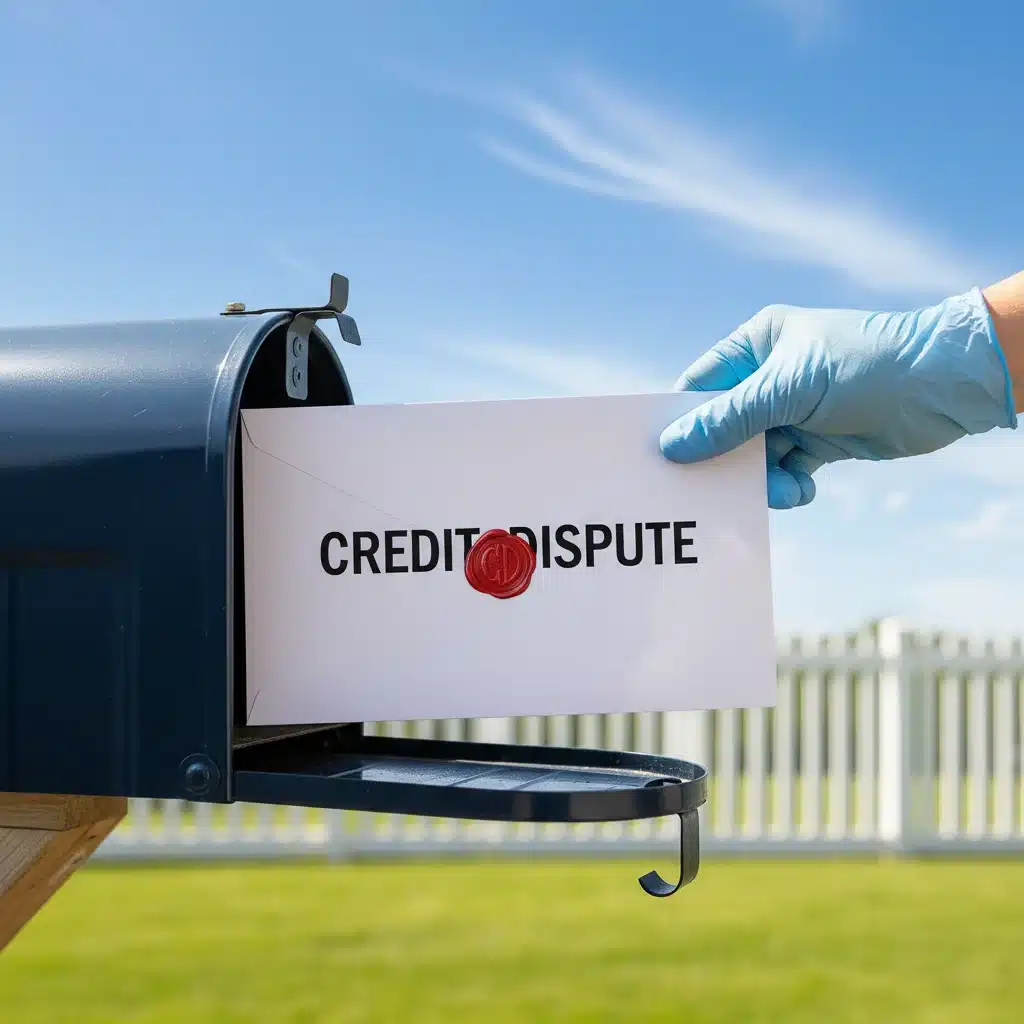
Sending a dispute letter via certified mail with a return receipt requested is often the most recommended method because it provides undeniable proof that the credit bureau received your dispute. Your letter should:
- Clearly state that you are disputing information on your credit report.
- Identify each item you are disputing by account number and creditor name.
- Explain why you believe the information is inaccurate or incomplete.
- Request that the information be investigated and removed or corrected.
- Include copies (never originals) of your supporting documentation.
- Include a copy of your driver’s license and a utility bill to prove your identity and address.
Here’s a template for a dispute letter:
[Your Name]
[Your Address]
[Your City, State, Zip Code]
[Your Phone Number]
[Your Email Address]

[Date]

[Credit Bureau Name]
[Credit Bureau Address - Check their website for the correct dispute address]

Subject: Dispute of Inaccurate Information on My Credit Report

Dear [Credit Bureau Name],

I am writing to dispute the following inaccurate information on my credit report. I have enclosed a copy of my credit report with the disputed items highlighted, along with supporting documentation.

1. Account Name: [Creditor Name]
   Account Number: [Account Number]
   Nature of Dispute: [Clearly explain why the information is inaccurate. E.g., 'This account is incorrectly reporting a late payment in January 2026. My records (see attached bank statement) show payment was made on [Date] and cleared on [Date].']
   Requested Action: Please investigate this item and remove the incorrect late payment notation.

2. Account Name: [Creditor Name]
   Account Number: [Account Number]
   Nature of Dispute: [Explain the error. E.g., 'This account is not mine. I have never opened an account with [Creditor Name]. I suspect this may be a case of identity theft.']
   Requested Action: Please investigate this item and remove it from my report.

I have attached copies of relevant documents to support my claims, including [list specific documents, e.g., 'bank statements,' 'payment confirmations,' 'identity theft report']. I also enclose copies of my driver's license and a utility bill for identification purposes.

Under the Fair Credit Reporting Act (FCRA), I request that you investigate these items and correct or remove any inaccurate information from my credit report within 30 days. Please send me the results of your investigation and a free updated copy of my credit report.

Thank you for your prompt attention to this matter.

Sincerely,
[Your Signature]
[Your Typed Name]
Step 4: Dispute with the Data Furnisher (Optional, but Recommended)
While the credit bureaus are legally obligated to investigate your dispute, it’s often beneficial to also dispute credit errors directly with the data furnisher – the company that provided the information to the credit bureau (e.g., a bank, credit card company, or collections agency). The FCRA also requires furnishers to investigate disputes that you send directly to them.
Why dispute with both? Sometimes, the furnisher can correct the error faster, and if they acknowledge the error, they are required to notify all three credit bureaus to update their records. This dual approach increases your chances of a quick and accurate resolution.
Your letter to the furnisher should be similar to the one sent to the credit bureau, but address it to their dispute department. Include the same supporting documentation and clearly state the error and the requested correction. Again, use certified mail with a return receipt.
Step 5: Understand the Investigation Process and Timeline
Once a credit bureau receives your dispute, they have 30 days (or 45 days if you provided additional information during the 30-day period) to investigate the claim. They will typically forward your information to the data furnisher, who then verifies the accuracy of the disputed item.
During this period, the credit bureau cannot report the disputed information to anyone without also stating that it is under dispute. If the furnisher confirms the information is inaccurate or cannot verify it, the credit bureau must remove or correct the item from your report.
After the investigation, the credit bureau must provide you with the results in writing, including a free updated copy of your credit report if any changes were made. If the dispute results in changes, check your reports from the other two bureaus to ensure consistency, as furnishers are supposed to update all bureaus.
Step 6: What to Do if Your Dispute is Denied or Unresolved
Unfortunately, not all disputes are resolved in your favor immediately. If the credit bureau or furnisher denies your dispute, or if the information remains inaccurate, you have several options:
Re-dispute with New Information:
If you have additional evidence or a clearer way to explain the error, you can submit a new dispute. Sometimes, providing more compelling documentation can change the outcome.
Add a Statement of Dispute to Your Report:
If the credit bureau insists the information is accurate but you still disagree, you have the right to add a brief statement (usually 100 words or less) to your credit report explaining your side of the story. While this doesn’t remove the negative item, it provides context for anyone viewing your report.
File a Complaint with Regulatory Bodies:
If you believe the credit bureau or furnisher has violated your rights under the FCRA, you can file a complaint with:
- The Consumer Financial Protection Bureau (CFPB): The CFPB is a federal agency that protects consumers in the financial marketplace. They can intervene on your behalf.
- Your State Attorney General: Your state’s Attorney General’s office may also be able to assist.
- The Federal Trade Commission (FTC): For cases of identity theft or other consumer protection issues.
Consult with a Consumer Law Attorney:
In complex cases, especially if you suspect repeated FCRA violations or significant damages, it may be wise to consult with a consumer law attorney specializing in credit reporting issues. They can advise you on your legal options, which may include filing a lawsuit against the credit bureau or furnisher.
Preventing Future Credit Report Errors
While knowing how to dispute credit errors is crucial, preventing them in the first place is even better. Here are some proactive steps:
- Monitor Your Credit Regularly: Beyond the annual free reports, consider using credit monitoring services (some credit card companies offer free monitoring) to receive alerts about changes to your report.
- Pay Bills on Time: The vast majority of credit report errors stem from late payments. Set up reminders or automatic payments to ensure you never miss a due date.
- Keep Good Records: Maintain meticulous records of all your financial transactions, especially payments and account closures.
- Be Vigilant Against Identity Theft: Regularly review bank and credit card statements for unauthorized activity. Consider freezing your credit if you are concerned about identity theft.
- Close Accounts Properly: When closing an account, ensure you receive written confirmation that the account is closed and has a zero balance.
The Impact of Successful Disputes on Your Credit Score
Successfully removing inaccurate negative information from your credit report can have a significant positive impact on your credit score. Even a single incorrect late payment or collection account can drag down your score by dozens of points. Once these errors are corrected, your score should improve, opening doors to better financial products and opportunities. Remember, the goal is often to see these corrections within 60 days of your initial dispute, setting you on a path to better financial health.
Common Misconceptions About Credit Disputes
Let’s debunk a few common myths about how to dispute credit errors:
- Myth: All negative items can be removed. Only inaccurate, incomplete, or unverifiable information can be removed. Legitimate negative items, like actual late payments, will remain on your report for their legally mandated timeframes (typically seven years).
- Myth: Disputing online is always faster and better. While convenient, online disputes can sometimes be less effective if they limit your ability to provide detailed explanations or extensive documentation. Certified mail offers a robust paper trail.
- Myth: You need to pay a credit repair company to dispute errors. You absolutely do not. The entire process of disputing credit report errors can be done by yourself, for free. Credit repair companies often charge for services you can perform yourself. If you choose to use one, research them thoroughly to avoid scams.
- Myth: Once an error is removed, it’s gone forever. While rare, a deleted item could reappear if the furnisher re-reports it. If this happens, you have the right to re-dispute it and should contact the credit bureau immediately. This is known as ‘reinsertion.’
Key Takeaways for Disputing Credit Errors in 2026
To summarize, here are the critical steps and considerations for effectively disputing credit report errors:
- Annual Review is Essential: Obtain and meticulously review all three credit reports from AnnualCreditReport.com at least once a year.
- Document Everything: Keep thorough records of all identified errors and gather strong supporting evidence.
- Dispute Formally: Send dispute letters via certified mail with return receipt to the credit bureaus and, ideally, to the data furnishers.
- Know Your Rights: The FCRA is your ally. Understand the timelines and your entitlements under the law.
- Be Persistent: If your initial dispute is denied, don’t give up. Re-dispute with more information, add a statement, or escalate to regulatory bodies.
- Proactive Monitoring: Regular credit monitoring helps catch errors early.
Conclusion
An accurate credit report is a cornerstone of financial health in 2026. Taking the initiative to regularly check your reports and promptly dispute credit errors is a powerful step towards safeguarding your financial future. While the process requires diligence and patience, the rewards of a corrected report and an improved credit score are well worth the effort. By following this step-by-step guide, you can confidently navigate the dispute process and ensure your credit report accurately reflects your financial integrity, ideally achieving resolution and a healthier credit profile in under 60 days.