Credit Age: 5-Year Average Account History Impact on Your Score

Understanding Credit Age: How a 5-Year Average Account History Positively Impacts Your Score
In the intricate world of personal finance, your credit score acts as a powerful gatekeeper, influencing everything from loan approvals to interest rates on mortgages and car loans. While many factors contribute to this three-digit number, one often underestimated yet profoundly impactful element is your credit age impact, specifically the average age of your credit accounts. A robust average account history, ideally reaching five years or more, can significantly bolster your creditworthiness and open doors to better financial opportunities.
This comprehensive guide will delve deep into the importance of credit age, demystifying how it’s calculated, its weight in popular scoring models like FICO and VantageScore, and actionable strategies to cultivate and maintain a long, healthy credit history. By the end of this article, you’ll have a clear understanding of why nurturing your credit accounts over time is not just beneficial, but essential for long-term financial stability and success.
What Exactly is Credit Age and How is it Calculated?
At its core, credit age impact refers to the length of time your credit accounts have been open. It’s not just about the oldest account you have, but rather an average across all your active credit lines. Credit bureaus calculate this by taking into account the opening date of each credit account you possess – credit cards, installment loans (like mortgages or car loans), and even lines of credit. They then average these ages to arrive at your overall average age of accounts (AAoA).
For example, if you have three credit accounts: one opened 10 years ago, another 5 years ago, and a third 1 year ago, your average age of accounts would be (10 + 5 + 1) / 3 = 5.33 years. This average is a crucial data point that lenders and credit scoring models use to assess your financial responsibility and stability over time.
It’s important to distinguish between the age of your oldest account and the average age of all accounts. While having a very old account is beneficial, it’s the average that truly reflects your consistent management of credit over an extended period. A longer average age demonstrates a track record of responsible borrowing and repayment, making you a more attractive borrower to potential lenders.
The Components of Credit Age
- Oldest Account: The date your very first credit account was opened. This sets the baseline for your credit history.
- Newest Account: The date your most recent credit account was opened. Opening many new accounts in a short period can lower your average age.
- Average Age of Accounts (AAoA): The sum of the ages of all your credit accounts divided by the number of accounts. This is the primary metric considered by credit scoring models for credit age impact.
- Specific Account Age: The individual age of each credit account. While not directly factored into the overall score as a standalone element, the age of each account contributes to the AAoA.
Understanding these components is the first step in strategically managing your credit history to maximize your credit age impact on your score.
The Significant Weight of Credit Age in FICO and VantageScore Models
Both FICO and VantageScore, the two most widely used credit scoring models, place considerable emphasis on the length of your credit history, including the average age of your accounts. While the exact percentages vary slightly between models and even different versions of the same model, the general principle remains: a longer, more established credit history is viewed favorably.
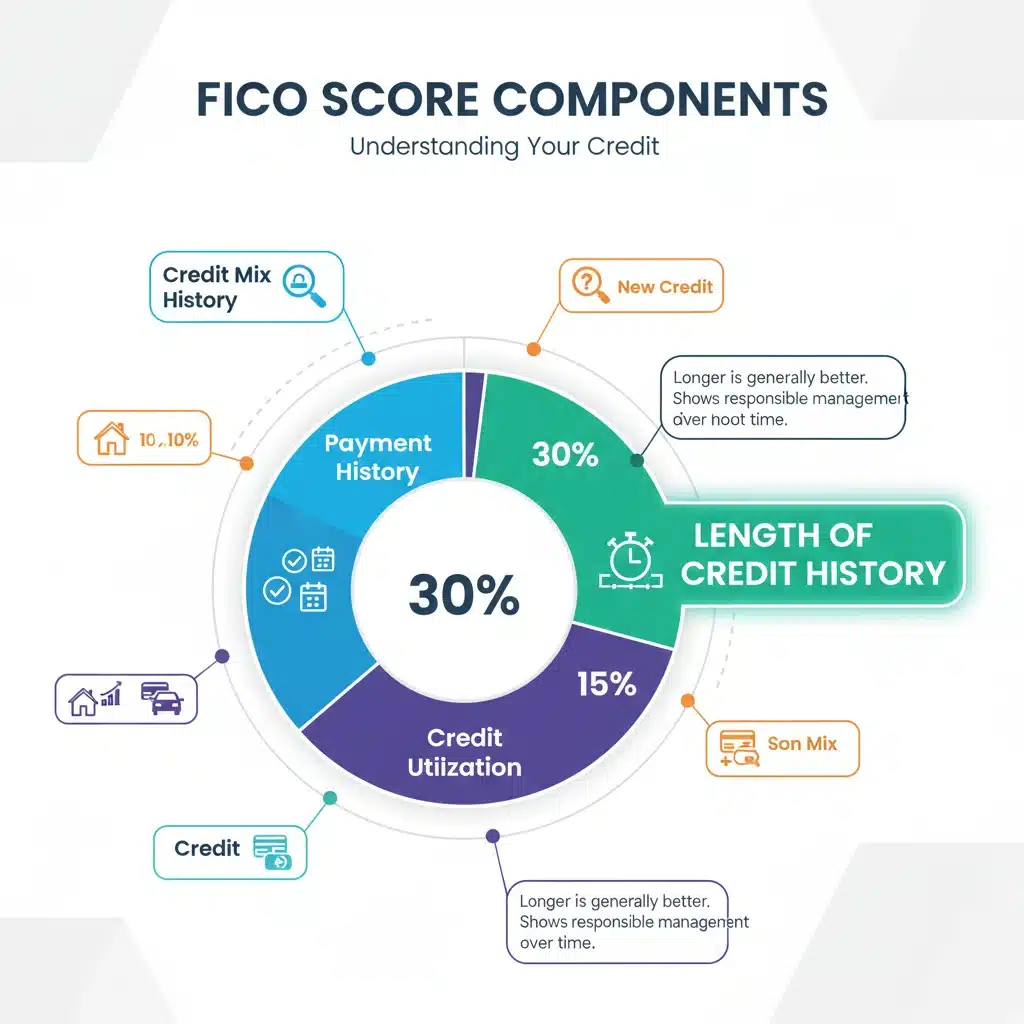
FICO Score and Length of Credit History
For FICO scores, the length of your credit history accounts for approximately 15% of your overall score. This 15% is broken down into several sub-factors, including:
- How long your oldest account has been open.
- The average age of all your accounts.
- How long specific types of accounts have been open.
A 5-year average account history is often considered a strong benchmark within this category, indicating a substantial period of credit management. Lenders perceive this as a sign of stability and reduced risk. They want to see that you’ve been able to handle credit responsibly for a significant duration, not just for a few months or a year.
Consider two individuals: one with an average account age of 1 year and another with an average of 5 years. Assuming all other factors are equal, the individual with the 5-year average will almost certainly have a higher FICO score due to the positive credit age impact. This is why financial advisors often recommend against closing old, unused credit accounts, even if they have a zero balance. Closing an old account can immediately reduce your average age of accounts, potentially hurting your score.
VantageScore and Credit History
VantageScore also considers the length of credit history a significant factor, although it categorizes its factors slightly differently. Under VantageScore 3.0, ‘Length of Credit History’ is grouped with ‘Type of Credit’ and ‘New Credit’ into a category that collectively has a ‘highly influential’ impact. While not a precise percentage like FICO, the message is clear: a longer history is better.
VantageScore also looks at the age of your oldest credit account, the age of your newest credit account, and the average age of all your accounts. The longer these periods, the better your score will be, reflecting a positive credit age impact. This consistency across major scoring models underscores the universal importance of cultivating a lengthy credit history.
The key takeaway is that both models reward longevity and consistency. A 5-year average account history doesn’t just happen overnight; it’s the result of sustained, responsible credit behavior. This track record tells lenders you’re a seasoned and reliable borrower.
Why a 5-Year Average Account History is a Golden Standard
While any increase in your average account age is positive, reaching and maintaining a 5-year average account history often represents a significant milestone in your credit journey. This duration demonstrates a substantial period of financial maturity and consistent credit management, which translates into several benefits:
1. Demonstrates Stability and Reliability
Lenders are inherently risk-averse. When they see a credit report with a 5-year average account history, it signals a borrower who has managed credit for a considerable period without significant issues. This stability is a strong indicator of future reliability. It suggests you’ve navigated various financial situations – job changes, economic fluctuations, personal expenses – while maintaining your credit obligations.
A short credit history, on the other hand, leaves more questions than answers. Lenders have less data to work with, making it harder for them to predict your future payment behavior. This uncertainty often leads to higher interest rates or even loan denials.
2. Enhances Trust with Lenders
Trust is paramount in lending. A long credit history, especially one with a 5-year average, builds trust. It shows that other creditors have extended credit to you for years, and you’ve honored those commitments. This historical data provides a robust foundation for new lenders to make informed decisions about extending credit to you. The positive credit age impact here is undeniable: more trust equals more favorable lending terms.
3. Mitigates the Impact of Negative Events
Even the most financially responsible individuals can experience bumps in the road, such as a late payment or a minor collection. While these negative marks do affect your score, their impact lessens over time. A long, established credit history with a high average account age can help cushion the blow of such events. The older, positive accounts can help to ‘dilute’ the negative effect of newer, less favorable events, leading to a quicker recovery of your credit score.
For instance, a single late payment on an account that’s 8 years old will likely have less credit age impact than a late payment on an account that’s only 1 year old, simply because the weight of the overall positive history is greater.
4. Opens Doors to Better Financial Products
With a strong credit age impact reflected in your score, you gain access to a wider array of premium financial products. This includes credit cards with lower interest rates and better rewards programs, more favorable terms on mortgages and auto loans, and even easier approval for personal loans. Lenders reserve their best offers for those with the strongest credit profiles, and a healthy credit age is a key component of that profile.
Imagine the difference in interest paid over the lifetime of a mortgage with a rate that’s even half a percentage point lower – that’s potentially thousands of dollars in savings, all thanks to a well-managed credit history and positive credit age impact.
Strategies to Cultivate and Maintain a Strong Credit Age
Understanding the importance of credit age impact is one thing; actively working to improve and maintain it is another. Here are practical strategies to ensure your average account history remains robust:
1. Start Early and Stay Consistent
The best time to start building credit is as early as possible. As soon as you’re eligible, consider opening a starter credit card or becoming an authorized user on a parent’s long-standing account. The sooner you establish your first account, the sooner your credit history begins to age. Consistency is key; regularly using your credit responsibly and making on-time payments will build a strong foundation.
Even if you’re past the ‘early’ stage, it’s never too late to start. The oldest account you have today will be even older tomorrow, contributing positively to your credit age impact.
2. Avoid Closing Old Accounts Unnecessarily
This is perhaps the most crucial piece of advice for managing credit age. Resist the urge to close old, paid-off credit cards, even if you no longer use them. As discussed, closing an old account immediately removes its age from your average, potentially dropping your overall average age of accounts and negatively impacting your score. Even if you’re consolidating debt or trying to simplify your finances, carefully consider the long-term credit age impact before closing an account.
If you have an old card with an annual fee you no longer wish to pay, consider asking the issuer if you can downgrade it to a no-annual-fee version. This keeps the account open and preserves its age.
3. Keep Accounts Active, Even if Minimally
While you shouldn’t close old accounts, many issuers will close inactive accounts after a certain period (e.g., 12-24 months of no activity). To prevent this, make a small purchase on each old card every few months, then pay it off immediately. This keeps the account active, prevents it from being closed due to inactivity, and continues to contribute to your positive credit age impact.
4. Be Mindful of Opening New Accounts
While new credit can be beneficial for diversifying your credit mix, opening too many new accounts in a short period can temporarily lower your average age of accounts. Each new account is a ‘young’ account that pulls down the average. Exercise caution and only open new credit when genuinely needed, ensuring you can manage the new debt responsibly.
The impact of new accounts is usually temporary. As the new accounts age, they will eventually contribute positively to your average age. However, in the short term, multiple new accounts can dilute your overall credit age impact.
5. Diversify Your Credit Mix (Over Time)
Having a mix of credit types – revolving credit (like credit cards) and installment loans (like mortgages, auto loans, or student loans) – can also positively influence your credit score. As these different types of accounts age, they contribute to a more robust and diverse credit history, further enhancing your credit age impact.
However, do not open loans you do not need simply to diversify your credit mix. The primary goal is responsible borrowing, and diversification is a secondary benefit that naturally occurs as your financial needs evolve.

Common Misconceptions About Credit Age
Despite its importance, credit age impact is often misunderstood. Let’s debunk some common myths:
Myth 1: Closing an account with a zero balance helps your score.
Reality: As discussed, closing an old account, even if it has a zero balance, can negatively affect your credit age by removing that account’s history from your average. It can also reduce your total available credit, which might increase your credit utilization ratio, another factor that impacts your score.
Myth 2: You need many credit cards to have a good credit age.
Reality: Quality over quantity. While having a few accounts can help diversify your credit mix, having too many can make it harder to manage and potentially lead to debt. Two or three well-managed, long-standing accounts can have a more significant positive credit age impact than a dozen poorly managed or short-lived ones.
Myth 3: Authorized user accounts don’t count towards credit age.
Reality: In many cases, they do. When you’re added as an authorized user to an account, that account’s history, including its age, can appear on your credit report and contribute to your average age of accounts. This can be a great way for young individuals to kickstart their credit history, provided the primary account holder has a long, positive payment history.
Myth 4: All old accounts have the same impact.
Reality: While all old accounts contribute, the type of account can also play a role. A long-standing mortgage or auto loan, which are installment loans with fixed payments, can be viewed slightly differently than revolving credit cards. However, the overarching principle is that any type of old, positive account history is beneficial for your credit age impact.
Monitoring Your Credit Age and Overall Credit Health
Proactively monitoring your credit reports is essential for understanding your credit age impact and overall financial health. You can obtain a free copy of your credit report from each of the three major credit bureaus (Experian, Equifax, and TransUnion) annually through AnnualCreditReport.com.
When reviewing your reports, pay close attention to:
- Account Open Dates: Verify the opening date for each account. Ensure accuracy and report any discrepancies.
- Closed Accounts: Check if any old, positive accounts have been closed without your knowledge or consent. If so, investigate and dispute inaccuracies.
- New Accounts: Be aware of any new accounts opened in your name. If you didn’t open them, it could be a sign of identity theft.
- Average Age Calculation: While credit reports don’t always explicitly state your average age of accounts, you can manually calculate it to get a clear picture of your credit age impact.
Many credit card companies and financial institutions also offer free access to your FICO or VantageScore, often including a breakdown of factors affecting your score. Utilize these tools to track changes in your average account age and understand how your actions are influencing your credit profile.
Regular monitoring not only helps you track your credit age but also allows you to catch errors or fraudulent activity early, protecting your financial well-being.
The Long-Term Benefits of a Strong Credit Age
The positive credit age impact extends far beyond just a higher credit score. It’s an investment in your financial future, leading to a cascade of benefits:
- Lower Interest Rates: A higher credit score, bolstered by a strong credit age, directly translates to lower interest rates on loans, saving you thousands over time.
- Easier Loan Approvals: Whether it’s a mortgage, car loan, or personal loan, lenders are more willing to approve applicants with a long, positive credit history.
- Better Credit Card Offers: Access to premium credit cards with attractive rewards, sign-up bonuses, and lower APRs.
- Reduced Insurance Premiums: In many states, insurance companies use credit-based insurance scores, which are influenced by your credit history, to determine premiums. A better credit history can mean lower premiums.
- Easier Rental Approvals: Landlords often check credit scores as part of their tenant screening process. A strong credit age can make it easier to secure rental housing.
- Lower Security Deposits: For utilities, cell phone contracts, and other services, a good credit score (influenced by credit age) can result in lower or no security deposit requirements.
- Financial Peace of Mind: Knowing you have a strong financial foundation provides a sense of security and reduces financial stress.
These long-term benefits underscore why focusing on factors like credit age impact is not just about a number, but about building a secure and prosperous financial life.
Conclusion: Nurturing Your Credit Age for Financial Success
Your credit score is a dynamic entity, constantly evolving with your financial decisions. Among the various factors that shape it, the credit age impact, particularly an average account history of five years or more, stands out as a powerful indicator of financial responsibility and stability. It tells a story of consistent management, prudent borrowing, and reliable repayment.
By understanding how credit age is calculated, its weight in major scoring models, and implementing strategic habits like avoiding unnecessary account closures and making timely payments, you can actively cultivate a credit history that works in your favor. This isn’t a quick fix; it’s a long-term commitment to financial health. But the rewards – lower interest rates, easier loan approvals, and greater financial freedom – are well worth the sustained effort.
Start today by reviewing your credit report, understanding the age of your accounts, and making conscious decisions that contribute to a longer, stronger credit history. Your future self, enjoying the benefits of excellent credit, will thank you for it. Remember, a healthy credit age is not just a number on a report; it’s a testament to your financial discipline and a key to unlocking countless opportunities in your financial journey.