Budgeting for Retirement 2026: Allocate 10% Income for Financial Security

Budgeting for Retirement 2026: Allocating 10% of Your Income for Long-Term Financial Security
The dream of a comfortable retirement is universal, but achieving it requires meticulous planning and consistent effort. As we approach 2026, the financial landscape continues to evolve, making strategic retirement budgeting more crucial than ever. This comprehensive guide will walk you through the essential steps to allocate a significant portion of your income – specifically 10% – towards building a robust nest egg for your golden years. Our focus is on providing actionable insights and practical strategies to help you secure your long-term financial future.
Why 10%? The Power of Consistent Contributions to Your Retirement Budget 2026
The recommendation to allocate 10% of your income for retirement savings is a widely accepted guideline, often considered a good starting point for many individuals. While some financial experts advocate for even higher percentages (15% or even 20%), 10% offers a balanced approach that is achievable for most people without severely impacting their current lifestyle, especially when starting early. The magic behind this figure lies in the power of compound interest – the ability of your investments to earn returns, which then earn returns on themselves. Over decades, even seemingly small, consistent contributions can grow into substantial sums.
Consider this: if you start saving at age 25, consistently contributing 10% of your income, you give your money ample time to grow. Market fluctuations will occur, but the long-term trend of diversified investments is typically upward. Waiting until your 30s or 40s to start saving significantly means you’ll need to contribute a much higher percentage of your income to catch up, as you’ll have fewer years for compounding to work its magic. Therefore, committing to a retirement budget 2026 with a 10% allocation is a proactive step towards ensuring financial independence later in life.
Furthermore, this 10% isn’t just about saving; it’s about building a habit. Once you consistently set aside this portion of your income, it becomes a natural part of your financial routine. This discipline is invaluable, not just for retirement, but for overall financial health. It forces you to live within your means and prioritize your future self. For many, this 10% target serves as a tangible goal, making the abstract concept of retirement planning feel more concrete and achievable.
However, it’s important to note that 10% is a general guideline. Your ideal savings rate might be higher or lower depending on several factors: your current age, desired retirement age, expected lifestyle in retirement, existing debts, and other financial obligations. For instance, if you’re starting later in life, or if you aspire to an extravagant retirement, you might need to aim for 15-20% or more. Conversely, if you have a pension or other significant assets, you might be able to get by with slightly less. The key is to assess your personal situation and adjust your retirement budget 2026 strategy accordingly, always striving to meet or exceed this foundational 10% benchmark.
Assessing Your Current Financial Situation: The Foundation of Your Retirement Budget 2026
Before you can effectively allocate 10% of your income, you need a clear picture of your current financial standing. This involves a thorough review of your income, expenses, assets, and liabilities. Think of it as a financial health check-up that will inform every subsequent decision regarding your retirement budget 2026.
Understanding Your Income Streams
Start by listing all your sources of income: salary, bonuses, freelance work, rental income, etc. Be precise and consider both gross and net (after-tax) income. For retirement planning, focusing on your net income is often more practical, as this is the money you actually have available to budget and save. If your income fluctuates, calculate an average or a conservative estimate to avoid overestimating your available funds.
Tracking Your Expenses
This is where many people falter. It’s crucial to know exactly where your money is going. Categorize your expenses into fixed (rent/mortgage, loan payments, insurance premiums) and variable (groceries, entertainment, dining out, utilities). Use budgeting apps, spreadsheets, or even a simple notebook to track every dollar for at least one to three months. This exercise often reveals hidden spending patterns and areas where you can cut back without significant lifestyle sacrifices. Identifying these ‘leaks’ in your budget is critical for freeing up the 10% you aim to allocate for retirement.
Evaluating Your Assets and Liabilities
Assets include anything you own that has monetary value: savings accounts, investment portfolios, real estate, vehicles, etc. Liabilities are what you owe: credit card debt, student loans, car loans, mortgage. Calculate your net worth (assets minus liabilities). A positive net worth is a good sign, but high-interest debt can be a significant drag on your ability to save for retirement. Prioritizing the elimination of high-interest debt can often be a more effective ‘investment’ than putting money into a retirement account, as the guaranteed return (saving on interest) is often higher than market returns.
Setting Clear Retirement Goals
What does retirement look like for you? Do you envision extensive travel, pursuing hobbies, or simply enjoying a quiet life at home? How much income do you think you’ll need per month or year? Will you downsize your home? Will you have healthcare costs? These questions help you quantify your retirement needs. A common rule of thumb is to aim for 70-80% of your pre-retirement income, but your personal circumstances may dictate a different figure. Having a clear target helps you work backward and determine how much you need to save annually and monthly within your retirement budget 2026.
Strategies for Allocating 10% of Your Income to Your Retirement Budget 2026
Once you understand your financial picture, the next step is to implement strategies to consistently allocate that 10%. This isn’t just about finding the money; it’s about optimizing where it goes to maximize growth and minimize taxes.
Automate Your Savings
The easiest way to ensure you hit your 10% target is to make it automatic. Set up direct deposits from your paycheck or automatic transfers from your checking account to your retirement savings accounts. ‘Set it and forget it’ is a powerful principle in personal finance. When the money is moved before you even see it, you’re less likely to spend it. This automation is a cornerstone of an effective retirement budget 2026.
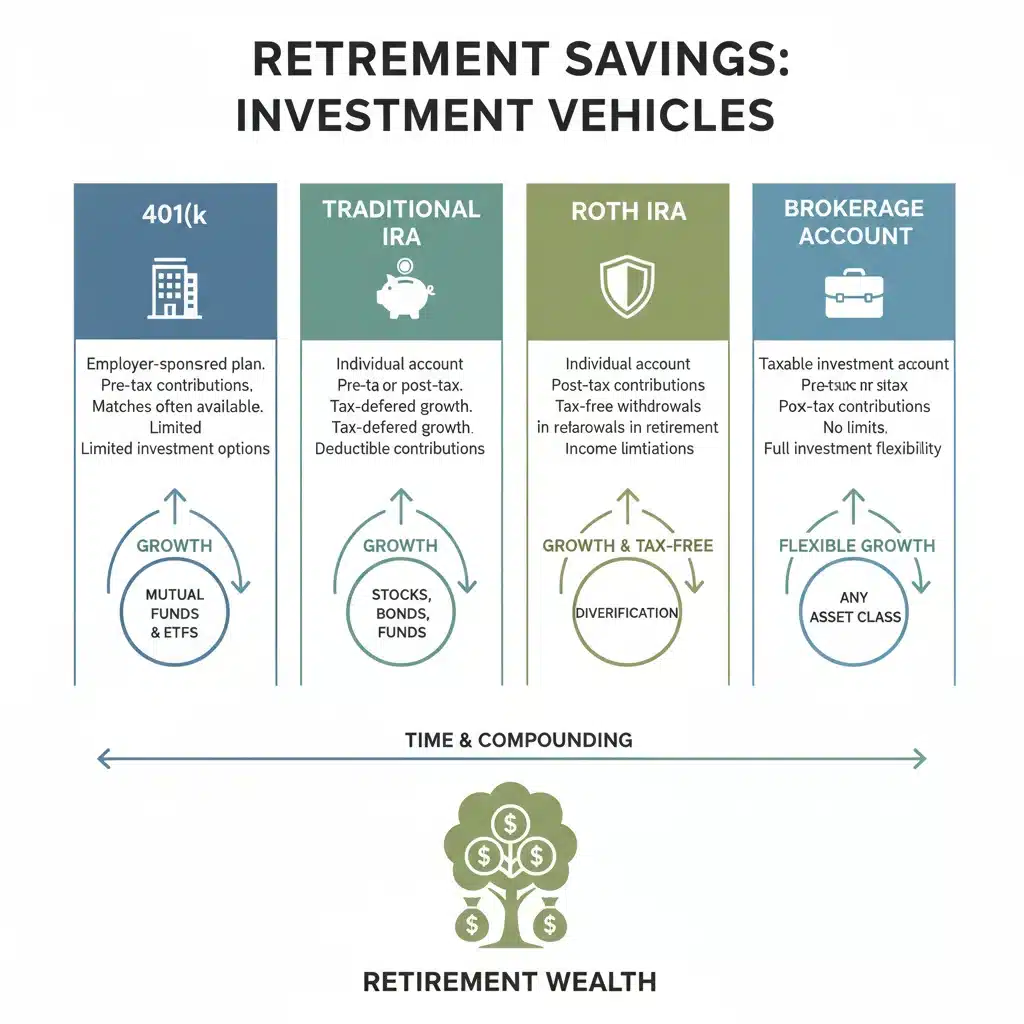
Utilize Employer-Sponsored Plans (401(k), 403(b), TSP)
If your employer offers a retirement plan, especially one with a matching contribution, this should be your first priority. A company match is essentially free money – an immediate 100% return on your investment. Contribute at least enough to get the full match. If that amount is less than 10% of your income, great! You’re already ahead. If it’s more, even better. These plans often offer tax advantages (pre-tax contributions reduce your taxable income now) and a wide array of investment options.
Explore Individual Retirement Accounts (IRAs)
Once you’ve maximized your employer match, consider opening an IRA. You have two main types: Traditional IRA and Roth IRA. Each has different tax implications:
- Traditional IRA: Contributions are often tax-deductible (reducing your current taxable income), and your investments grow tax-deferred. You pay taxes when you withdraw in retirement.
- Roth IRA: Contributions are made with after-tax money, but your qualified withdrawals in retirement are tax-free. This is particularly attractive if you expect to be in a higher tax bracket in retirement than you are now.
The annual contribution limits for IRAs are lower than for 401(k)s, but they offer more control over investment choices. They are excellent vehicles to supplement your employer-sponsored plan and bolster your retirement budget 2026.
Consider Health Savings Accounts (HSAs)
If you have a high-deductible health plan (HDHP), an HSA can be a powerful triple-tax-advantaged savings vehicle. Contributions are tax-deductible, investments grow tax-free, and qualified withdrawals for medical expenses are also tax-free. If you don’t use the funds for medical expenses, after age 65, they can be withdrawn for any purpose and taxed like a traditional IRA. This makes HSAs a stealth retirement account for those who qualify.
Diversify Your Investments
Don’t put all your eggs in one basket. Diversification across different asset classes (stocks, bonds, real estate, etc.) and within those classes (e.g., large-cap, small-cap, international stocks) is crucial to manage risk and optimize returns. Your risk tolerance and time horizon to retirement should guide your asset allocation strategy. Younger investors can typically afford to take on more risk, while those closer to retirement might shift towards more conservative investments. Regularly review and rebalance your portfolio to ensure it aligns with your goals and risk profile for your retirement budget 2026.
Optimizing Your Spending: Finding the Extra 10% for Your Retirement Budget 2026
For many, the idea of allocating 10% of their income feels daunting, especially if current budgets are already tight. However, by optimizing your spending, you can often find significant amounts that can be redirected to your retirement budget 2026 without feeling deprived.
Conduct a Spending Audit
Go back to your expense tracking. Where are you overspending? Common areas include:
- Dining Out/Takeout: Even a few meals a week can add up quickly. Cooking at home is almost always cheaper.
- Subscriptions: Review all your monthly subscriptions – streaming services, gym memberships, apps. Are you using them all? Cancel what you don’t need.
- Impulse Purchases: Online shopping and frequent small purchases can drain your bank account. Implement a 24-hour rule before buying non-essential items.
- Transportation: Can you carpool, use public transport more, or bike/walk for shorter trips?
- Unnecessary Luxuries: Daily lattes, premium cable packages, or frequent high-cost entertainment.
The goal isn’t to eliminate all enjoyment, but to be mindful and intentional with your spending. Every dollar saved from discretionary spending can be a dollar invested in your future self.
Implement the ‘Pay Yourself First’ Principle
This goes hand-in-hand with automating your savings. Instead of saving what’s left after expenses, make saving for retirement your first ‘expense.’ When your paycheck hits, the 10% for your retirement budget 2026 is immediately transferred. This shifts your mindset from reactive saving to proactive financial planning.
Look for Income-Generating Opportunities
If cutting expenses isn’t enough, consider increasing your income. This could involve:
- Negotiating a raise: Research industry benchmarks and present a strong case to your employer.
- Taking on a side hustle: Freelancing, consulting, or part-time work can generate extra cash that can be entirely dedicated to retirement savings.
- Selling unused items: Declutter your home and sell items you no longer need.
Any additional income you generate can significantly boost your 10% allocation without impacting your primary budget.
Review and Adjust Your Budget Regularly
Your financial situation is not static. Life changes – you might get a raise, have new expenses, or your retirement goals might evolve. Make it a habit to review your budget and retirement contributions at least once a year, or whenever a major life event occurs. This ensures your retirement budget 2026 remains aligned with your current reality and future aspirations.

Common Pitfalls to Avoid in Your Retirement Budget 2026
Even with the best intentions, several common mistakes can derail your retirement planning efforts. Being aware of these can help you navigate around them.
Ignoring Inflation
The cost of living will undoubtedly be higher in 20, 30, or 40 years than it is today. A dollar today won’t buy the same amount of goods and services in the future. When calculating your retirement needs, factor in an inflation rate (historically around 2-3% per year) to ensure your savings will have adequate purchasing power. Failing to account for inflation means you’ll likely undersave.
Underestimating Healthcare Costs
Healthcare is one of the biggest expenses for retirees. Medicare covers some costs, but not all. Long-term care, prescription drugs, and supplemental insurance can be very expensive. Don’t assume your health will hold up perfectly; plan for significant healthcare expenditures in your retirement budget 2026.
Taking Early Withdrawals
Dipping into your retirement accounts before age 59½ typically incurs a 10% penalty on top of regular income taxes. While there are some exceptions, doing so significantly hampers your long-term growth and should be avoided at all costs. Think of your retirement savings as sacred funds, untouchable until their intended purpose.
Being Too Conservative with Investments
While it’s wise to manage risk, being overly conservative, especially when you’re young, means you’re missing out on potential growth. Keeping too much cash in low-interest savings accounts won’t outpace inflation. A balanced portfolio with a healthy allocation to equities (stocks) is generally recommended for long-term growth.
Not Having an Emergency Fund
An emergency fund (3-6 months of living expenses in an easily accessible savings account) acts as a buffer. Without it, unexpected expenses (car repair, job loss, medical emergency) might force you to tap into your retirement savings. Build this fund before aggressively increasing your retirement contributions beyond the 10%.
Advanced Strategies for Boosting Your Retirement Budget 2026
Once you’ve mastered the 10% allocation and avoided common pitfalls, consider these advanced strategies to further supercharge your retirement savings.
Catch-Up Contributions
If you’re over 50, the IRS allows you to make additional ‘catch-up’ contributions to your 401(k)s and IRAs above the standard limits. This is a fantastic opportunity to make up for lost time or simply accelerate your savings in the years leading up to retirement. These additional contributions can significantly impact your retirement budget 2026 goals.
Backdoor Roth IRA
If your income is too high to contribute directly to a Roth IRA, you might be able to use the ‘backdoor Roth’ strategy. This involves contributing to a Traditional IRA (which may not be tax-deductible at higher income levels) and then immediately converting it to a Roth IRA. This allows high-income earners to still benefit from tax-free growth and withdrawals in retirement. It’s a slightly more complex strategy and often benefits from professional advice.
Mega Backdoor Roth (if applicable)
For those whose employer-sponsored 401(k) plan allows after-tax contributions and in-service distributions or rollovers, the mega backdoor Roth can allow you to contribute significantly more than the standard 401(k) limits into a Roth account. This is a very advanced strategy and requires specific plan provisions, but it can be incredibly powerful for maximizing tax-free growth.
Real Estate as a Retirement Asset
Beyond your primary residence, consider investment properties. Rental income can provide a steady cash flow in retirement, and the property itself can appreciate in value. However, real estate also comes with responsibilities (maintenance, tenants) and risks, so it should be carefully considered as part of your overall retirement budget 2026 plan.
Working Longer or Part-Time in Retirement
While the goal is financial independence, some people choose to work part-time in retirement, either for enjoyment, social interaction, or to supplement their income. Even a few years of working longer can significantly reduce the pressure on your savings and allow your investments more time to grow. This flexibility can be a valuable component of your retirement budget 2026 planning.
The Role of Professional Financial Advice in Your Retirement Budget 2026
Navigating the complexities of retirement planning can be overwhelming. A qualified financial advisor can be an invaluable resource, helping you:
- Create a Personalized Plan: They can assess your unique situation, risk tolerance, and goals to create a tailored retirement budget 2026 strategy.
- Optimize Investment Portfolios: Advisors can help you select appropriate investment vehicles, diversify your assets, and rebalance your portfolio as needed.
- Understand Tax Implications: They can guide you through the intricacies of tax-advantaged accounts and help you minimize your tax burden both now and in retirement.
- Plan for Healthcare and Long-Term Care: Advisors can help you integrate these significant costs into your overall retirement plan.
- Stay on Track: Regular check-ins with an advisor can help you stay disciplined and make necessary adjustments to your retirement budget 2026.
Look for fiduciaries – advisors who are legally obligated to act in your best interest. While there’s a cost associated with financial advice, the benefits of a well-structured and optimized retirement plan often far outweigh the fees.
Conclusion: Your Path to a Secure Retirement in 2026 and Beyond
Achieving financial security in retirement is a marathon, not a sprint. By committing to allocate 10% of your income towards your retirement budget 2026, you are taking a powerful and proactive step towards a comfortable and worry-free future. Start by understanding your current financial situation, automate your savings, and strategically utilize tax-advantaged accounts. Continuously optimize your spending, avoid common pitfalls, and consider advanced strategies as your financial journey progresses.
Remember, consistency is key. Even small, regular contributions, coupled with the power of compound interest, can transform your financial outlook. Don’t delay – the best time to start saving for retirement was yesterday; the second best time is today. Take control of your retirement budget 2026, and build the future you envision.
By diligently following these guidelines and regularly reviewing your progress, you can confidently build a robust retirement fund that provides the financial freedom and peace of mind you deserve in your golden years.