Budget Hacks: Cut Spending, Save $300 Monthly in 2026

In an economic landscape that increasingly demands financial prudence, the ability to effectively manage personal finances has never been more critical. For many Americans, the dream of financial stability often feels just out of reach, not because of a lack of income, but due to insidious budget spending leaks that silently siphon away hard-earned money. These leaks, often hidden in plain sight, can accumulate to substantial sums over time, preventing individuals and families from achieving their financial goals. As we look towards 2026, setting a clear objective to save a significant amount, say $300 monthly, requires a strategic approach to identifying and plugging these often-overlooked expenditures.
The journey to financial freedom is not about drastic, unsustainable cuts, but rather about smart, consistent adjustments that align with your long-term objectives. It’s about understanding where your money truly goes and making conscious choices to redirect it towards savings, investments, or debt reduction. This article aims to illuminate five common US spending leaks that, once identified and addressed, can pave the way for substantial monthly savings. By diligently applying the strategies outlined here, you can transform your financial habits and confidently work towards saving $300 or more every month, setting a solid foundation for a more secure financial future.
We will delve into the specifics of each spending leak, providing practical, actionable advice that you can implement immediately. From dissecting your subscription services to optimizing your grocery habits, and from re-evaluating your transportation costs to taming the beast of impulse buying, every section is designed to empower you with the knowledge and tools to take control of your financial destiny. By the end of this comprehensive guide, you will have a clear roadmap to not only identify your personal budget spending leaks but also to plug them effectively, ensuring that your money works harder for you, not against you.
Understanding the Pervasiveness of Budget Spending Leaks
Before we dive into specific leaks, it’s essential to grasp why these budget spending leaks are so common and often go unnoticed. Modern consumer culture, coupled with convenient payment methods and aggressive marketing, makes it incredibly easy to spend money without much thought. Digital subscriptions renew automatically, small daily purchases add up, and the allure of convenience often outweighs the cost in our minds. The cumulative effect of these small, seemingly insignificant expenditures can be staggering, eroding your savings potential month after month.
Many people focus on major expenses like rent or mortgage, and while these are undoubtedly significant, they are often fixed or difficult to alter quickly. The real opportunity for immediate and impactful savings often lies in the variable and discretionary spending categories – the very areas where budget spending leaks tend to proliferate. Recognizing this distinction is the first step towards a more effective budgeting strategy. It’s not always about earning more; sometimes, it’s about spending smarter. By understanding the psychological and practical reasons behind these leaks, you can develop a more resilient and proactive approach to managing your money.
The goal isn’t deprivation; it’s optimization. It’s about ensuring every dollar you spend aligns with your values and financial goals. This mindset shift is crucial for long-term success in plugging budget spending leaks. Instead of viewing budgeting as a restrictive chore, consider it an empowering tool that gives you control and clarity over your financial life. With this perspective, you’re better equipped to tackle the specific leaks we’re about to explore and achieve your $300 monthly savings target by 2026.
Leak #1: The Subscription Overload – Digital & Physical Services
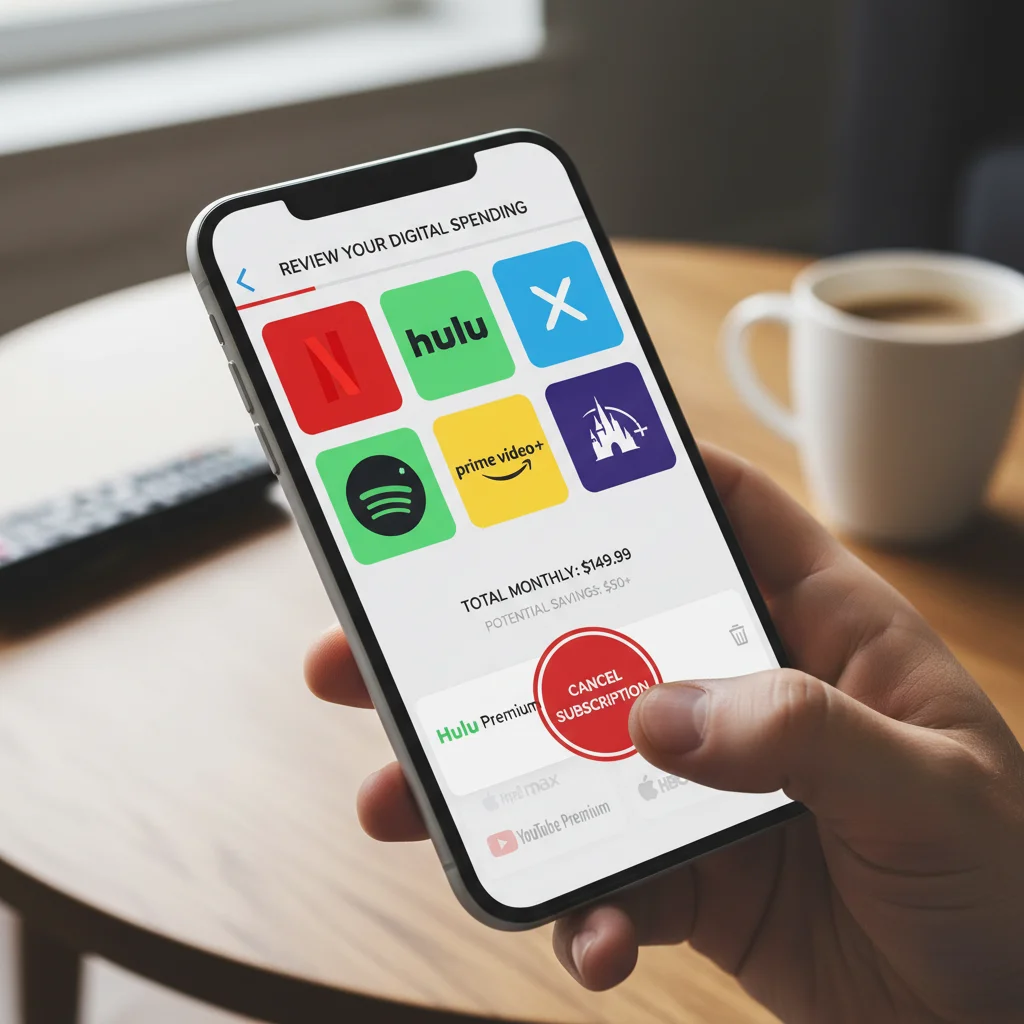
In the digital age, subscription services have become an integral part of our lives. From streaming platforms and music services to meal kits and fitness apps, the options are endless. While many offer genuine value, it’s alarmingly easy to accumulate subscriptions that you no longer use, rarely use, or have forgotten about entirely. This is one of the most significant and often overlooked budget spending leaks.
Identifying Your Subscription Leaks
The first step is to create a comprehensive list of all your recurring subscriptions. Go through your bank statements and credit card bills from the last 12 months. Look for any recurring charges, no matter how small. You might be surprised at what you find. Many people discover subscriptions they signed up for during a free trial period and forgot to cancel, or services they once used but no longer need.
Consider the following categories:
- Streaming Services: Netflix, Hulu, Disney+, Spotify, Apple Music, YouTube Premium, etc.
- Software & Apps: Adobe Creative Cloud, premium versions of mobile apps, cloud storage, VPNs.
- Delivery Services: Amazon Prime, DoorDash DashPass, Instacart Express, etc.
- Gym Memberships & Fitness Apps: Often auto-renew even if you haven’t stepped foot in the gym for months.
- Meal Kits & Coffee Subscriptions: Blue Apron, HelloFresh, craft coffee deliveries.
- Beauty & Grooming Boxes: Birchbox, Dollar Shave Club.
- News & Magazine Subscriptions: Digital and physical editions.
- Gaming Subscriptions: Xbox Game Pass, PlayStation Plus, Nintendo Switch Online.
Actionable Strategies to Plug This Leak
Once you have your list, it’s time to evaluate each subscription critically:
- Audit Usage: For each service, ask yourself: How often do I use this? Does it provide significant value to my life? Can I get similar benefits for free or at a lower cost?
- Prioritize & Eliminate: Rank your subscriptions by importance. Keep the essentials, but be ruthless with the rest. If you’re only using one streaming service occasionally, consider canceling the others and rotating them monthly or quarterly if needed.
- Negotiate & Bundle: Sometimes, calling the service provider can lead to a lower rate or a temporary pause. Also, check if your internet or phone provider offers bundles that include streaming services at a discounted rate.
- Leverage Free Alternatives: Many public libraries offer free access to digital content, including movies, music, and audiobooks. Explore these resources before paying for another service.
- Set Reminders: If you sign up for a free trial, immediately set a calendar reminder a few days before it ends to decide whether to cancel or continue.
By systematically reviewing and cutting unnecessary subscriptions, you can easily save $50 to $100+ per month. This direct approach to tackling a common area of budget spending leaks offers immediate and tangible results, bringing you closer to your $300 monthly savings goal.
Leak #2: Excessive & Unplanned Food Spending – Dining Out and Groceries
Food is a necessity, but it’s also a category where budget spending leaks are notoriously prevalent. The convenience of dining out, ordering takeout, and impulse grocery purchases can quickly inflate your food budget beyond recognition. For many households, food expenses represent one of the largest variable costs, making it a prime target for significant savings.
Identifying Your Food Spending Leaks
Track your food expenditures meticulously for at least a month. Categorize everything: groceries, restaurant meals, coffee shop visits, vending machine purchases, and food delivery services. You might be surprised to see how often you grab a coffee or a quick lunch that adds up to a substantial amount by month-end.
Common culprits include:
- Daily Coffee Runs: A $5 coffee five times a week is $100 a month.
- Frequent Restaurant Meals/Takeout: Each meal can easily cost $15-$30 per person.
- Impulse Buys at the Grocery Store: Unplanned snacks, treats, and non-essential items.
- Food Waste: Buying too much or not eating leftovers, leading to spoiled food.
- Convenience Store Trips: Marked-up prices for quick grabs.
Actionable Strategies to Plug This Leak
- Meal Planning & Preparation: Plan your meals for the week, create a grocery list based on that plan, and stick to it. Preparing meals at home is almost always cheaper and healthier than eating out. Cook in bulk to have leftovers for lunches.
- Pack Your Lunch: Bringing your lunch to work or school instead of buying it daily can save you hundreds of dollars each month.
- Brew Coffee at Home: Invest in a good coffee maker and make your coffee at home. The savings are substantial.
- Shop Smart at the Grocery Store:
- Never shop hungry.
- Stick to your list.
- Compare unit prices.
- Buy generic brands when appropriate.
- Look for sales and use coupons.
- Limit trips to avoid impulse buys.
- Reduce Food Waste: Store food properly, understand expiration dates, and get creative with leftovers. Utilize services like ‘Too Good To Go’ to rescue discounted food from local businesses.
- Limit Restaurant Visits: Treat dining out as an occasional indulgence rather than a regular occurrence. When you do go out, look for deals, happy hour specials, or share entrees.
By implementing these strategies, you can realistically save $100 to $150+ per month on food expenses, significantly chipping away at your budget spending leaks and moving closer to your $300 monthly savings goal.
Leak #3: Unnecessary Transportation Costs – Fuel, Maintenance, and Ride-Shares
For many Americans, transportation is a significant expense, often second only to housing. While owning a car is a necessity for some, there are numerous budget spending leaks associated with how we use and maintain our vehicles, as well as our reliance on costly alternatives like ride-sharing services.
Identifying Your Transportation Leaks
Examine your transportation habits. How often do you drive short distances that could be walked or biked? Are you maintaining your vehicle efficiently? How frequently do you use Uber, Lyft, or taxis? The cumulative cost of these seemingly small choices can add up.
Key areas to scrutinize:
- Fuel Consumption: Inefficient driving habits, unnecessary trips.
- Vehicle Maintenance: Neglecting routine maintenance leading to costly repairs, or overpaying for simple services.
- Ride-Sharing & Taxis: Using these services out of convenience rather than necessity.
- Parking Fees & Tolls: Daily or frequent charges that go unnoticed.
- Car Washes: Frequent visits to automated car washes.
Actionable Strategies to Plug This Leak
- Optimize Driving Habits:
- Combine errands to reduce trips.
- Drive smoothly (avoid aggressive acceleration and braking) to improve fuel efficiency.
- Ensure tires are properly inflated.
- Use navigation apps to find the most fuel-efficient routes.
- Embrace Alternatives:
- Walk or bike for short distances.
- Utilize public transportation if available and practical.
- Carpool with colleagues or friends.
- Consider a scooter or electric bicycle for local commutes.
- Smart Vehicle Maintenance:
- Follow your car’s maintenance schedule to prevent larger issues.
- Learn basic DIY maintenance (e.g., checking fluids, changing wiper blades).
- Shop around for repair quotes.
- Avoid unnecessary premium fuels unless specifically required by your vehicle.
- Reduce Ride-Share Usage: Plan ahead to avoid situations where you rely on expensive ride-shares. If you must use them, compare prices between services.
- Review Car Insurance: Shop around for car insurance quotes annually. Even slight differences can save you money. Consider increasing your deductible if you have a robust emergency fund.
- Limit Car Washes: Wash your car at home or opt for less frequent, cheaper washes.
By making conscious choices about your transportation, you can easily save $50 to $100+ per month. This area often has significant hidden budget spending leaks that, once addressed, provide a tangible boost to your monthly savings.

Leak #4: Impulse Purchases & Unplanned Entertainment
The thrill of a spontaneous purchase or an impromptu night out can be exhilarating, but these impulse decisions are notorious budget spending leaks. Modern marketing, online shopping, and social pressures often contribute to spending money without a clear plan or need, significantly impacting your financial goals.
Identifying Your Impulse Spending Leaks
This leak is often harder to pinpoint because it’s less about recurring charges and more about one-off decisions. Start by reviewing your bank and credit card statements for non-essential purchases that weren’t part of your planned budget. Think about:
- Online Shopping: Clicking ‘buy now’ on items seen on social media or email promotions.
- Retail Therapy: Shopping as a response to stress, boredom, or sadness.
- Unplanned Outings: Spontaneous trips to the mall, movies, concerts, or bars.
- Convenience Buys: Picking up items at checkout counters or gas stations that weren’t on your list.
- Sales & Discounts: Buying things you don’t need just because they’re on sale.
Actionable Strategies to Plug This Leak
- Implement a 24-Hour Rule: For any non-essential purchase over a certain amount (e.g., $20 or $50), wait 24 hours before buying it. This pause allows you to assess if you truly need or want the item, often leading to a decision not to purchase.
- Unsubscribe from Marketing Emails: Reduce temptation by unsubscribing from newsletters and promotional emails from retailers that frequently entice you to spend.
- Avoid Impulse-Prone Environments: Limit time spent in malls, online shopping sites, or social media feeds that are heavy with advertisements if you know you’re susceptible to impulse buys.
- Create a ‘Want’ List: Instead of buying immediately, add desired items to a ‘want’ list. Review it periodically, and you’ll likely find many items no longer seem appealing.
- Set a Discretionary Spending Budget: Allocate a specific, small amount of money each month for ‘fun money’ or impulse buys. Once it’s gone, it’s gone. This allows for some flexibility without derailing your entire budget.
- Find Free or Low-Cost Entertainment: Explore parks, libraries, free community events, hiking trails, or host potlucks instead of expensive dinners out.
- Pay with Cash: When shopping for non-essentials, using cash can make the act of spending more tangible and often curbs impulse buys.
By gaining control over impulse purchases and unplanned entertainment, you can easily reclaim $50 to $100+ per month. This leak, while often subtle, can be a major drain on your finances, and addressing it is crucial for achieving your $300 monthly savings target.
Leak #5: Banking Fees & Unoptimized Financial Services
While often small individually, banking fees and suboptimal financial services can represent persistent budget spending leaks that silently erode your savings. Many people pay for services they don’t need or could get for free elsewhere, simply out of habit or lack of awareness.
Identifying Your Financial Service Leaks
Scrutinize your bank statements for any recurring fees. Don’t just look at your primary checking account; consider savings accounts, credit cards, and investment accounts.
Common fees and unoptimized services include:
- Monthly Maintenance Fees: Many banks charge a fee if you don’t meet certain balance requirements or direct deposit thresholds.
- ATM Fees: Charges for using out-of-network ATMs.
- Overdraft Fees: Penalties for spending more than you have in your account.
- Late Payment Fees: On credit cards, loans, or utility bills.
- Foreign Transaction Fees: For purchases made abroad or in foreign currency.
- Annual Credit Card Fees: For cards that don’t offer sufficient rewards to offset the cost.
- High-Interest Debt: Paying high interest on credit card balances or personal loans.
- Unused Safety Deposit Boxes or Other Services: Paying for things you no longer need.
Actionable Strategies to Plug This Leak
- Switch to a Fee-Free Bank/Credit Union: Many online banks and credit unions offer checking and savings accounts with no monthly maintenance fees, no minimum balance requirements, and often reimburse ATM fees.
- Avoid ATM Fees: Plan withdrawals to use your bank’s ATMs or those in networks that waive fees. Cash back at grocery stores can also be a fee-free alternative.
- Set Up Overdraft Protection: Link your checking account to a savings account to automatically cover overdrafts, or opt-out of overdraft protection if you prefer transactions to be declined rather than incurring a fee.
- Automate Bill Payments: Set up automatic payments for all your bills to avoid late fees. Ensure you have sufficient funds in your account.
- Negotiate or Switch Credit Cards: If you have an annual fee card, call the issuer to see if they’ll waive the fee or offer a retention bonus. If not, consider switching to a no-annual-fee card, especially if you don’t maximize the benefits of the current one.
- Pay Down High-Interest Debt: Prioritize paying off credit card debt, as the interest rates are often exorbitant and a major budget spending leak.
- Review Statements Regularly: Make it a habit to check your bank and credit card statements for any unauthorized charges or unexpected fees.
- Cancel Unused Services: If you’re paying for a safety deposit box or other financial service you no longer need, cancel it.
By optimizing your financial services and actively avoiding unnecessary fees, you can typically save $20 to $50+ per month, contributing to your overall goal of saving $300 monthly. This might seem like a smaller leak, but it’s one of the easiest to plug permanently.
Creating a Sustainable Budget and Tracking Progress
Identifying and plugging these five common budget spending leaks is a fantastic start, but sustained success requires a robust budgeting system and consistent tracking. Saving $300 monthly by 2026 isn’t a one-time fix; it’s a commitment to ongoing financial discipline.
Choosing Your Budgeting Method
There are several effective budgeting methods; choose one that suits your personality and lifestyle:
- Zero-Based Budgeting: Every dollar is assigned a job (spending, saving, debt repayment). This ensures no money is left unaccounted for.
- 50/30/20 Rule: Allocate 50% of your income to needs, 30% to wants, and 20% to savings and debt repayment. This is a simpler, more flexible approach.
- Envelope System: For cash spenders, allocating physical cash into envelopes for different categories.
- Budgeting Apps: Tools like Mint, YNAB (You Need A Budget), or Personal Capital can automate tracking and provide visual insights into your spending.
The best budget is the one you’ll stick to. Experiment to find what works for you.
Tracking and Reviewing Your Spending
Regularly reviewing your budget and actual spending is paramount. This allows you to identify new budget spending leaks, adjust categories as needed, and celebrate your progress. Dedicate 15-30 minutes each week to:
- Categorize Transactions: Ensure all your spending is correctly assigned to its budget category.
- Compare Actual vs. Budgeted: See where you overspent or underspent.
- Adjust as Needed: If you consistently overspend in one area, consider if your budget is realistic or if you need to cut back more. If you underspend, you can allocate that extra money to savings or debt.
- Calculate Your Savings: Keep a running tally of how much you’ve saved by plugging these leaks. Seeing the numbers grow is incredibly motivating.
Automating Your Savings
One of the most powerful strategies to ensure you hit your $300 monthly savings goal is to automate it. Set up an automatic transfer from your checking account to a dedicated savings account (or investment account) for the first of every month, or right after you get paid. Treat this transfer as a non-negotiable bill. Out of sight, out of mind – your savings will grow without you having to consciously move the money each time.
Consider opening a high-yield savings account to maximize your returns on these savings. The power of compound interest, even on small amounts, can significantly boost your financial growth over time.
Beyond the $300: Building Long-Term Financial Resilience
Saving $300 monthly by 2026 is an excellent, achievable goal that will significantly improve your financial standing. However, the strategies learned from plugging these budget spending leaks extend far beyond just reaching this initial target. They lay the groundwork for long-term financial resilience and prosperity.
The habits you develop – mindful spending, regular budgeting, and proactive financial management – will serve you well for years to come. As you master these skills, you can set even more ambitious financial goals, such as building a substantial emergency fund, saving for a down payment on a home, funding your retirement, or investing for wealth creation.
Remember, financial success is a journey, not a destination. There will be months where you exceed your savings goal and months where you might fall short. The key is consistency, learning from your experiences, and continuously adapting your strategies. By diligently addressing your budget spending leaks, you are not just saving money; you are building a stronger, more secure financial future for yourself and your loved ones.
Conclusion: Empowering Your Financial Future
The pervasive nature of budget spending leaks means that almost everyone has opportunities to save more. By systematically identifying and addressing the five common leaks discussed – subscription overload, excessive food spending, unnecessary transportation costs, impulse purchases, and banking fees – you can reclaim a significant portion of your income. Our target of saving $300 monthly by 2026 is not just attainable but highly probable with consistent effort and the implementation of these practical strategies.
The journey begins with awareness and a commitment to change. Take the time to review your financial statements, understand your spending patterns, and make conscious decisions about where your money goes. Embrace the power of budgeting as a tool for empowerment, not restriction. Automate your savings, track your progress, and celebrate every milestone along the way.
By taking control of your finances today, you are not only plugging budget spending leaks but also building a robust foundation for a more secure and prosperous future. Start small, stay consistent, and watch your savings grow. The year 2026 can be the year you look back and realize the profound impact of these simple yet powerful financial adjustments.