Credit Utilization Ratio: The 30% Rule and Its Critical Impact on Your Score in the Current Economy
Credit Utilization Ratio: The 30% Rule and Its Critical Impact on Your Score in the Current Economy
In the intricate world of personal finance, few metrics hold as much sway over your financial future as your credit score. And within the complex algorithms that determine this all-important number, one factor stands out as particularly influential: your credit utilization ratio. Often overlooked by many, this ratio can be the difference between securing favorable loan terms and being denied essential financing. In today’s dynamic and sometimes unpredictable economic landscape, understanding and strategically managing your credit utilization is more critical than ever. This comprehensive guide will delve deep into the concept of credit utilization, unpack the widely cited 30% rule, and explore its profound impact on your credit score in the current economic climate.
What Exactly is Credit Utilization Ratio?
At its core, your credit utilization ratio is a simple calculation: it’s the amount of credit you’re currently using divided by the total amount of credit available to you. Expressed as a percentage, it reflects how much of your available credit limit you’ve tapped into. For instance, if you have a credit card with a $10,000 limit and your current balance is $3,000, your credit utilization ratio for that card is 30% ($3,000 / $10,000 = 0.30 or 30%).
The Components of the Ratio
- Total Credit Used: This includes the outstanding balances on all your revolving credit accounts, primarily credit cards and lines of credit. It does not typically include installment loans like mortgages or car loans, as these are structured differently.
- Total Available Credit: This is the sum of all your credit limits across all your revolving credit accounts. If you have multiple credit cards, you’d add up the limits of each card to get your total available credit.
Credit bureaus (Experian, Equifax, TransUnion) calculate this ratio both for individual accounts and for your overall credit profile. Both matter, but the overall ratio tends to have a more significant impact on your FICO and VantageScore scores.
Why is Credit Utilization So Important?
Credit utilization is a significant factor in credit scoring models because it’s seen as a strong indicator of financial risk. Lenders view a high utilization ratio as a sign that you might be over-reliant on credit, potentially struggling financially, or at a higher risk of defaulting on your payments. Conversely, a low utilization ratio suggests responsible credit management and a lower risk profile, making you a more attractive borrower.
Impact on Your Credit Score
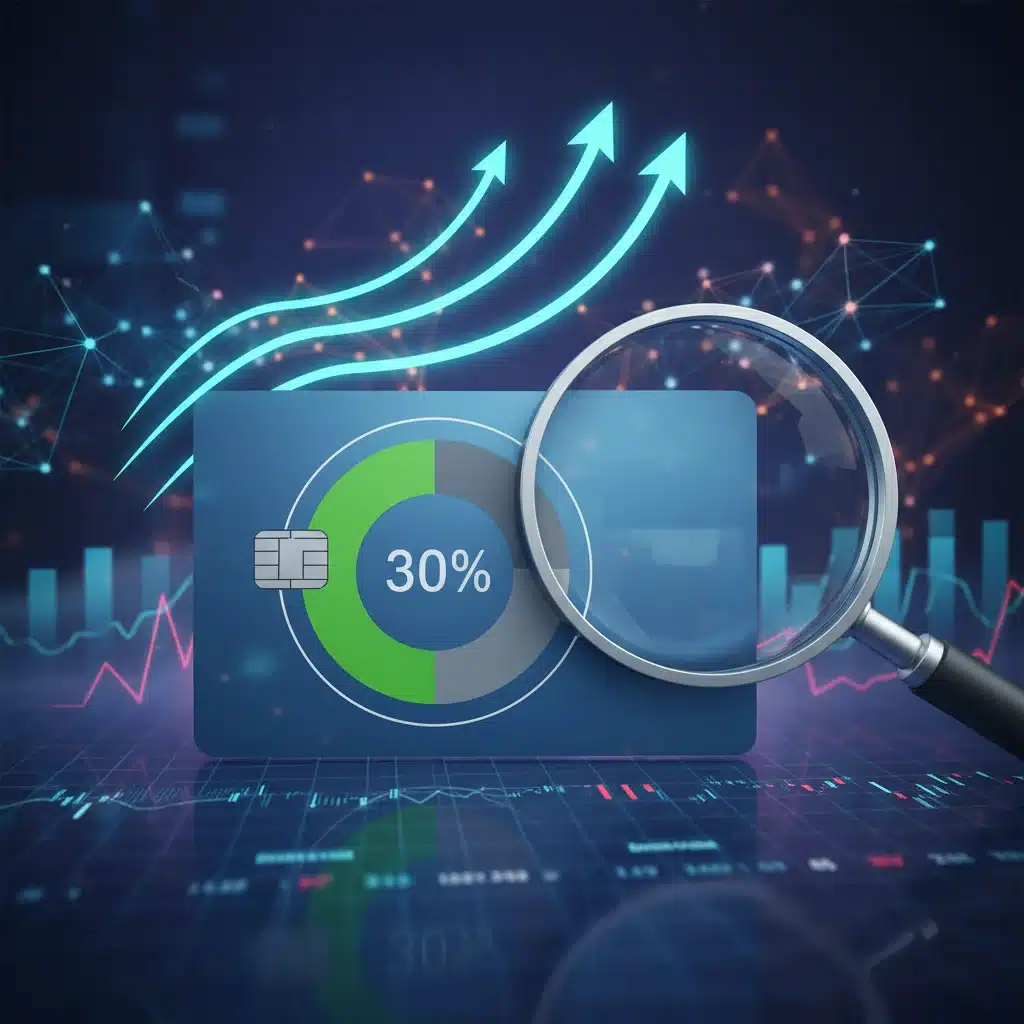
Among the various factors that make up your credit score, credit utilization (often called ‘amounts owed’) typically accounts for about 30% of your FICO score. This makes it the second most important factor, right after payment history (which accounts for 35%). Given its substantial weight, even small changes in your utilization can lead to noticeable shifts in your credit score, sometimes quite rapidly.
The Mythical (But Powerful) 30% Rule
You’ve likely heard the advice: keep your credit utilization below 30%. This isn’t an arbitrary number; it’s a widely accepted guideline rooted in how credit scoring models tend to operate. While not an official rule set by credit bureaus, it’s a benchmark that has proven effective for most consumers in maintaining a healthy credit score.
What Happens Above 30%?
When your credit utilization creeps above the 30% threshold, credit scoring models start to view you as a higher risk. The higher the percentage climbs, the more negatively it impacts your score. For example, a utilization of 50% will hurt your score more than 30%, and 80% will be even more detrimental. It’s not a cliff where your score suddenly plummets at 30.01%, but rather a gradient where the negative impact becomes increasingly pronounced as utilization rises.
Why Not Aim for 0%?
While a very low utilization is generally good, a 0% utilization across all accounts might not be ideal either. Credit scoring models like to see that you are actively using credit responsibly. If you never use your credit cards, there’s less data for the bureaus to assess your repayment behavior. A low, but not zero, utilization (e.g., 1-10%) often yields the best results for your score, demonstrating that you can manage credit without maxing it out.
Credit Utilization in the Current Economic Climate
The current economic environment, characterized by fluctuating interest rates, inflation, and sometimes uncertain job markets, amplifies the importance of managing your credit utilization effectively. Here’s why:
Increased Reliance on Credit
During economic downturns or periods of high inflation, many individuals find themselves relying more heavily on credit cards to cover daily expenses or unexpected costs. This increased usage can quickly push utilization ratios higher, potentially damaging credit scores at a time when good credit is most needed.
Higher Interest Rates
With central banks often raising interest rates to combat inflation, the cost of carrying a balance on credit cards has become significantly more expensive. A high credit utilization ratio, coupled with high interest rates, can lead to a vicious cycle of debt, making it harder to pay down balances and reduce utilization.
Lender Scrutiny
In uncertain economic times, lenders tend to become more cautious. They scrutinize credit applications more closely, and a strong credit score, heavily influenced by a healthy credit utilization ratio, becomes even more critical for approval on loans, mortgages, or lines of credit. A high utilization ratio might not only lead to denial but also to less favorable terms, such as higher interest rates or stricter repayment schedules.
Job Security and Income Fluctuations
Economic shifts can lead to job insecurity or reduced income for some households. In such scenarios, maintaining a low credit utilization ratio provides a crucial buffer, ensuring access to emergency funds through credit if absolutely necessary, without immediately jeopardizing your credit standing.
Strategies to Optimize Your Credit Utilization Ratio
Proactive management is key to keeping your credit utilization in check and boosting your credit score. Here are several actionable strategies:
1. Pay Down Balances Regularly
This is the most straightforward and effective method. If possible, pay off your credit card balances in full each month. If that’s not feasible, aim to pay significantly more than the minimum payment. The lower your balance, the lower your utilization.
2. Make Multiple Payments Per Month
Credit card issuers typically report your balance to the credit bureaus once a month, usually on your statement closing date. By making payments throughout the month, especially before your statement closing date, you can ensure that a lower balance is reported, thus reducing your reported utilization.
3. Request a Credit Limit Increase
If you have a good payment history and a stable income, you can ask your credit card issuer for a credit limit increase. If approved, this immediately increases your total available credit, which can lower your utilization ratio even if your balance remains the same. Be cautious, however: only do this if you trust yourself not to spend the extra credit. An increased limit should not be an invitation to take on more debt.
4. Open a New Credit Card (Strategically)
Opening a new credit card can increase your total available credit, thereby lowering your overall utilization ratio. However, this strategy comes with caveats. Applying for new credit results in a hard inquiry on your credit report, which can temporarily ding your score. Also, new accounts lower your average age of accounts, another factor in credit scoring. This strategy is best for those with already strong credit who are looking for a long-term boost and can manage the new credit responsibly.
5. Spread Your Spending Across Cards
If you have multiple credit cards, avoid maxing out one card while others remain unused. Instead, try to distribute your spending or keep balances low across all cards. Remember, credit bureaus look at both individual card utilization and your overall utilization.
6. Monitor Your Credit Report Regularly
Regularly check your credit reports from all three major bureaus (Experian, Equifax, TransUnion) for errors. An incorrect high balance or an unauthorized account could artificially inflate your utilization ratio. You can get free copies of your credit report annually from AnnualCreditReport.com.

7. Consider a Balance Transfer
If you have high balances on several cards with high interest rates, a balance transfer to a new card with a 0% introductory APR can give you breathing room to pay down debt without accruing additional interest. This can help reduce your utilization on the original cards, but be mindful of balance transfer fees and ensure you can pay off the balance before the promotional period ends.
Real-World Scenarios and Their Impact
Let’s consider a few scenarios to illustrate the practical impact of credit utilization:
Scenario 1: The Diligent Borrower
Sarah has two credit cards, each with a $5,000 limit, totaling $10,000 in available credit. She uses one card for everyday expenses, typically incurring $1,000 in charges each month. She pays off the full balance before the due date. Her utilization is 10% ($1,000 / $10,000). Sarah enjoys an excellent credit score, making her eligible for the best interest rates on a new car loan.
Scenario 2: The Stressed Spender
Mark also has $10,000 in total available credit across two cards. Due to unexpected medical bills and reduced work hours, he has accumulated balances of $4,000 on one card and $3,000 on the other, totaling $7,000. His utilization is 70% ($7,000 / $10,000). Mark’s credit score has dropped significantly. When he applies for a personal loan to consolidate his debt, he’s offered a much higher interest rate due to his high-risk profile, making repayment more challenging.
Scenario 3: The Strategic Planner
Emily has one credit card with a $2,000 limit and a balance of $1,500, resulting in a high 75% utilization. She decides to open a new credit card with a $3,000 limit. After the hard inquiry, her total available credit becomes $5,000. Her total debt remains $1,500. Her overall utilization drops to 30% ($1,500 / $5,000). While her average age of accounts slightly decreased, the significant drop in utilization helps her credit score begin to recover, making her eligible for better financial products in the future.
The Psychological Aspect of Credit Utilization
Beyond the numbers, managing your credit utilization also has a significant psychological component. Consistently carrying high balances can lead to stress, anxiety, and a feeling of being trapped by debt. Conversely, actively managing your utilization, seeing your balances decrease, and watching your credit score improve can be incredibly empowering and motivating. It reinforces positive financial habits and builds confidence in your ability to handle your finances effectively.
Building a Habit of Low Utilization
The goal isn’t just to hit the 30% mark once; it’s to maintain a low utilization ratio consistently. This requires developing good financial habits:
- Budgeting: Create and stick to a budget that ensures you’re not overspending on your credit cards.
- Emergency Fund: Build an emergency fund to cover unexpected expenses, reducing the need to rely on credit cards for emergencies.
- Automated Payments: Set up automated payments to ensure you never miss a due date and can consistently pay down balances.
- Regular Review: Periodically review your credit card statements and credit reports to catch any discrepancies and stay aware of your spending habits.
The Role of Different Credit Accounts
It’s important to differentiate between revolving credit and installment credit when discussing utilization. Credit utilization primarily applies to revolving accounts, which have a credit limit that you can borrow against repeatedly, such as credit cards and lines of credit. Installment loans, like mortgages, car loans, or student loans, have a fixed repayment schedule and a set loan amount. While your payment history on these loans is crucial for your credit score, their outstanding balance doesn’t directly factor into your credit utilization ratio in the same way revolving credit does.
Secured vs. Unsecured Cards
For individuals with limited credit history or poor credit, secured credit cards can be an excellent tool to build or rebuild credit. With a secured card, you put down a deposit, which often becomes your credit limit. Managing a secured card responsibly, by keeping utilization low and paying on time, will positively impact your credit utilization ratio and overall credit score, paving the way for unsecured credit in the future.
Advanced Strategies and Considerations
For those looking to fine-tune their credit management, here are a few advanced considerations:
Understanding Reporting Dates
As mentioned, credit card companies typically report your balance to the credit bureaus on your statement closing date. If you’re planning to apply for a significant loan (like a mortgage) in the near future, it can be beneficial to pay down your credit card balances to a very low level (even 1-5%) a few days before your statement closing date. This ensures the lowest possible utilization is reported, potentially giving your score a temporary boost when it matters most.

Authorized Users
Being an authorized user on someone else’s credit card can impact your credit utilization. If the primary cardholder maintains a low utilization, it can positively reflect on your credit report. However, if they carry high balances, it could negatively affect your score. Choose wisely who you become an authorized user for, or who you add as one.
The ‘Credit Mix’ Factor
While credit utilization focuses on revolving credit, your overall ‘credit mix‘ (having a healthy combination of revolving and installment accounts) also contributes to your credit score, albeit to a lesser extent (around 10%). Demonstrating responsible management across different types of credit shows lenders you can handle various financial obligations.
Conclusion: Mastering Your Financial Destiny
In an economy that demands financial prudence and adaptability, understanding and actively managing your credit utilization ratio is no longer optional; it’s a necessity. The 30% rule serves as a powerful beacon, guiding you towards responsible credit habits that can significantly bolster your credit score. By consistently keeping your balances low, making timely payments, and strategically utilizing your available credit, you not only improve your creditworthiness but also gain greater control over your financial destiny.
Remember, your credit score is a dynamic reflection of your financial behavior. By prioritizing a healthy credit utilization ratio, you’re not just playing by the rules of the credit system; you’re building a robust foundation for future financial opportunities, from securing a home loan to launching a business. Take charge of your credit utilization today, and watch your financial future unfold with greater security and possibility.