
In the intricate world of personal finance, your credit score acts as a powerful gatekeeper, influencing everything from loan approvals to interest rates and even rental applications. A seemingly small dip in this three-digit number can have far-reaching consequences, costing you thousands over your lifetime. What many don’t realize is that often, these detrimental drops aren’t due to poor financial habits but rather to insidious credit report errors lurking within their files. This comprehensive guide will take you on a 3-month credit report deep dive, equipping you with the knowledge and strategies to identify and rectify these inaccuracies, potentially boosting your score by 20 points or more.
Understanding your credit report is the first, crucial step toward financial empowerment. It’s not merely a historical record; it’s a living document that constantly evolves, reflecting your financial interactions. Unfortunately, human error, data entry mistakes, and even identity theft can introduce errors that unfairly penalize you. Our mission over the next three months is to systematically dissect your credit reports, uncover these hidden issues, and embark on a journey to reclaim your financial standing.
The Critical Importance of a 3-Month Deep Dive into Your Credit Report
Why a 3-month deep dive? Because a single glance isn’t enough. Your credit report is a dynamic document, updated by various creditors and data furnishers. A thorough, sustained review allows you to:
- Catch Recurring Errors: Some errors might be corrected only to reappear later. A longer monitoring period helps identify persistent issues.
- Monitor Dispute Progress: Disputes take time. A 3-month window provides ample opportunity to file, track, and follow up on your claims.
- Identify Subtle Discrepancies: Minor differences across the three major bureaus (Equifax, Experian, and TransUnion) can be easily missed in a quick review but become apparent with sustained attention.
- Understand Reporting Cycles: Different creditors report at different times of the month. A longer review period ensures you see a full cycle of reporting.
Ignoring these potential errors is akin to leaving money on the table. Each negative mark, regardless of its origin, can drag down your score, making it harder and more expensive to achieve your financial goals. By committing to this deep dive, you’re not just fixing a number; you’re investing in your financial future.
Month 1: The Initial Scan and Data Collection – Unmasking Obvious Credit Report Errors
Step 1: Obtain Your Free Credit Reports
The Fair Credit Reporting Act (FCRA) grants you the right to one free credit report from each of the three major credit bureaus (Equifax, Experian, and TransUnion) annually. The only authorized website for this is AnnualCreditReport.com. Do not be fooled by look-alike sites.
Action Plan for Month 1, Week 1:
- Visit AnnualCreditReport.com and request all three reports simultaneously.
- Print or save digital copies of each report. Having physical copies allows for easier annotation.
Step 2: Scrutinize Personal Information
This might seem basic, but incorrect personal details are common credit report errors and can cause significant problems. Check for:
- Name: Any misspellings, old names, or variations?
- Addresses: Former addresses you don’t recognize, or incorrect current addresses?
- Date of Birth: Even a single digit error can be problematic.
- Social Security Number: This is critical. Any discrepancy here is a red flag for identity theft.
- Employment Information: Old employers or incorrect job titles.
Action Plan for Month 1, Week 2:
- Go through each report, highlighting any incorrect personal information.
- Cross-reference across all three reports. Are the errors consistent or unique to one bureau?
Step 3: Examine Account Information – The Heart of Your Credit Profile
This is where most impactful credit report errors reside. You’ll need to go line by line, account by account.
- Account Numbers: Do you recognize all listed accounts? Fraudulent accounts are a major sign of identity theft.
- Account Status: Are accounts correctly reported as open, closed, or paid off?
- Balances: Do the reported balances match your records or recent statements?
- Payment History: This is crucial. Look for late payments you know you made on time, or payments marked late when the account was current.
- Credit Limits: Are your credit limits accurately reported? An incorrectly low limit can negatively impact your credit utilization ratio.
- Dates: Account opening dates, last activity dates, and date of last payment.
Action Plan for Month 1, Week 3 & 4:
- For each account, verify its accuracy against your personal records (bank statements, loan documents, credit card statements).
- Highlight every single discrepancy, no matter how small.
- Pay special attention to negative items (late payments, collections, charge-offs). Verify the dates and accuracy of these entries.
Remember, patience is key during this initial scan. The more thorough you are now, the more effective your dispute process will be.
Month 2: Deeper Dive and Dispute Preparation – Tackling Complex Credit Report Errors
Now that you’ve identified potential credit report errors, it’s time to gather evidence and prepare your disputes.
Step 4: Gather Supporting Documentation
You can’t just claim an error; you need to prove it. For each highlighted error, find supporting documents:
- Bank statements showing on-time payments.
- Canceled checks.
- Official letters from creditors confirming account status or balances.
- Police reports for identity theft.
- Court documents for bankruptcies or judgments.
- Personal notes or calendars tracking payments.
Action Plan for Month 2, Week 1:
- Organize your highlighted errors by credit bureau.
- For each error, compile relevant supporting documents. Make copies; never send originals.
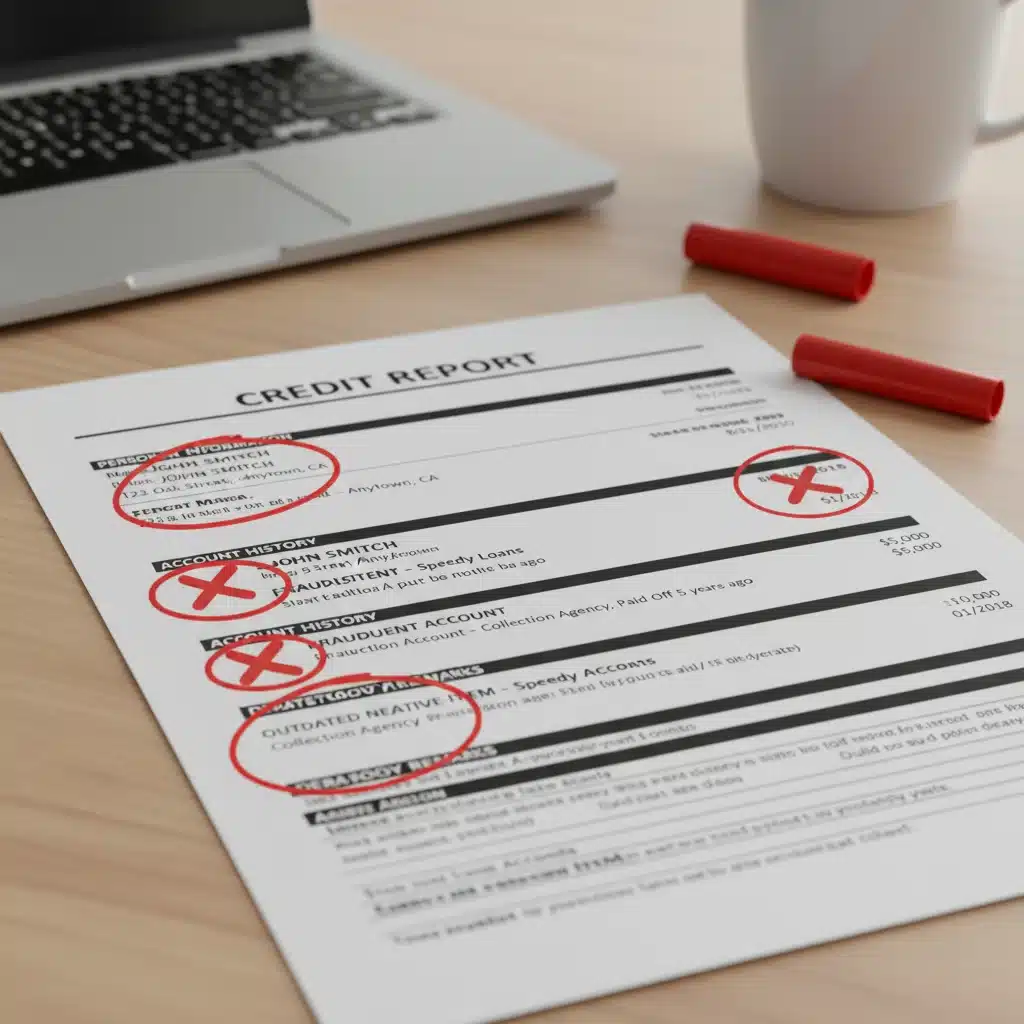
Step 5: Understand Different Types of Errors
Knowing the type of error helps in crafting an effective dispute. Common credit report errors include:
- Identity Errors: Mixed files (your information mixed with someone’s else’s), incorrect personal details.
- Reporting Errors: Accounts reported multiple times, closed accounts showing as open, incorrect payment statuses, incorrect balances.
- Fraudulent Accounts: Accounts opened in your name without your knowledge.
- Outdated Information: Negative information (like a bankruptcy) remaining on your report beyond its legal reporting period (typically 7-10 years).
Action Plan for Month 2, Week 2:
- Categorize each of your identified errors. This will help you tailor your dispute letters.
Step 6: Craft Your Dispute Letters
You generally have two options for disputing errors: online or by mail. While online is faster, certified mail provides a paper trail, which is often preferred for more serious disputes.
Your dispute letter should be clear, concise, and professional. Include:
- Your full name, address, and Social Security Number.
- A clear statement that you are disputing information on your credit report.
- Identify the specific item(s) you are disputing, including the account number and creditor.
- Explain why you believe the information is inaccurate.
- Request that the information be investigated and corrected or removed.
- Enclose copies of your supporting documents.
Action Plan for Month 2, Week 3 & 4:
- Draft a separate dispute letter for each credit bureau that has the error. Even if the same error appears on all three, send individual letters.
- Attach copies of your supporting documents to each letter.
- Send letters via certified mail with a return receipt requested. Keep copies of everything you send.
Under the FCRA, credit bureaus have 30 days (sometimes 45 days if you provide additional information during the dispute process) to investigate your claim and respond. This is where the 3-month timeline becomes crucial.
Month 3: Follow-Up, Escalation, and Ongoing Monitoring – Securing Your Financial Future from Credit Report Errors
The final month is dedicated to monitoring the progress of your disputes, taking further action if necessary, and establishing good long-term habits.
Step 7: Monitor Dispute Progress and Review Results
After 30-45 days, you should receive a response from the credit bureaus. They will either confirm the correction, state that the information was verified as accurate, or request more information.
Action Plan for Month 3, Week 1 & 2:
- Upon receiving responses, carefully review them.
- If the error was corrected, congratulations! Verify this by requesting an updated credit report (you are entitled to a free updated report if an error was found and corrected).
- If the bureau states the information was verified as accurate, but you still believe it’s wrong, you have options.
Step 8: Escalation Strategies for Unresolved Credit Report Errors
Don’t give up if your initial dispute is denied. You have several avenues for escalation:
- Dispute Directly with the Furnisher: Contact the creditor or data furnisher (e.g., the bank, credit card company) directly. Often, they can correct errors at their source. Send a dispute letter to them with your evidence.
- Add a Statement of Dispute: If an error cannot be resolved, you have the right to add a 100-word statement to your credit report explaining your side of the story. While it won’t remove the negative item, it can provide context for lenders.
- Contact the Consumer Financial Protection Bureau (CFPB): The CFPB is a government agency that protects consumers in the financial marketplace. You can submit a complaint online, and they will forward it to the company for a response.
- Consider Legal Action: In severe cases, especially involving identity theft or persistent refusal to correct legitimate errors, you might consult with a consumer law attorney.
Action Plan for Month 3, Week 3:
- For any unresolved disputes, choose your next course of action: dispute with furnisher, add a statement, or file a CFPB complaint.
- Execute your chosen strategy, ensuring to keep detailed records of all communications.

Step 9: Ongoing Monitoring and Best Practices
Your 3-month deep dive has set a strong foundation, but credit health is an ongoing process. To prevent future credit report errors and maintain a healthy score:
- Regularly Monitor Your Reports: Make it a habit to check one credit report every four months (e.g., Equifax in January, Experian in May, TransUnion in September). This way, you review all three annually without requesting them all at once.
- Review Credit Score Monitoring Services: Many credit card companies offer free credit score and report monitoring. Utilize these tools for alerts on significant changes.
- Maintain Good Credit Habits: Pay bills on time, keep credit utilization low (ideally below 30%), and avoid opening too many new accounts at once.
- Be Vigilant Against Identity Theft: Regularly check bank and credit card statements for suspicious activity. Consider freezing your credit if you’re concerned.
Action Plan for Month 3, Week 4:
- Set up a recurring reminder to check your credit reports every four months.
- Enroll in free credit monitoring services offered by your banks or credit card providers.
- Continue to practice excellent financial habits.
The Impact of Fixing Credit Report Errors on Your Score
Successfully removing credit report errors can have a dramatic positive effect on your credit score. Negative items, even small ones, disproportionately impact your score. Incorrect late payments, collections, or fraudulent accounts can suppress your score significantly. By eliminating these inaccuracies, you remove the anchors holding your score down. It’s not uncommon for individuals to see their scores jump by 20, 50, or even 100 points after successfully disputing and removing serious errors.
Think of your credit score as a reflection of your financial reliability. When errors paint an inaccurate picture, you’re unfairly penalized. Correcting these errors means your score can finally reflect your true financial behavior, opening doors to better interest rates, easier loan approvals, and greater financial freedom.
Conclusion: Empowering Yourself Against Credit Report Errors
Embarking on a 3-month credit report deep dive might seem daunting, but the potential rewards are immense. By systematically reviewing your reports, meticulously documenting errors, and diligently disputing inaccuracies, you take a powerful step towards financial well-being. Don’t let hidden credit report errors dictate your financial future. Take control, empower yourself with knowledge, and watch your credit score climb. Your financial health is worth the effort.