Chapter 7 vs. Chapter 13: 2026 Bankruptcy Guide
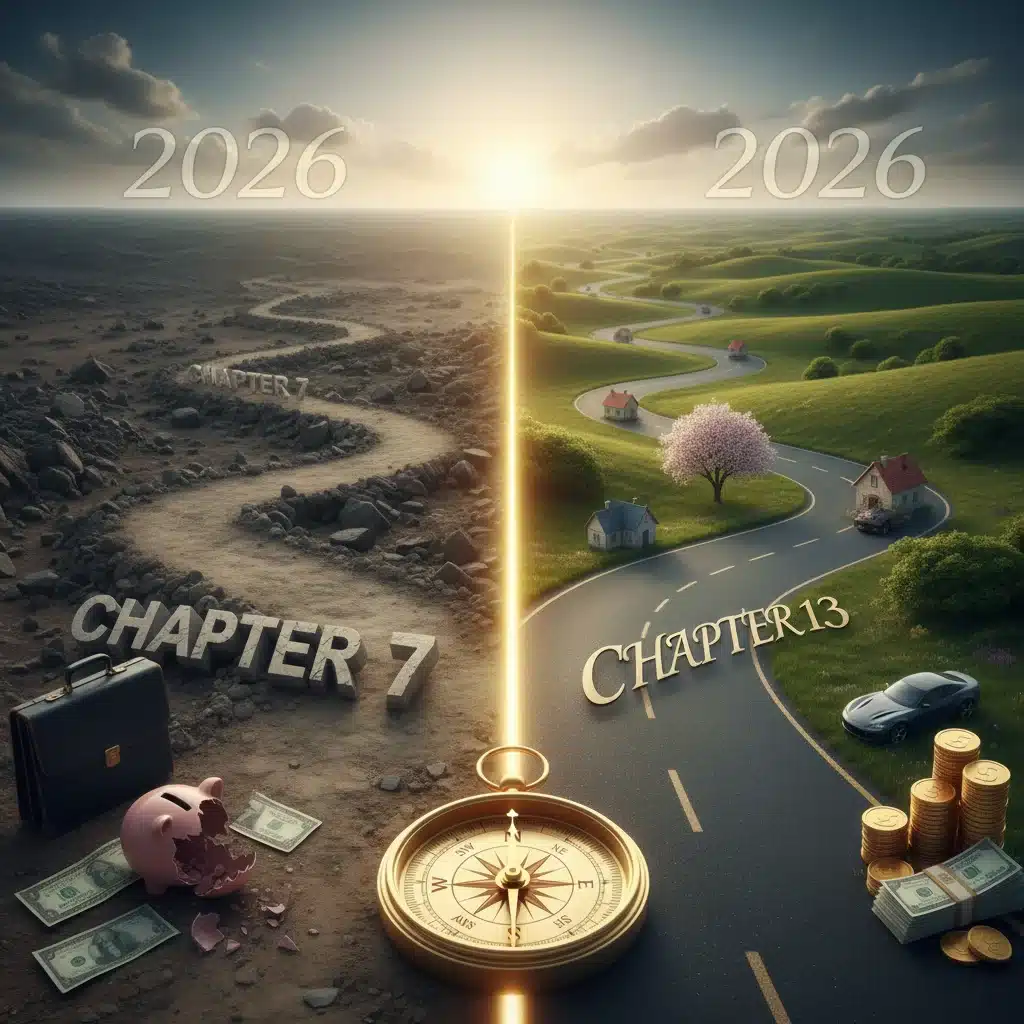
Navigating Chapter 7 vs. Chapter 13 Bankruptcy in 2026: Which Debt Relief Path is Right for You?
In 2026, facing overwhelming debt can feel like an insurmountable challenge. For many, the concept of bankruptcy emerges as a potential lifeline, offering a structured legal process to manage or eliminate financial obligations. However, the world of bankruptcy is not monolithic; it primarily offers two distinct paths for individuals: Chapter 7 and Chapter 13. Understanding the fundamental differences between these two options is crucial for making an informed decision that aligns with your financial goals and current circumstances. This comprehensive guide will delve into the intricacies of both Chapter 7 and Chapter 13 bankruptcy, providing you with the knowledge needed to navigate this complex landscape in 2026.
The choice between Chapter 7 and Chapter 13 is not merely a matter of preference; it hinges on several key factors, including your income, assets, the type of debt you hold, and your long-term financial objectives. Each chapter comes with its own set of eligibility requirements, benefits, and potential drawbacks. For those struggling with debt, distinguishing between these options can be the first step towards a fresh financial start. We will explore the eligibility criteria, the dischargeable debts, the impact on assets, and the duration of each process, ensuring you have a clear picture of what to expect.
As we move through 2026, economic shifts and potential legislative updates can subtly influence bankruptcy proceedings. While the core tenets of Chapter 7 and Chapter 13 remain largely consistent, staying informed about the current legal landscape is vital. This article aims to provide a timeless understanding of these bankruptcy types, while also acknowledging the contemporary context. Our focus on Bankruptcy Chapter Comparison will equip you with the insights necessary to evaluate which option is best suited for your unique situation, ultimately empowering you to make a decision that paves the way for financial recovery and stability.
Understanding Chapter 7 Bankruptcy: The Liquidation Path
Chapter 7 bankruptcy, often referred to as ‘liquidation bankruptcy,’ is designed for individuals with limited income who cannot afford to pay back their debts. Its primary goal is to provide a relatively quick discharge of most unsecured debts, offering a fresh start. In exchange for this discharge, a bankruptcy trustee may sell certain non-exempt assets to pay creditors. However, in many Chapter 7 cases, debtors are able to retain all of their property due to state and federal exemption laws.
Eligibility for Chapter 7: The Means Test in 2026
To qualify for Chapter 7 bankruptcy, you must pass the ‘means test.’ This test determines whether your income is low enough to justify a Chapter 7 filing. The means test compares your average monthly income over the past six months to the median income for a household of your size in your state. If your income is below the median, you generally qualify. If it’s above the median, further calculations are required to determine if you have enough disposable income to pay a portion of your unsecured debts. The specific median income figures are updated regularly, so it’s essential to use the most current data for 2026 when assessing your eligibility. This is a critical step in any Bankruptcy Chapter Comparison.
Beyond the income requirement, you must also not have received a Chapter 7 discharge in the last eight years or a Chapter 13 discharge in the last six years. Furthermore, if you’ve had a previous bankruptcy case dismissed within the last 180 days due to your failure to appear or comply with court orders, or if you voluntarily dismissed it after creditors sought relief from the automatic stay, you might be ineligible for Chapter 7.
What Happens to Your Assets in Chapter 7?
One of the most common concerns about Chapter 7 is the potential loss of assets. While Chapter 7 is a liquidation bankruptcy, most debtors do not lose any property. This is due to bankruptcy exemptions, which protect certain types and amounts of property from being sold by the trustee. Exemptions vary significantly by state, and some states allow debtors to choose between state and federal exemption schemes. Common exempt assets include:
- A portion of the equity in your home (homestead exemption).
- A portion of the equity in your vehicle.
- Household goods and furnishings.
- Tools of your trade.
- Retirement accounts and pensions.
- Certain personal injury awards.
It’s crucial to understand your state’s specific exemption laws or the federal exemptions to accurately assess what property you might keep. An experienced bankruptcy attorney can help you navigate these complex rules and ensure you maximize your protections. This aspect is often a major deciding factor in the Bankruptcy Chapter Comparison.
Dischargeable Debts in Chapter 7
Chapter 7 bankruptcy is highly effective at discharging many types of unsecured debt. Common debts that can be discharged include:
- Credit card debt.
- Medical bills.
- Personal loans.
- Utility bills (pre-filing).
- Certain judgments.
However, certain debts are generally non-dischargeable, meaning they will survive your bankruptcy and you will still be obligated to pay them. These typically include:
- Most student loan debt (unless undue hardship is proven, which is very difficult).
- Most tax debts.
- Child support and alimony obligations.
- Debts for death or personal injury caused by driving while intoxicated.
- Debts incurred through fraud.
Understanding which debts can and cannot be discharged is paramount when considering Chapter 7. It directly impacts the effectiveness of the bankruptcy in providing true debt relief. This distinction is a cornerstone of any effective Bankruptcy Chapter Comparison.
The Chapter 7 Process and Timeline
The Chapter 7 process is typically much quicker than Chapter 13, often concluding within 4 to 6 months. Here’s a general overview of the steps:
- Credit Counseling: Before filing, you must complete an approved credit counseling course.
- Petition Filing: Your attorney prepares and files your bankruptcy petition and schedules with the court.
- Automatic Stay: Upon filing, an ‘automatic stay’ goes into effect, immediately halting most collection activities, including lawsuits, wage garnishments, and repossessions.
- Meeting of Creditors (341 Meeting): Approximately 20-40 days after filing, you will attend a brief meeting with your trustee and any creditors who choose to appear. This is primarily an opportunity for the trustee to verify information in your petition.
- Debtor Education Course: After filing but before discharge, you must complete a second approved financial management course.
- Discharge: If no issues arise, your debts are typically discharged about 60 days after the 341 meeting.
The relatively short timeline and immediate relief from collection efforts make Chapter 7 an attractive option for many. However, its suitability depends heavily on your income and assets, as highlighted in this Bankruptcy Chapter Comparison.
Exploring Chapter 13 Bankruptcy: The Reorganization Path
Chapter 13 bankruptcy, often called ‘reorganization bankruptcy,’ is designed for individuals with regular income who can afford to repay some or all of their debts over time through a court-approved repayment plan. Unlike Chapter 7, Chapter 13 allows debtors to keep all of their property, exempt or non-exempt, as long as they make their plan payments. This option is particularly beneficial for those who have non-exempt assets they wish to protect or who have fallen behind on mortgage or car payments and want to catch up.
Eligibility for Chapter 13: Income and Debt Limits in 2026
To qualify for Chapter 13, you must have a ‘regular income,’ meaning your income is stable and sufficient to make plan payments. There are also specific debt limits for Chapter 13, which are adjusted periodically. As of 2026, these limits typically restrict unsecured debts to a certain amount (e.g., around $465,275) and secured debts to another amount (e.g., around $1,395,875). If your debts exceed these statutory limits, you might be ineligible for Chapter 13 and would need to explore other options, such as Chapter 11 bankruptcy if you are a high-income individual with significant debt. Keeping these limits in mind is crucial for any Bankruptcy Chapter Comparison.
Similar to Chapter 7, there are also restrictions on repeat filings. You cannot receive a Chapter 13 discharge if you received a Chapter 7, 11, or 12 discharge within the past four years, or a Chapter 13 discharge within the past two years.
The Chapter 13 Repayment Plan
The cornerstone of Chapter 13 is the repayment plan. This plan outlines how you will repay your creditors over a period of three to five years. The length of the plan depends on your income:
- If your income is below the state median, your plan will typically be three years.
- If your income is above the state median, your plan will typically be five years.
The plan must propose to pay certain debts in full, such as priority debts (e.g., recent tax debts, child support) and secured debts (e.g., mortgage arrears, car loans). Unsecured creditors will receive a portion of their debt based on your disposable income and the value of your non-exempt assets. The plan must be feasible, meaning you must demonstrate to the court that you can make the proposed payments. 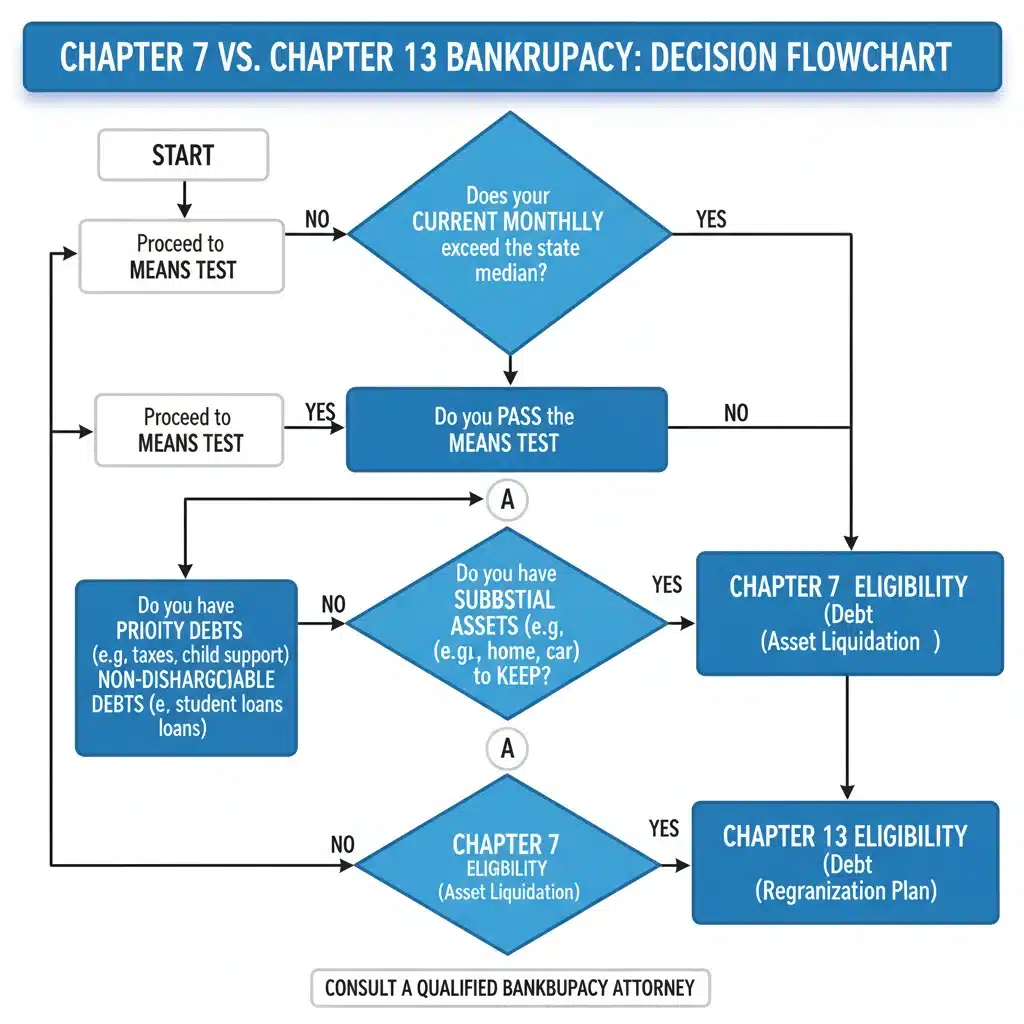
Benefits of Chapter 13: Saving Your Assets and More
Chapter 13 offers several distinct advantages, particularly for debtors with specific financial goals:
- Stopping Foreclosure and Repossession: Chapter 13 is an excellent tool for stopping foreclosure on your home or repossession of your car. The repayment plan allows you to catch up on missed payments over time while keeping your property.
- Protecting Non-Exempt Assets: Unlike Chapter 7, you don’t have to sell non-exempt assets. As long as you propose to pay unsecured creditors at least as much as they would have received in a Chapter 7 liquidation, you can keep all your property.
- ‘Cram Down’ on Secured Debts: In some cases, Chapter 13 allows you to reduce the principal balance of a secured loan (like a car loan or investment property mortgage) to the current market value of the collateral, provided certain conditions are met. This is known as a ‘cram down.’
- Strip Off Junior Liens: If your home is worth less than the balance of your first mortgage, Chapter 13 may allow you to ‘strip off’ junior liens (like a second mortgage or home equity line of credit), treating them as unsecured debt that can be discharged.
- Co-Debtor Protection: The automatic stay in Chapter 13 can extend to co-signers on consumer debts, providing protection to friends or family who co-signed loans with you.
These benefits highlight why Chapter 13 is often the preferred choice for individuals with substantial assets or specific types of secured debt, making it a strong contender in any Bankruptcy Chapter Comparison.
Dischargeable Debts in Chapter 13
Chapter 13 can discharge many of the same unsecured debts as Chapter 7, including credit card debt, medical bills, and personal loans. Additionally, Chapter 13 can discharge some debts that are non-dischargeable in Chapter 7, such as:
- Certain non-support divorce debts.
- Debts for willful and malicious injury to property (not persons).
- Certain tax debts that are older than three years.
It’s important to note that student loans, child support, alimony, and most recent tax debts remain non-dischargeable in Chapter 13, just as in Chapter 7. However, the ability to address mortgage arrears and certain other debts makes Chapter 13 a powerful tool for comprehensive financial restructuring, a key aspect of our Bankruptcy Chapter Comparison.
The Chapter 13 Process and Timeline
The Chapter 13 process is longer and more involved than Chapter 7, typically lasting three to five years. Key steps include:
- Credit Counseling: Similar to Chapter 7, an approved credit counseling course is required before filing.
- Petition Filing and Plan Proposal: You file your petition along with a proposed repayment plan outlining how you intend to repay your debts.
- Automatic Stay: The automatic stay takes effect, protecting you from creditors while your plan is developed and confirmed.
- Meeting of Creditors (341 Meeting): You attend a meeting with your trustee and creditors, where the trustee will review your plan and ask questions.
- Plan Confirmation Hearing: The court reviews your proposed plan to ensure it meets legal requirements and is feasible. If approved, the plan is ‘confirmed.’
- Making Plan Payments: You begin making regular payments to the Chapter 13 trustee, who then distributes the funds to your creditors according to the confirmed plan.
- Debtor Education Course: You must complete a financial management course before receiving your discharge.
- Discharge: Once all plan payments are successfully completed, any remaining dischargeable debts are eliminated.
The commitment required for a multi-year repayment plan is significant, but for many, it’s a worthwhile trade-off to protect assets and reorganize finances effectively. This long-term commitment is a crucial differentiator in any Bankruptcy Chapter Comparison.
Key Differences: A Direct Bankruptcy Chapter Comparison
To help solidify your understanding, let’s summarize the core distinctions between Chapter 7 and Chapter 13 bankruptcy:
Income and Eligibility
- Chapter 7: Primarily for debtors with lower incomes who pass the means test, indicating they cannot afford to repay their debts.
- Chapter 13: For debtors with regular, stable income sufficient to make plan payments, even if their income is above the state median.
Asset Protection
- Chapter 7: Non-exempt assets may be sold by the trustee to pay creditors. However, many debtors keep all their property due to exemptions.
- Chapter 13: Debtors keep all their assets, exempt or non-exempt, as long as they successfully complete their repayment plan.
Debt Repayment
- Chapter 7: Most unsecured debts are discharged without any repayment to creditors (unless there are non-exempt assets).
- Chapter 13: Debts are repaid through a court-approved plan over three to five years. The amount repaid depends on disposable income and asset values.
Duration of Process
- Chapter 7: Typically 4-6 months from filing to discharge.
- Chapter 13: Typically 3-5 years, the length of the repayment plan.
Impact on Secured Debts (Mortgages, Car Loans)
- Chapter 7: Does not allow you to force creditors to accept a repayment plan for secured debts. You must either reaffirm the debt (agree to keep paying it), surrender the property, or redeem the property (pay its market value in a lump sum). It can stop foreclosure temporarily, but doesn’t provide a long-term cure for arrears.
- Chapter 13: Allows you to catch up on arrears for secured debts (like mortgages and car loans) through the repayment plan, potentially saving your home or vehicle. It can also allow for ‘cram downs’ or ‘lien stripping’ in certain situations.
Credit Impact
- Both Chapter 7 and Chapter 13 will negatively impact your credit score and remain on your credit report for a significant period. Chapter 7 stays on for 10 years, while Chapter 13 stays on for 7 years. However, many debtors find they can begin rebuilding their credit relatively quickly after bankruptcy discharge.
Choosing the Right Path: Factors to Consider in 2026
Deciding between Chapter 7 and Chapter 13 is a significant decision with long-term financial implications. Here are key factors to carefully consider when undertaking your personal Bankruptcy Chapter Comparison:
Your Income Level and Stability
If your income is low and you genuinely cannot afford to make monthly payments towards your debts, Chapter 7 might be your best option. If you have a steady income and can afford regular payments, Chapter 13 offers a structured way to manage your debts while protecting your assets. The means test for Chapter 7 and the regular income requirement for Chapter 13 are foundational to this decision.
Types of Debt You Owe
Are your debts primarily unsecured (credit cards, medical bills) or do you have significant secured debts (mortgage, car loans) that you want to save? If you’re behind on your mortgage and want to keep your home, Chapter 13 is generally the superior choice as it provides a mechanism to cure arrears. If your debts are mostly unsecured and you have few non-exempt assets, Chapter 7 could offer a quicker discharge.
Assets You Wish to Protect
Do you own significant non-exempt assets (e.g., a second home, valuable investments, expensive vehicles with substantial equity) that you are determined to keep? If so, Chapter 13 allows you to retain these assets by committing to a repayment plan. If your assets are primarily exempt, Chapter 7 might still be viable without losing property.
Previous Bankruptcy Filings
Your bankruptcy filing history will directly impact your eligibility. Check the look-back periods for both Chapter 7 and Chapter 13 discharges to ensure you qualify for your desired chapter.
Desire for a Repayment Plan vs. Quick Discharge
Are you looking for a swift resolution to your debt problems, even if it means potentially losing some non-exempt assets? Or are you prepared for a multi-year repayment plan to reorganize your finances and protect your property? Your personal preference for a quick discharge versus a structured repayment plan is a valid consideration in this Bankruptcy Chapter Comparison.
The Role of a Bankruptcy Attorney
Navigating the complexities of bankruptcy law, especially when weighing Chapter 7 vs. Chapter 13, is challenging. The bankruptcy code is intricate, and state laws regarding exemptions and procedures can vary. A qualified bankruptcy attorney can:
- Assess your financial situation comprehensively.
- Help you understand the means test and eligibility requirements for both chapters.
- Advise you on which assets are exempt and non-exempt in your specific jurisdiction.
- Develop a feasible Chapter 13 repayment plan or prepare a thorough Chapter 7 petition.
- Represent you in court and at the 341 meeting of creditors.
- Ensure all necessary documents are filed correctly and on time.
- Guide you through the entire process, minimizing stress and maximizing your chances of a successful outcome.
Attempting to file for bankruptcy without legal representation can lead to significant errors, dismissal of your case, or even the loss of assets you could have protected. The investment in legal counsel is often invaluable for securing your financial future. 
Life After Bankruptcy: Rebuilding Your Financial Future
Filing for bankruptcy, whether Chapter 7 or Chapter 13, is not the end of your financial journey; it’s a new beginning. While your credit will take a hit, there are concrete steps you can take to rebuild your financial health:
- Secure a Secured Credit Card: These cards require a deposit, acting as your credit limit, and can help you re-establish a positive payment history.
- Obtain a Small Installment Loan: A small loan that you repay consistently can also demonstrate your ability to manage credit responsibly.
- Monitor Your Credit Report: Regularly check your credit reports for inaccuracies and dispute any errors immediately.
- Budgeting and Financial Planning: Develop and stick to a realistic budget. Consider working with a financial advisor to create a long-term financial plan.
- Save for Emergencies: Build an emergency fund to avoid relying on credit in the future.
- Avoid New Debt: Be cautious about taking on new debt, especially immediately after bankruptcy. Focus on living within your means.
Many individuals successfully rebuild their credit and achieve financial stability within a few years post-bankruptcy. The key is consistent, responsible financial behavior and learning from past challenges. This forward-looking perspective is essential when considering any Bankruptcy Chapter Comparison.
Conclusion: Making Your Informed Decision in 2026
The decision between Chapter 7 and Chapter 13 bankruptcy in 2026 is deeply personal and depends entirely on your unique financial circumstances. Chapter 7 offers a rapid discharge of unsecured debts for those with limited income and assets, providing a swift fresh start. Chapter 13, on the other hand, provides a structured repayment plan over several years, allowing individuals with regular income to protect valuable assets, catch up on secured debts, and reorganize their financial lives. This thorough Bankruptcy Chapter Comparison underscores that neither option is inherently ‘better’ than the other; rather, one will be more appropriate for your specific situation.
Before making any decisions, it is imperative to conduct a comprehensive assessment of your income, expenses, assets, and liabilities. More importantly, seeking the advice of a knowledgeable and experienced bankruptcy attorney is highly recommended. They can provide tailored guidance, explain the nuances of federal and state bankruptcy laws in 2026, and help you navigate the process effectively, ensuring you choose the debt relief path that best positions you for a sustainable financial future. Remember, taking action to address your debt is a brave and proactive step towards regaining control of your financial well-being.