Debt Management Plans 2026: Reduce Monthly Payments by 25%

In an increasingly complex financial landscape, managing debt effectively has become a paramount concern for millions. As we look towards 2026, the promise of reducing monthly payments by a significant margin, perhaps even 25% or more, through strategic financial tools like Debt Management Plans (DMPs) offers a beacon of hope. This comprehensive guide will delve deep into the world of Debt Management Plans, exploring how they work, their benefits, and why 2026 could be your year to achieve substantial financial relief.
Understanding the Debt Burden in 2026
Before we explore the solutions, it’s crucial to understand the scope of the problem. Consumer debt continues to be a major challenge for households worldwide. High-interest credit cards, personal loans, and other unsecured debts can quickly spiral out of control, leading to stress, missed payments, and a declining credit score. The economic predictions for 2026 suggest that while some sectors may see growth, many individuals will still grapple with the aftermath of inflation and fluctuating interest rates, making effective debt management more critical than ever.
Many individuals find themselves in a cycle of minimum payments, where a significant portion of their payment goes towards interest, doing little to reduce the principal. This can be a disheartening and seemingly endless struggle. The psychological toll of persistent debt can also be immense, affecting mental health, relationships, and overall quality of life. Recognizing these challenges is the first step towards seeking viable solutions like Debt Management Plans.
The average household debt load is a statistic that often surprises many. From credit card balances to medical bills, the accumulation of unsecured debt can feel overwhelming. Without a clear strategy, it’s easy to fall behind, incurring late fees and further damaging credit. This is where the structured approach of a Debt Management Plan can make a substantial difference, offering a clear path to financial recovery and reduced monthly obligations.
The Rising Cost of Living and Its Impact on Debt
The cost of living has been on an upward trajectory, impacting household budgets and often pushing individuals to rely more heavily on credit to cover essential expenses. From groceries to utilities, the increased financial strain makes it harder to pay down existing debts. This cyclical pattern can be broken with the right tools and strategies. Debt Management Plans are designed to alleviate this pressure by restructuring payments into a more manageable format.
Furthermore, unforeseen financial emergencies, such as medical issues or job loss, can exacerbate an already precarious debt situation. Having a robust plan in place before these events occur, or quickly adopting one in their wake, is vital. The proactive nature of engaging with a Debt Management Plan provider allows for a structured response to these challenges, preventing further financial deterioration.
The interest rates on unsecured debts, particularly credit cards, can be astronomically high, making it difficult to make headway on the principal. Even with consistent payments, the balance can seem to barely budge. This is a common frustration that DMPs specifically address by working with creditors to secure lower interest rates, thereby making payments more impactful.
What Exactly Are Debt Management Plans (DMPs)?
A Debt Management Plan is a formal agreement between you, your creditors, and a credit counseling agency. The agency negotiates with your creditors on your behalf to reduce interest rates, waive fees, and combine multiple unsecured debts into one manageable monthly payment. The primary goal is to help you pay off your debts in a structured and affordable way, typically over three to five years, with the potential to significantly reduce your monthly outlay.
Unlike debt consolidation loans, which require good credit and involve taking out a new loan to pay off old ones, DMPs don’t involve taking on new debt. Instead, they focus on making your existing debts more affordable. This distinction is crucial, especially for individuals who may not qualify for traditional consolidation loans due to a less-than-perfect credit history. DMPs offer an alternative path to financial relief without further credit inquiries or new loan obligations.
The process begins with a thorough financial assessment by a certified credit counselor. They will review your income, expenses, and debts to determine if a DMP is the right solution for your specific situation. This personalized approach ensures that the plan is tailored to your financial capacity, making it sustainable and effective. The counselor acts as an intermediary, advocating for your best interests with your creditors.
Key Features and Benefits of DMPs
- Reduced Interest Rates: One of the most significant advantages of a DMP is the ability to secure lower interest rates from creditors. This means more of your payment goes towards the principal, accelerating your debt payoff.
- Consolidated Monthly Payment: Instead of juggling multiple due dates and varying payment amounts, a DMP combines all your eligible debts into a single, predictable monthly payment. This simplifies your finances and reduces the risk of missed payments.
- Waived Fees: Many creditors are willing to waive late fees and over-limit fees once you are enrolled in a DMP, further reducing your overall debt burden.
- Structured Payoff Plan: DMPs provide a clear timeline for becoming debt-free, usually within 3 to 5 years. This structured approach offers a sense of control and a tangible goal to work towards.
- Protection from Creditor Harassment: Once you’re enrolled in a DMP, creditors typically stop contacting you directly, as they communicate with the credit counseling agency instead. This can provide much-needed peace of mind.
- Improved Financial Literacy: Credit counseling agencies often provide financial education and budgeting tools, empowering you with the knowledge to maintain financial health long after your debts are paid off.
These benefits collectively contribute to the potential for a 25% or even greater reduction in your monthly payments, making debt repayment a far less daunting task. The psychological relief alone can be transformative, allowing individuals to focus on other aspects of their lives without the constant shadow of debt.
How Debt Management Plans Can Reduce Monthly Payments by 25% (or More) in 2026
The 25% reduction in monthly payments isn’t an arbitrary number; it’s a realistic outcome for many individuals who enroll in a Debt Management Plan. This reduction is primarily achieved through a combination of lower interest rates and the elimination of various fees. Let’s break down the mechanics:
Lower Interest Rates: The Game Changer
Creditors are often willing to reduce interest rates for clients enrolled in a DMP because they recognize that receiving consistent payments, even at a lower rate, is preferable to a potential default or bankruptcy. For example, a credit card with a 24% APR might be reduced to 8-10% or even less. This substantial drop in interest means that a much larger portion of your monthly payment goes directly to reducing your principal balance, rather than just covering interest charges.
Consider a scenario where you have $10,000 in credit card debt at 20% APR, with a minimum payment of $300. If your interest rate is reduced to 10% through a DMP, your effective payment towards the principal dramatically increases, allowing the total monthly payment to be lowered while still making significant progress on the debt. This mechanism is the cornerstone of how DMPs achieve such significant reductions.
Eliminating Fees and Penalties
Late fees, over-limit fees, and other penalties can quickly add up, making it harder to escape the debt cycle. As part of a DMP, credit counseling agencies negotiate with creditors to waive these fees. This not only reduces the total amount you owe but also frees up more of your monthly payment to go towards the principal. The absence of these punitive charges can make a noticeable difference in your overall financial burden.
The cumulative effect of waived fees over the course of a 3-5 year plan can be substantial. These savings directly contribute to the overall reduction in the total amount paid and, consequently, the monthly payment amount. It’s a win-win: creditors receive consistent payments, and you get a clearer path to becoming debt-free without the added burden of fees.
Streamlined Budgeting and Financial Discipline
While not a direct reduction in the payment itself, the structured nature of a DMP fosters better financial discipline. Having a single, predictable monthly payment simplifies budgeting and helps you avoid falling behind. This improved financial management can indirectly lead to savings by preventing new debt accumulation and encouraging more mindful spending habits.
The credit counseling agency often provides budgeting advice and resources, helping you identify areas where you can cut expenses and allocate more funds towards your debt repayment. This holistic approach empowers you to take control of your finances, ensuring that the benefits of the DMP extend beyond just reduced payments.
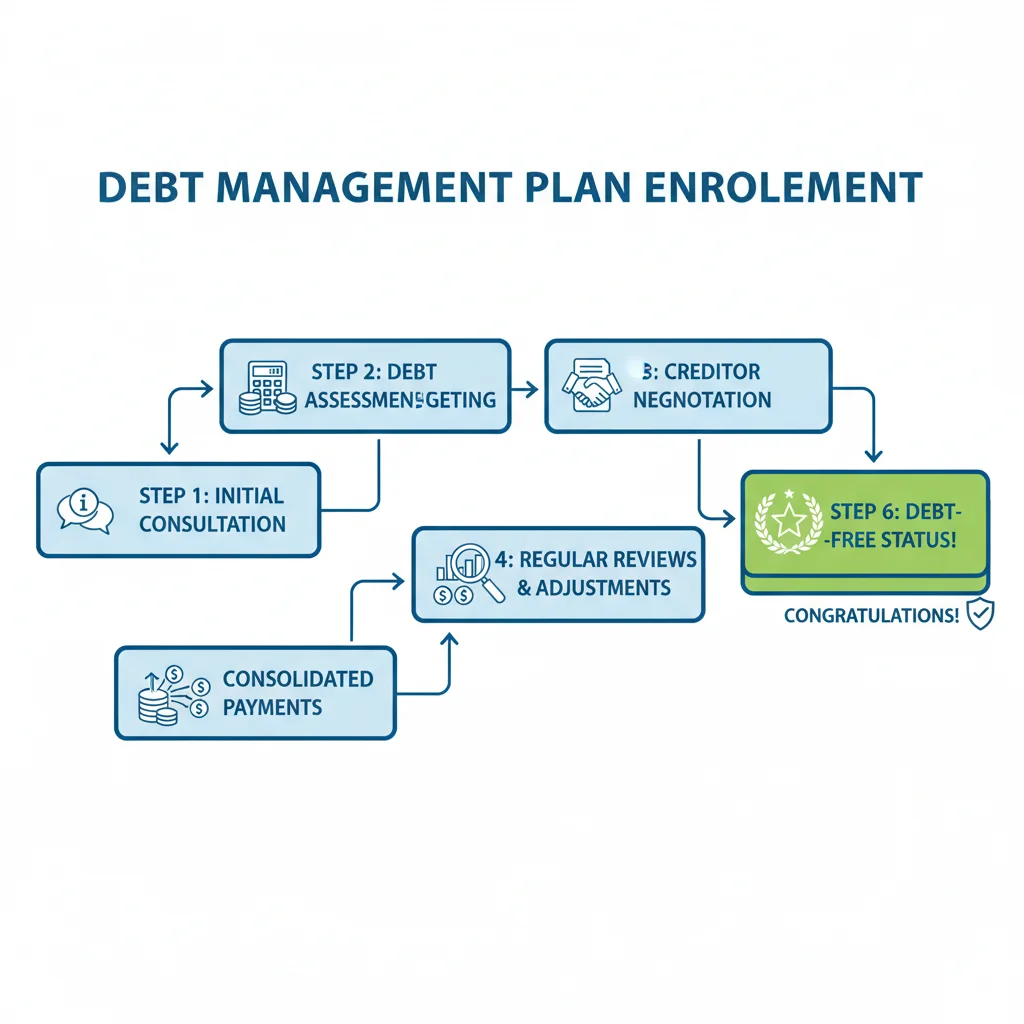
The Step-by-Step Process of Enrolling in a DMP
Embarking on a Debt Management Plan journey involves several key steps. Understanding this process can help demystify DMPs and encourage you to take the first step towards financial freedom.
1. Initial Consultation with a Credit Counseling Agency
The first step is to contact a reputable, non-profit credit counseling agency. During your initial consultation, a certified credit counselor will conduct a thorough review of your financial situation. This includes examining your income, expenses, assets, and all your outstanding debts. They will help you understand your options and determine if a DMP is the most suitable solution for you.
This consultation is usually free and confidential. Be prepared to provide detailed information about your financial health. The counselor will also assess your eligibility for a DMP, considering factors such as the type of debt you have and your ability to make consistent payments, even if reduced.
2. Budget Analysis and Debt Assessment
Following the initial consultation, the counselor will work with you to create a realistic budget. This involves identifying areas where you can cut back on expenses to free up funds for your debt payments. They will also meticulously list all your unsecured debts, including credit cards, medical bills, and personal loans, to be included in the plan.
This stage is critical for establishing a sustainable payment plan. The goal is to ensure that the consolidated monthly payment is affordable for you while still allowing you to cover your essential living expenses. Transparency and honesty during this phase are crucial for the success of the DMP.
3. Negotiation with Creditors
Once a budget and debt list are established, the credit counseling agency will contact your creditors on your behalf. They will negotiate for lower interest rates, the waiver of fees, and a more favorable payment schedule. Creditors are often amenable to these negotiations because it increases the likelihood of them recovering at least a portion of the debt, as opposed to a complete loss if you were to declare bankruptcy.
This negotiation process can take some time, but the agency will keep you informed of the progress. During this period, it’s important to continue making any agreed-upon payments to demonstrate your commitment to resolving your debt.
4. Consolidated Monthly Payments
Once agreements are reached with your creditors, you will make a single, consolidated monthly payment to the credit counseling agency. The agency then disburses these funds to your creditors according to the negotiated terms. This simplifies your financial obligations and ensures that all your creditors are paid on time and as agreed.
This streamlined payment process is a major relief for many individuals, eliminating the stress of managing multiple due dates and varying payment amounts. It also helps in rebuilding a positive payment history, which can indirectly benefit your credit score over time.
5. Completing the Plan and Becoming Debt-Free
You will continue to make your consolidated monthly payments until all the debts included in the plan are paid off. This typically takes between three to five years. Throughout this period, the credit counseling agency will provide ongoing support and financial education.
Upon successful completion of the DMP, you will be debt-free from the accounts included in the plan. This is a significant financial milestone, marking the end of a challenging journey and the beginning of a new chapter of financial stability. The discipline and habits developed during the DMP can serve as a foundation for long-term financial health.
Who Can Benefit from Debt Management Plans in 2026?
Debt Management Plans are not a one-size-fits-all solution, but they can be incredibly beneficial for specific individuals and situations. Consider if a DMP might be right for you if:
- You have a significant amount of unsecured debt (credit cards, personal loans, medical bills) that you’re struggling to pay off.
- You’re consistently making only minimum payments, and your debt balance isn’t decreasing significantly.
- You’re facing high interest rates that are making it difficult to make headway on your principal.
- You want to avoid bankruptcy but need a structured way to manage your debt.
- You’re receiving frequent calls from creditors or collection agencies.
- You’re committed to making regular payments and improving your financial habits.
- You have a stable income, even if it’s modest, that allows you to make the consolidated monthly payment.
If you identify with several of these points, exploring a Debt Management Plan in 2026 could be a pivotal step towards regaining control of your financial future. The key is to be proactive and seek help before your debt situation becomes unmanageable.
DMPs vs. Other Debt Relief Options
It’s important to differentiate DMPs from other debt relief options to make an informed decision:
- Debt Consolidation Loans: These involve taking out a new loan to pay off multiple existing debts. They require good credit to qualify for favorable interest rates and might not be an option for everyone.
- Debt Settlement: This involves negotiating with creditors to pay a lump sum that is less than the total amount owed. While it can reduce the principal, it often negatively impacts your credit score and can come with tax implications.
- Bankruptcy: This is a legal process to eliminate or reorganize debt. While it offers a fresh start, it has severe and long-lasting consequences on your credit report and financial standing.
Debt Management Plans typically offer a middle ground, providing a structured repayment plan without the severe credit impact of debt settlement or bankruptcy. They focus on paying back your original debt, albeit with more favorable terms, which is generally viewed more positively by creditors and credit bureaus in the long run.
Choosing the Right Credit Counseling Agency for Your DMP
The success of your Debt Management Plan largely depends on the credit counseling agency you choose. It’s crucial to select a reputable, non-profit organization that prioritizes your financial well-being.
What to Look For:
- Non-Profit Status: Ensure the agency is a non-profit organization. Non-profits are typically focused on helping consumers rather than generating profits.
- Accreditation: Look for agencies accredited by reputable organizations such as the National Foundation for Credit Counseling (NFCC) or the Financial Counseling Association of America (FCAA).
- Certified Counselors: Verify that their counselors are certified and have extensive experience in debt management and financial education.
- Transparent Fees: Reputable agencies will be upfront about any fees they charge. These fees should be reasonable and clearly explained. Avoid agencies that charge exorbitant upfront fees.
- Educational Resources: A good agency will offer financial education and budgeting tools to help you develop sustainable financial habits.
- Positive Reviews and Reputation: Check online reviews and ratings from previous clients to gauge the agency’s effectiveness and customer service.
Taking the time to research and select the right agency is an investment in your financial future. A good agency will act as your advocate, providing guidance and support throughout your entire Debt Management Plan journey.
Potential Impact on Your Credit Score in 2026
Many people worry about the impact of a Debt Management Plan on their credit score. While there can be an initial dip, the long-term effects are often positive, especially compared to the alternatives of continued missed payments, debt settlement, or bankruptcy.
Initial Effects:
- Account Status: Creditors may mark accounts as ‘managed by credit counseling’ or similar, which can be seen by future lenders.
- Credit Card Closures: Some creditors may close accounts once they are included in a DMP. This can reduce your available credit and potentially impact your credit utilization ratio.
Long-Term Benefits:
- Improved Payment History: Consistent, on-time payments through a DMP will positively impact your payment history, which is the most significant factor in your credit score.
- Reduced Debt-to-Income Ratio: As your debts are paid down, your debt-to-income ratio improves, a key metric for lenders.
- Path to Debt-Free Status: Successfully completing a DMP leads to becoming debt-free, which is the ultimate goal for improving your financial health and creditworthiness in the long run.
It’s crucial to understand that while a DMP might not instantly boost your credit score, it provides a structured path to financial stability and eventual credit recovery. The temporary inconveniences are often far outweighed by the benefits of eliminating overwhelming debt and establishing a solid payment history. By 2026, with a successfully completed DMP, you could be in a much stronger credit position than if you had continued to struggle with high-interest debts.

Maximizing Your Success with a Debt Management Plan in 2026
Enrolling in a DMP is a significant step, but your active participation is key to its success. Here are some tips to maximize the benefits and ensure you stay on track:
- Adhere Strictly to Your Budget: The budget created with your counselor is your roadmap to financial freedom. Stick to it diligently to ensure you can make your consolidated payments.
- Avoid New Debt: While on a DMP, it’s crucial to avoid taking on any new debt. This means no new credit cards or unnecessary loans. Focus entirely on paying off your existing obligations.
- Communicate with Your Agency: If you experience any financial difficulties or changes in your income, communicate immediately with your credit counseling agency. They can help you explore options and adjust your plan if necessary.
- Continue Financial Education: Take advantage of the educational resources offered by your agency. The more financially literate you become, the better equipped you’ll be to manage your money after the DMP.
- Monitor Your Progress: Regularly review your statements and track your debt reduction. Seeing your progress can be highly motivating and reinforce your commitment to the plan.
- Build an Emergency Fund: As you progress through your DMP and free up some financial capacity, start building a small emergency fund. This can prevent you from relying on credit cards again for unexpected expenses.
By actively engaging in these practices, you not only ensure the success of your Debt Management Plan but also cultivate healthy financial habits that will serve you well for years to come. The year 2026 can truly mark a turning point in your financial journey.
The Future of Debt Management: What to Expect in 2026 and Beyond
As we move into 2026, the landscape of debt management is continuously evolving. Technology plays an increasingly important role, with more sophisticated tools for budgeting, tracking expenses, and connecting with credit counselors online. The emphasis on financial literacy and proactive debt management is also growing, with a greater focus on preventative measures rather than just reactive solutions.
Government regulations and economic policies may also influence the availability and effectiveness of Debt Management Plans. Staying informed about these changes through your credit counseling agency or financial news outlets is always a good practice. However, the core principles of DMPs – reducing interest, consolidating payments, and providing a structured path to debt freedom – are likely to remain steadfast.
The goal for 2026 and beyond is not just to get out of debt, but to stay out of debt. DMPs offer a powerful mechanism to achieve the former, and the financial education component helps lay the groundwork for the latter. By embracing these tools and committing to a healthier financial lifestyle, individuals can look forward to a future free from the burden of overwhelming debt.
Conclusion: Your Path to Financial Freedom in 2026 with Debt Management Plans
The prospect of reducing your monthly debt payments by 25% or more in 2026 through a Debt Management Plan is not just a pipe dream; it’s a tangible reality for many. By understanding what DMPs are, how they work, and who can benefit, you can make an informed decision about your financial future.
Debt Management Plans offer a structured, supportive, and effective way to tackle unsecured debt, providing relief from high interest rates, consolidating payments, and offering a clear timeline to becoming debt-free. While there may be short-term impacts on your credit, the long-term benefits of financial stability and improved creditworthiness are substantial.
If you’re feeling overwhelmed by debt, don’t wait. Reach out to a reputable non-profit credit counseling agency today. Take the first step towards a more secure and prosperous 2026. Your financial freedom is within reach, and a Debt Management Plan could be the key to unlocking it.