The 50/30/20 Rule in 2026: Effectiveness Across Income Levels

The 50/30/20 Rule in 2026: A Data-Backed Comparison of Its Effectiveness for Different Income Levels
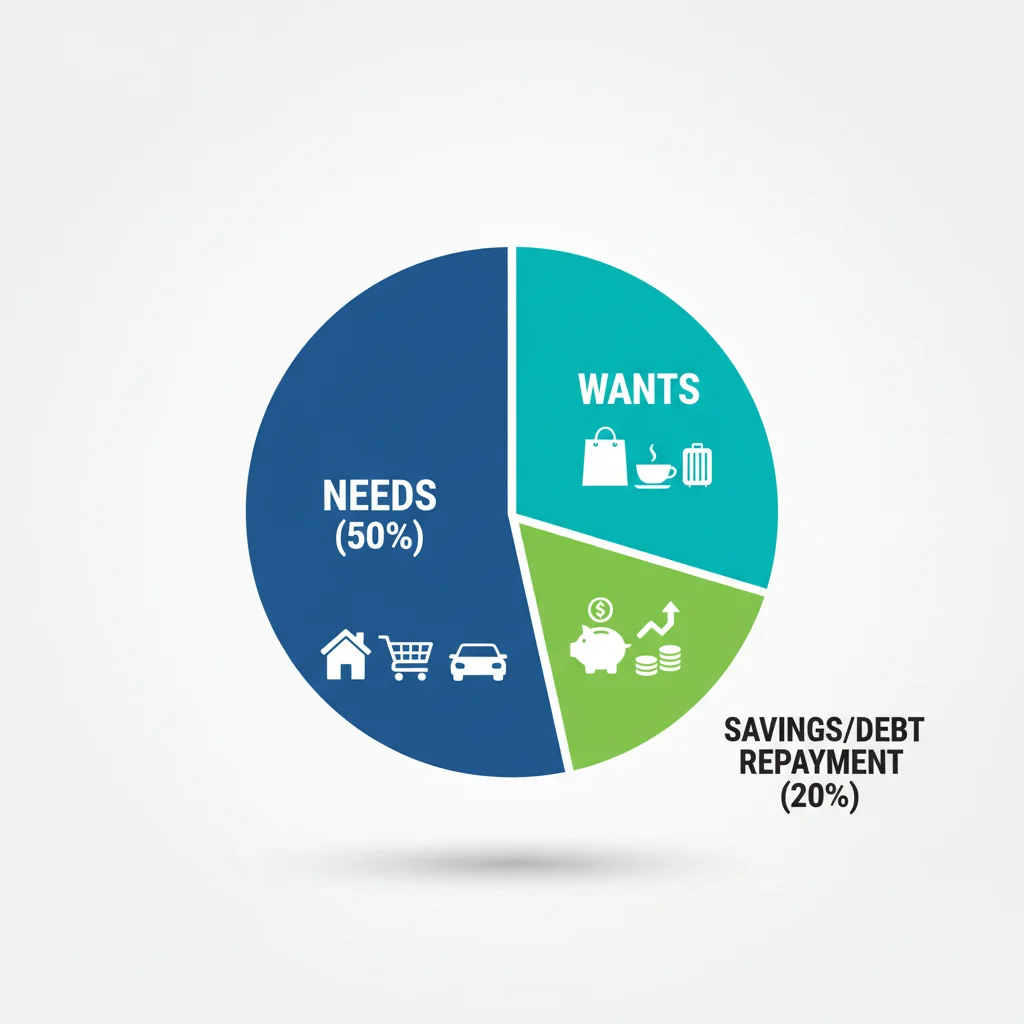
In the ever-evolving landscape of personal finance, budgeting remains a cornerstone of financial stability and growth. Among the myriad of budgeting methodologies, the 50/30/20 rule effectiveness stands out for its simplicity and intuitive appeal. Proposed by Senator Elizabeth Warren in her book All Your Worth: The Ultimate Lifetime Money Plan, this rule suggests allocating 50% of your after-tax income to needs, 30% to wants, and 20% to savings and debt repayment. While seemingly straightforward, its universal applicability, particularly in a dynamic economic environment like 2026, warrants a deeper, data-backed investigation.
The year 2026 brings with it new economic realities, including potential shifts in inflation, interest rates, cost of living, and employment landscapes. These factors inevitably influence how different income levels can realistically adhere to and benefit from the 50/30/20 rule. This comprehensive analysis will delve into the nuances of applying this popular budgeting framework across various income brackets, offering insights into its strengths, limitations, and how it can be adapted for optimal financial health in the modern era.
Our objective is to provide a robust comparison, examining how individuals in low, middle, and high-income categories navigate the demands of needs, wants, and savings within the 50/30/20 structure. We will leverage contemporary economic data and financial planning principles to offer practical advice, ensuring that the 50/30/20 rule effectiveness remains a valuable tool for financial empowerment, regardless of one’s starting point.
Understanding the Core Principles of the 50/30/20 Rule
Before we dissect its application across different income levels, let’s briefly recap the foundational components of the 50/30/20 rule:
- 50% for Needs: This category encompasses essential expenses that you cannot live without. This includes housing (rent/mortgage), utilities, groceries, transportation, insurance premiums, and minimum loan payments. The key here is ‘essential’ – distinguishing between what is truly necessary for survival and what is merely convenient or desired.
- 30% for Wants: Wants are discretionary expenses that improve your quality of life but are not strictly necessary. This could include dining out, entertainment, vacations, hobbies, subscription services, new gadgets, and upgraded clothing. This category provides flexibility and allows for personal enjoyment, but it’s also the first place to look for cuts if financial adjustments are needed.
- 20% for Savings & Debt Repayment: This crucial portion is dedicated to building your financial future. It includes contributions to emergency funds, retirement accounts (401k, IRA), investment portfolios, and paying down high-interest debt beyond the minimum payments (e.g., credit card debt, personal loans). This component is vital for long-term financial security and wealth accumulation.
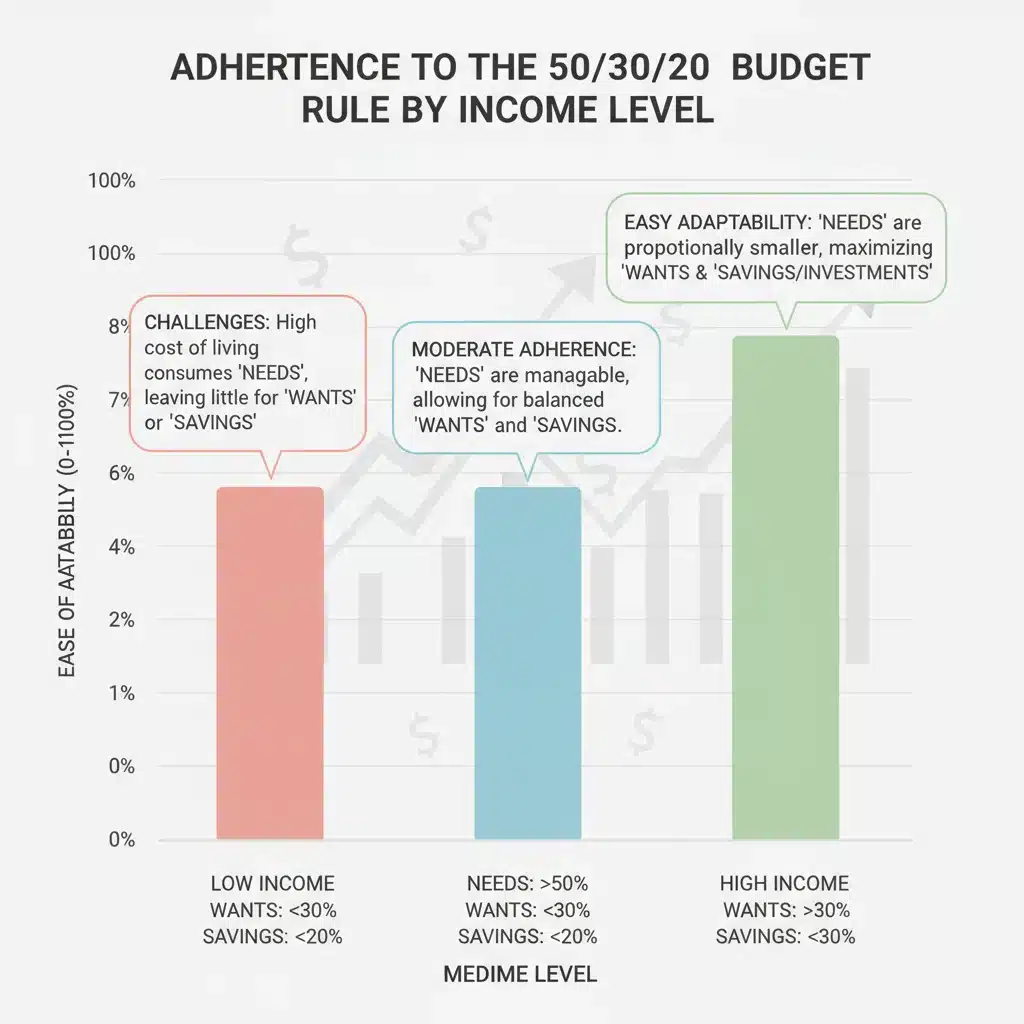
The beauty of the 50/30/20 rule lies in its simplicity and adaptability. It provides a clear framework without being overly restrictive, allowing individuals to tailor their spending within these broad categories. However, the ease with which one can adhere to these percentages varies significantly based on income and geographical location, particularly in 2026 where economic disparities might be more pronounced.
The 50/30/20 Rule and Low-Income Earners in 2026
For individuals and households with lower incomes, adhering strictly to the 50/30/20 rule can present significant challenges. In 2026, with potentially rising costs of living in many urban and even rural areas, the ‘Needs’ category often consumes a much larger percentage of their income than the suggested 50%.
Challenges Faced by Low-Income Earners:
- Disproportionate Cost of Living: Housing, transportation, and healthcare costs can easily exceed 50% of a low income, leaving very little, if anything, for wants or savings. Data from recent economic reports indicates that for many, essential living costs have outpaced wage growth, making the 50% for needs an aspirational, rather than realistic, target.
- Limited Discretionary Income: The ‘Wants’ category often shrinks dramatically, or disappears entirely, as every dollar must be stretched to cover necessities. This can lead to financial stress and a feeling of deprivation.
- Difficulty in Saving: Allocating 20% to savings and debt repayment can feel impossible when basic needs are barely met. This creates a vicious cycle where individuals struggle to build an emergency fund or pay down debt, making them vulnerable to financial shocks.
Strategies for Low-Income Earners to Adapt the Rule:
While strict adherence might be difficult, the underlying principles of the 50/30/20 rule can still offer guidance. The key is adaptation and prioritization:
- Focus on Minimizing Needs: This might involve seeking affordable housing options, utilizing public transportation, batch cooking to reduce grocery bills, and exploring government assistance programs for food or utilities. Every dollar saved in the ‘Needs’ category can be redirected.
- Redefine ‘Wants’: For low-income earners, ‘wants’ might shift from luxury items to small comforts that prevent burnout, such as a streaming service or an occasional inexpensive outing. The goal is not to eliminate them entirely, but to be highly selective.
- Prioritize Even Small Savings: Even if 20% is unattainable, aiming for 5% or 10% is a crucial starting point. Automating even small transfers to a savings account can build momentum. Prioritizing high-interest debt repayment, even if it’s just an extra $10 a month, can significantly impact long-term financial health.
- Increase Income: While challenging, exploring opportunities for side hustles, skill development, or seeking higher-paying employment can directly improve adherence to the rule.
The 50/30/20 rule effectiveness for low-income individuals in 2026 hinges on flexibility and a relentless focus on optimizing every financial decision. It becomes less about strict percentages and more about the mindset of conscious allocation.
The 50/30/20 Rule and Middle-Income Earners in 2026
Middle-income earners typically find the 50/30/20 rule more accessible, though not without its own set of challenges. This demographic often balances rising family expenses, mortgage payments, student loan debt, and the desire for a comfortable lifestyle. In 2026, the squeeze on the middle class could intensify due to inflation and stagnant wage growth in certain sectors.
Common Scenarios for Middle-Income Earners:
- Balancing Family Needs and Wants: For families, the ‘Needs’ category can expand to include childcare, education expenses, and larger housing. This often means carefully managing the ‘Wants’ category to ensure both immediate comfort and future security.
- Student Loan Debt: Many middle-income professionals carry significant student loan burdens, which can eat into the 20% savings/debt repayment category or even spill over into needs if minimum payments are high.
- Lifestyle Creep: As income increases, there’s a natural tendency to upgrade one’s lifestyle. This ‘lifestyle creep’ can make it difficult to stick to the 30% for wants, as discretionary spending expands to fill available income.
Optimizing the 50/30/20 Rule for Middle-Income Earners:
For this group, the 50/30/20 rule effectiveness is often maximized through strategic planning and discipline:
- Strict Categorization: Clearly define what constitutes a ‘need’ versus a ‘want’. For instance, while a car might be a need, a luxury vehicle upgrade could be a want. Regular budget reviews help maintain this distinction.
- Automate Savings: Setting up automatic transfers to savings and investment accounts is a powerful way to ensure the 20% allocation is met consistently before discretionary spending occurs.
- Address High-Interest Debt Proactively: Utilizing the 20% for aggressive repayment of credit card debt or high-interest personal loans can free up significant cash flow in the long run, improving financial flexibility.
- Strategic ‘Want’ Allocation: Middle-income earners have more flexibility in the ‘Wants’ category. This allows for planned indulgences, but also requires conscious choices to avoid overspending. Consider ‘value-based spending’ where wants align with personal values.
- Future Planning: The 20% for savings should be diversified, covering emergency funds, retirement, and potentially short-term goals like a down payment on a home or a child’s education.
The middle-income bracket is where the 50/30/20 rule can truly shine as a guiding principle, provided there’s a commitment to regular financial review and adjustment. The potential for wealth building is significant if the 20% is consistently allocated and invested wisely.
The 50/30/20 Rule and High-Income Earners in 2026
High-income earners often find that the 50/30/20 rule is easily achievable, and in many cases, the 20% for savings can be significantly exceeded. However, this demographic faces its own unique set of challenges, often related to managing wealth and avoiding lifestyle inflation.
Opportunities and Challenges for High-Income Earners:
- Easier Adherence to Needs: The 50% for needs is often easily met, leaving a substantial surplus that can be reallocated. This provides immense financial freedom.
- Risk of Lifestyle Inflation: With higher income comes the temptation to increase spending across all categories, leading to ‘lifestyle creep’ where wants become perceived as needs. This can undermine the effectiveness of the rule if not managed.
- Optimizing the 20% (and Beyond): The primary challenge shifts from simply saving to strategically investing and managing a larger pool of assets for maximum growth and tax efficiency.
- Complex Financial Planning: High-income individuals often have more complex financial situations involving investments, real estate, business ventures, and tax planning, which require more sophisticated strategies than the basic 50/30/20 rule alone can provide.
Maximizing the 50/30/20 Rule for High-Income Earners:
For high-income individuals, the 50/30/20 rule effectiveness becomes a baseline, often serving as a springboard for more aggressive financial strategies:
- Reallocate Surplus: If needs are comfortably met with less than 50%, the surplus can be reallocated to savings/investments (boosting the 20%+) or even to carefully chosen wants.
- Aggressive Savings and Investments: Exceeding the 20% savings target is highly recommended. Focus on maximizing contributions to tax-advantaged accounts (401k, IRA, HSA), exploring real estate investments, and building a diversified investment portfolio.
- Strategic Debt Management: High-income earners might have different types of debt, such as investment property mortgages or business loans. The 20% can be used to strategically pay down these debts or leverage them for further growth.
- Wealth Management and Estate Planning: Beyond the basic rule, high-income individuals benefit greatly from working with financial advisors to address complex issues like tax planning, estate planning, and philanthropic giving.
- Conscious Spending: Despite ample funds, maintaining a conscious approach to ‘wants’ prevents unnecessary spending and ensures that financial resources are directed towards meaningful goals.
For high-income earners, the 50/30/20 rule acts as a powerful guiding principle that encourages a systematic approach to money, even when strict adherence to percentages isn’t necessary. It helps maintain financial discipline amidst abundance.
Data-Backed Insights and Adaptations for 2026
The economic landscape of 2026, characterized by ongoing technological advancements, potential shifts in global markets, and evolving employment trends, necessitates a data-informed approach to budgeting. Our analysis of recent economic indicators and consumer spending patterns reveals several key insights regarding the 50/30/20 rule effectiveness:
- Inflationary Pressures: Persistent inflation, particularly in sectors like housing, food, and energy, continues to strain the ‘Needs’ category for all income levels, but disproportionately impacts low-income households. This means the 50% for needs might need to be adjusted upwards for many, or aggressive cost-cutting measures are required.
- Gig Economy and Income Volatility: The rise of the gig economy and more flexible work arrangements can lead to income volatility. For these individuals, a fixed 50/30/20 split might be less practical. A more flexible approach, perhaps using average income over several months, or prioritizing a larger emergency fund, becomes crucial.
- Technological Tools: The proliferation of budgeting apps and AI-driven financial planning tools makes tracking and adherence to budgeting rules easier than ever. These tools can provide real-time insights, automate savings, and identify spending patterns that hinder adherence to the 50/30/20 rule.
- Mental Health and Financial Well-being: Data increasingly links financial stress to mental health issues. While the 50/30/20 rule aims for financial stability, it’s important to recognize that for some, especially low-income earners, strict adherence can cause more stress. Adaptations that prioritize small, achievable financial wins can be more beneficial for overall well-being.
Recommended Adaptations for 2026:
- The Flexible 50/30/20: Instead of rigid percentages, consider the rule as a guideline. For instance, a 60/20/20 or even 70/20/10 split might be more realistic for low-income individuals, with the goal of gradually shifting towards the ideal 50/30/20 as income grows or expenses decrease.
- Dynamic Budgeting: Regularly review and adjust your budget, perhaps quarterly or semi-annually, to account for changes in income, expenses, and economic conditions. This is particularly important in a rapidly changing environment like 2026.
- Focus on Financial Literacy: Education on managing debt, understanding investments, and identifying financial scams is paramount for all income levels to truly maximize the 50/30/20 rule effectiveness.
- Emergency Fund First: Before aggressively tackling other savings or debt, ensure a robust emergency fund (3-6 months of living expenses) is in place. This provides a crucial safety net against unforeseen circumstances.
- Debt Snowball/Avalanche for the 20%: For the debt repayment portion, consider strategies like the debt snowball (paying smallest debts first for motivational wins) or debt avalanche (paying highest interest debts first for maximum financial impact).
Common Pitfalls and How to Avoid Them
While the 50/30/20 rule is a powerful tool, certain pitfalls can hinder its effectiveness. Awareness of these common mistakes can help individuals stay on track:
- Misclassifying Expenses: One of the most frequent errors is labeling ‘wants’ as ‘needs’. For example, a premium cable package or daily gourmet coffee might be considered needs by some, but are clearly wants. Honest categorization is crucial for accurate budgeting and maximizing the 50/30/20 rule effectiveness.
- Ignoring Small Expenses: The cumulative effect of small, often overlooked expenses (e.g., daily snacks, impulse buys) can significantly impact the ‘Wants’ category. Tracking all spending, even minor transactions, provides a clearer picture of where money is going.
- Lack of Flexibility: Life happens. Unexpected expenses, job changes, or new financial goals can disrupt a rigid budget. The rule should be a flexible guide, not an unbreakable law. Be prepared to adjust percentages as circumstances change.
- Forgetting to Track Progress: A budget is only effective if it’s regularly reviewed. Failing to track spending, review categories, and assess progress can lead to drifting away from the intended allocations.
- Setting Unrealistic Expectations: Especially for those new to budgeting or with lower incomes, expecting to hit perfect 50/30/20 splits immediately can lead to discouragement. Start where you are, make gradual improvements, and celebrate small victories.
The Psychological Aspect of the 50/30/20 Rule
Beyond the numbers, the 50/30/20 rule effectiveness also stems from its psychological impact. It simplifies financial decisions, reducing the overwhelm often associated with budgeting. By clearly delineating categories, it helps individuals make conscious choices about their money.
- Reduces Decision Fatigue: Knowing that 50% is for necessities, 30% for enjoyment, and 20% for the future simplifies spending decisions.
- Promotes Conscious Spending: It encourages individuals to think twice before making discretionary purchases, asking whether an item truly aligns with their ‘wants’ allocation.
- Fosters a Sense of Control: Having a clear plan for your money empowers you, giving a sense of control over your financial destiny, which is a significant factor in reducing financial stress.
- Encourages Goal Setting: The 20% dedicated to savings and debt repayment directly supports short-term and long-term financial goals, providing motivation to stick to the plan.
The success of any budgeting method, including the 50/30/20 rule, relies heavily on consistent application and a positive mindset towards financial management. It’s not just about restricting spending; it’s about aligning your money with your values and future aspirations.
Conclusion: The Enduring Relevance of the 50/30/20 Rule in 2026
As we navigate the complexities of 2026, the 50/30/20 rule effectiveness remains a powerful and relevant framework for personal finance. While its strict adherence may vary significantly across different income levels, its core principles of prioritizing needs, managing wants, and dedicating resources to savings and debt repayment are universally beneficial.
For low-income earners, the rule serves as an aspirational guide, encouraging incremental improvements and strategic adaptations to secure basic needs and build a foundation for future stability. For middle-income individuals, it offers a balanced approach to achieving both present comfort and long-term financial goals. And for high-income earners, it acts as a disciplined baseline, facilitating aggressive wealth accumulation and sophisticated financial planning.
The key to unlocking the full potential of the 50/30/20 rule in 2026 lies in its intelligent application. This means understanding your personal financial situation, being honest about your spending, adapting the percentages as needed, and leveraging available tools and resources. By doing so, individuals at all income levels can harness the power of this simple yet profound budgeting method to achieve greater financial security, freedom, and peace of mind in the years to come.
Ultimately, the 50/30/20 rule is more than just a set of numbers; it’s a philosophy for conscious spending and strategic saving. Its enduring appeal lies in its ability to provide clarity and direction in a world where financial choices can often feel overwhelming. Embrace its principles, adapt them to your unique circumstances, and pave your way to a more secure financial future in 2026 and beyond.