Quarterly Budget Review: Essential for US Households in 2026

In an ever-evolving economic landscape, the traditional annual financial check-up is rapidly becoming an outdated practice. For US households in 2026, the imperative to conduct a quarterly budget review has never been more pronounced. This isn’t just about tweaking numbers; it’s about fostering financial resilience, adapting to change, and proactively steering your household towards its monetary goals. The pace of life, coupled with economic shifts, inflation, and personal milestones, demands a more agile approach to money management. A quarterly budget review serves as that critical mechanism, ensuring your financial plans remain relevant, effective, and aligned with your aspirations.
The concept of a quarterly budget review might sound daunting to some, conjuring images of tedious spreadsheets and complex calculations. However, viewed through the lens of empowerment, it transforms into a powerful tool for financial control and peace of mind. This comprehensive guide will delve into the myriad reasons why a three-month financial health check is indispensable for American families in the current climate, offering actionable insights and strategies to seamlessly integrate this practice into your financial routine. From identifying spending leaks to capitalizing on investment opportunities, a regular, structured look at your finances can unlock significant benefits.
The Shifting Sands of the 2026 Economy: Why Annual Reviews Fall Short
The year 2026 presents a unique set of economic challenges and opportunities that underscore the urgency of a quarterly budget review. Global events, technological advancements, and domestic policies can trigger rapid changes in inflation rates, interest rates, job markets, and consumer prices. An annual review simply cannot keep pace with such dynamism, leaving households vulnerable to unforeseen financial pressures or missing out on potential gains.
Consider the impact of fluctuating energy prices, which can significantly alter transportation and utility costs. Or the rapid evolution of technology, which might introduce new subscription services or necessitate unexpected upgrades. These aren’t annual occurrences; they can happen at any time, subtly eroding your purchasing power or diverting funds from critical savings goals. A quarterly budget review allows you to detect these shifts early, enabling prompt adjustments to your spending habits or income strategies. It acts as an early warning system, preventing minor deviations from snowballing into major financial setbacks.
Furthermore, the investment landscape is perpetually in motion. Quarterly reviews provide an opportunity to assess the performance of your investments, rebalance portfolios if necessary, and ensure they remain aligned with your risk tolerance and long-term objectives. Waiting an entire year could mean missing out on crucial adjustments that could optimize returns or mitigate losses. In essence, the 2026 economy demands vigilance, and a quarterly budget review is the vigilant eye your finances need.
Personal Milestones and Life Changes: Adapting Your Financial Blueprint
Life is a journey punctuated by significant events, and each milestone carries financial implications. Whether it’s a new job, a promotion, a marriage, the birth of a child, a child entering college, a major home repair, or even an unexpected medical expense, these events directly impact your income, expenses, and financial goals. An annual budget review simply isn’t frequent enough to incorporate these changes effectively. By the time the next annual review rolls around, months – or even an entire year – of misaligned financial planning could have passed, potentially leading to missed opportunities or accumulated debt.
A quarterly budget review, on the other hand, provides a structured checkpoint to integrate these life changes into your financial blueprint. For instance, if you receive a promotion and a salary increase, a quarterly review allows you to immediately reallocate those additional funds towards accelerated debt repayment, increased savings, or a new investment. Conversely, if an unexpected expense arises, you can quickly identify areas to temporarily cut back or adjust your savings targets without derailing your entire financial plan.
This proactive approach ensures that your budget remains a living document, evolving with your life rather than becoming a static, irrelevant relic. It empowers you to make informed decisions in real-time, preventing financial stress and fostering a sense of control over your monetary destiny.
Uncovering Spending Leaks and Optimizing Cash Flow
One of the most immediate and tangible benefits of a quarterly budget review is the ability to identify and plug spending leaks. These are often small, seemingly insignificant expenses that, when accumulated over time, can significantly impact your cash flow. Think about unused subscriptions, impulsive online purchases, or frequent small expenditures on convenience items. Individually, they might seem harmless, but collectively, they can drain your bank account.
During a quarterly budget review, you’ll have a fresh perspective on your spending patterns. This closer scrutiny allows you to spot recurring expenses that no longer serve a purpose or areas where you’re consistently overspending. For example, you might realize you’re paying for three streaming services but only actively using one, or that your monthly coffee shop visits are adding up to a substantial sum. These insights are much harder to glean when you only look at your finances once a year, as the details can become blurred over a longer period.
By identifying these leaks, you can make conscious decisions to cut back, reallocate funds, and optimize your cash flow. This freed-up money can then be directed towards more impactful financial goals, such as building an emergency fund, paying down high-interest debt, or contributing more to retirement savings. The power of a quarterly budget review lies in its ability to bring these hidden drains to light, transforming awareness into actionable financial improvement.
Setting and Tracking Financial Goals with Greater Precision
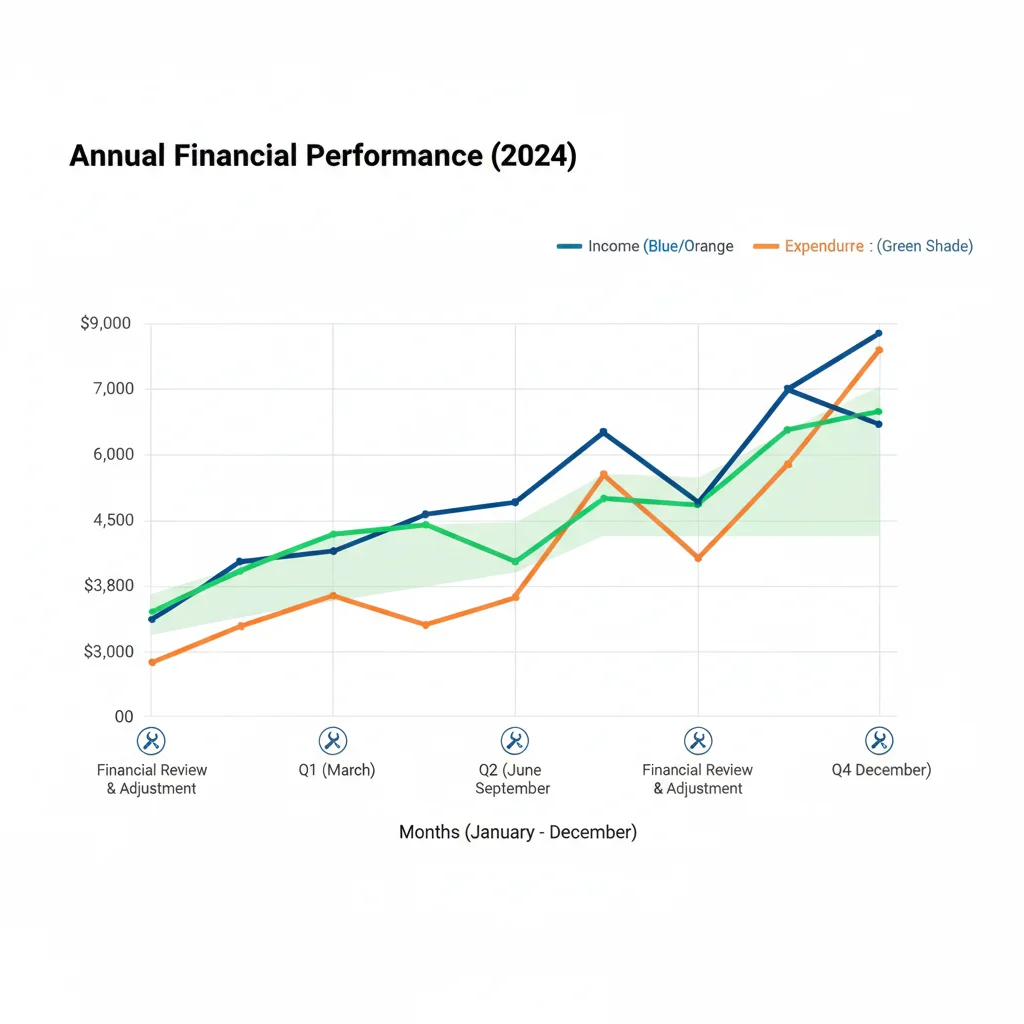
Financial goals, whether short-term or long-term, require consistent monitoring and adjustment. A quarterly budget review provides the ideal framework for this. Instead of waiting an entire year to see if you’re on track to buy a house, save for a down payment, or fund your child’s education, you can assess your progress every three months.
This increased frequency allows for greater precision in tracking. If you find yourself falling behind on a savings goal, a quarterly review enables you to identify the reasons – perhaps unexpected expenses arose, or your income was lower than anticipated – and make immediate adjustments. You can then recalibrate your savings strategy, explore options for increasing income, or temporarily reduce discretionary spending to get back on track.
Conversely, if you’re ahead of schedule, a quarterly review offers the opportunity to accelerate your progress, perhaps by increasing your contributions or exploring new investment avenues. This iterative process of setting, tracking, and adjusting fosters a sense of accomplishment and keeps you motivated. It prevents the disheartening realization at the end of the year that you’ve significantly missed your targets due to a lack of timely oversight. For US households in 2026, where economic conditions can shift rapidly, precise goal tracking through a quarterly budget review is paramount to achieving financial aspirations.
Enhanced Debt Management Strategies
Debt can be a significant burden for many US households. Whether it’s credit card debt, student loans, or a mortgage, effective management is key to financial freedom. A quarterly budget review offers a powerful platform for scrutinizing your debt situation and refining your repayment strategies.
During this review, you can assess interest rates, minimum payments, and the total outstanding balance across all your debts. This regular check-in allows you to identify opportunities for debt consolidation, refinancing, or prioritizing higher-interest debts for accelerated repayment. For example, if you’ve managed to free up some extra cash flow through other budget adjustments, a quarterly review can guide you on the most impactful way to apply those funds to reduce your debt burden.
Furthermore, a quarterly review helps you stay on top of any changes in interest rates or payment terms, ensuring you’re always making informed decisions about your debt. It prevents debt from silently growing out of control and empowers you to actively work towards becoming debt-free. In an environment where interest rates can fluctuate, such as in 2026, this regular oversight is not just beneficial, but essential for maintaining control over your financial obligations.
Staying Ahead of Inflation and Cost of Living Increases
Inflation is a persistent economic factor that erodes purchasing power over time. In 2026, US households must remain acutely aware of its impact on their daily expenses. An annual budget review often fails to capture the subtle yet significant increases in the cost of living that occur throughout the year. By the time you review your budget annually, you might find that your planned expenses are significantly underestimated, leading to budget shortfalls and financial stress.
A quarterly budget review provides a much-needed buffer against the effects of inflation. Every three months, you can compare your actual spending against your budgeted amounts, paying close attention to categories most affected by rising prices, such as groceries, gas, and utilities. This allows you to adjust your budget allocations proactively, ensuring that your financial plan accurately reflects the current cost of living.
For example, if grocery prices have risen by a noticeable margin over the last three months, a quarterly review prompts you to increase your grocery budget for the next quarter or explore cost-saving measures like meal planning or buying in bulk. This proactive adjustment prevents you from constantly feeling like your money isn’t going as far as it used to, empowering you to maintain your quality of life without falling into debt.
Optimizing Savings and Investment Strategies
Saving and investing are crucial pillars of long-term financial security. However, these areas are often neglected until the end-of-year financial scramble. A quarterly budget review transforms this reactive approach into a proactive one, allowing for continuous optimization of your savings and investment strategies.
During your quarterly check-up, you can assess whether you’re consistently meeting your savings targets. If not, you can identify the reasons and make immediate adjustments. Perhaps you can automate transfers to your savings accounts or explore ways to cut discretionary spending. For investments, a quarterly review is an excellent opportunity to:
- Review portfolio performance: Are your investments performing as expected?
- Rebalance your portfolio: Has your asset allocation drifted from your target due to market fluctuations?
- Assess risk tolerance: Has your comfort level with risk changed?
- Identify new opportunities: Are there new investment vehicles or strategies worth considering?
- Adjust contributions: Can you increase your contributions to retirement accounts or other investment vehicles?
This regular engagement with your savings and investments ensures they are always working optimally for you, aligning with your current financial situation and future goals. It’s especially vital in 2026, where market volatility and evolving economic conditions necessitate more frequent oversight to capitalize on growth and mitigate potential losses.

Reducing Financial Stress and Increasing Peace of Mind
Money is a leading cause of stress for many households. The fear of the unknown, the worry about unexpected expenses, and the feeling of not being in control can take a significant toll on mental well-being. A quarterly budget review directly addresses these anxieties by providing clarity, control, and confidence.
When you regularly review your finances, you gain a clear understanding of your income, expenses, assets, and liabilities. This knowledge eliminates much of the guesswork and uncertainty that fuels financial stress. You’ll know exactly where your money is going, how much you’re saving, and how close you are to achieving your goals. This transparency fosters a sense of control, empowering you to make informed decisions rather than reacting to financial surprises.
Furthermore, the proactive nature of a quarterly review means you’re better prepared for unexpected events. Having an up-to-date emergency fund, for instance, provides a critical safety net, reducing the panic associated with unforeseen expenses like car repairs or medical bills. This preparation translates directly into increased peace of mind, allowing you to focus on other aspects of your life without constant financial worry. For US households navigating the complexities of 2026, this emotional benefit of a quarterly budget review is invaluable.
Practical Steps for a Successful Quarterly Budget Review
Implementing a successful quarterly budget review doesn’t have to be complicated. Here’s a step-by-step guide to get you started:
1. Schedule It Like an Appointment
Treat your quarterly budget review as a non-negotiable appointment. Block out 2-4 hours in your calendar every three months. Consistency is key. Choose a time when you can focus without distractions.
2. Gather All Financial Documents
Before you begin, collect all necessary financial information. This includes bank statements, credit card statements, investment account statements, pay stubs, loan statements, and any receipts for significant purchases. Having everything in one place streamlines the process.
3. Review Income Sources
Verify all income streams. Has your salary changed? Do you have new sources of income or side hustles? Ensure your budget reflects your current total income accurately.
4. Analyze Spending Categories
This is where you dig deep. Go through your bank and credit card statements category by category. Compare your actual spending to your budgeted amounts. Look for:
- Overspending: Which categories consistently exceed your budget? Can you identify why?
- Underspending: Are there areas where you’re consistently spending less? Can those funds be reallocated?
- New expenses: Have new recurring expenses emerged (e.g., subscriptions, new hobbies)?
- Unused services: Are you paying for anything you no longer use?
5. Assess Debt Status
Review all outstanding debts. Note current balances, interest rates, and minimum payments. Are you making progress on your repayment goals? Are there opportunities to consolidate or refinance?
6. Check Savings and Investments
Review your progress towards savings goals (emergency fund, down payment, retirement, etc.). Look at your investment portfolio performance. Is it aligned with your risk tolerance and goals? Consider increasing contributions if your cash flow allows.
7. Update Financial Goals
Revisit your short-term and long-term financial goals. Have they changed? Are they still realistic? Adjust them as needed based on your current financial situation and life circumstances.
8. Make Adjustments and Create an Action Plan
Based on your review, make concrete adjustments to your budget for the next quarter. This might involve cutting expenses in certain areas, increasing savings contributions, or adjusting investment strategies. Create an actionable plan with specific steps and deadlines.
9. Utilize Technology
Leverage budgeting apps (e.g., Mint, YNAB, Personal Capital) or spreadsheet templates to simplify the process. Many apps automate transaction categorization, making the review much faster and more accurate.
Conclusion: Embracing Financial Agility in 2026
The argument for a quarterly budget review for US households in 2026 is compelling and multifaceted. It transcends mere financial accounting, becoming a cornerstone of proactive money management, adaptability, and long-term financial well-being. In a world characterized by rapid economic shifts, personal milestones, and evolving market conditions, relying on an annual financial check-up is akin to navigating a stormy sea with an outdated map.
By committing to a quarterly budget review, you empower yourself to identify and address financial challenges promptly, capitalize on opportunities, and ensure your financial blueprint remains perfectly aligned with your life’s journey and aspirations. It’s an investment of time that yields substantial returns in the form of reduced stress, increased financial control, and a clearer path towards achieving your monetary goals. Make 2026 the year you embrace financial agility and transform your household’s financial future through the power of the quarterly budget review.