Sinking Fund Strategy: Achieve US Savings Goals by 2026 with 8% Returns

The Power of the ‘Sinking Fund’: Building Specific Savings Goals for US Consumers by 2026’s End, Achieving 8% Annual Returns
In the dynamic landscape of personal finance, the concept of a ‘sinking fund’ often emerges as a powerful, yet sometimes overlooked, tool for achieving specific financial objectives. For US consumers looking to strategically save and invest, understanding and implementing an effective sinking fund strategy can be the cornerstone of their financial success. This comprehensive guide will delve into the intricacies of sinking funds, illustrating how they can be leveraged to meet ambitious savings goals by the end of 2026, with a particular focus on targeting an impressive 8% annual return.
Many individuals find themselves caught in a cycle of reactive spending, where unexpected expenses derail their financial progress. Whether it’s a car repair, a dream vacation, a down payment on a home, or even a new gadget, these larger, non-monthly expenses can often lead to debt or deplete emergency savings if not planned for properly. This is precisely where the sinking fund strategy shines. It’s a proactive approach to saving that empowers you to allocate funds for future anticipated expenses, breaking them down into manageable, regular contributions.
By the end of this article, you will have a clear understanding of what a sinking fund is, why it’s crucial for financial stability and growth, how to set one up, and practical strategies for investing these funds to achieve an 8% annual return. We will also explore common pitfalls and how to avoid them, ensuring your journey towards financial freedom is both smooth and successful. Let’s embark on this journey to master your money and make your financial aspirations a reality by 2026.
What is a Sinking Fund and Why is it Essential for US Consumers?
At its core, a sinking fund is a designated pool of money set aside specifically for a future expense. Unlike an emergency fund, which is for unforeseen circumstances, a sinking fund is for expenses you know are coming, even if the exact timing or amount isn’t perfectly clear. Think of it as pre-saving for planned expenditures, preventing them from becoming financial emergencies or leading to credit card debt.
Breaking Down the Concept
- Purposeful Savings: Each sinking fund has a specific purpose. Instead of a general savings account, you might have separate funds for a new car, annual insurance premiums, holiday gifts, home repairs, or a significant vacation.
- Planned Expenses: These are not your regular monthly bills. They are larger, often infrequent expenses that, if not planned for, can create significant financial strain.
- Reduces Financial Stress: Knowing you have money specifically earmarked for these expenses eliminates the anxiety and last-minute scramble that often accompanies them.
- Prevents Debt: By saving in advance, you avoid relying on credit cards or loans, saving yourself from interest payments and unnecessary debt.
Why is a Sinking Fund Strategy Particularly Relevant for US Consumers by 2026?
The US economic landscape is constantly evolving. Inflation, fluctuating interest rates, and the desire for greater financial independence make robust savings strategies more important than ever. By 2026, many US consumers aim to achieve significant milestones, such as purchasing a home, funding higher education, or securing a comfortable retirement. A well-executed sinking fund strategy provides the framework to achieve these goals systematically.
- Inflationary Pressures: As the cost of living continues to rise, having dedicated funds for future large purchases helps mitigate the impact of inflation by allowing you to save consistently and potentially invest those savings for growth.
- Interest Rate Environment: While borrowing costs have increased, the potential for higher returns on savings and investments also exists. Utilizing a sinking fund strategy allows you to capitalize on favorable interest rates to grow your money.
- Personalized Financial Goals: From a down payment on a house to a child’s college fund, each individual’s financial journey is unique. Sinking funds offer the flexibility to tailor savings to these specific, personal aspirations.
- Building Financial Resilience: In an uncertain world, financial resilience is key. Sinking funds contribute to this by ensuring you’re prepared for predictable large expenses, allowing your emergency fund to truly remain for emergencies.
Implementing a sinking fund strategy is not just about saving; it’s about intentional financial planning and taking control of your future. It shifts your mindset from reacting to expenses to proactively preparing for them, fostering a sense of financial empowerment.
How to Set Up Your Sinking Funds: A Step-by-Step Guide
Establishing effective sinking funds requires a systematic approach. Here’s how US consumers can set up their funds to maximize their saving potential by 2026.
Step 1: Identify Your Specific Goals and Expenses
Begin by listing all the non-monthly, larger expenses you anticipate within the next few years. Be as specific as possible. Examples include:
- Annual car insurance premium ($1,200 due in 6 months)
- Holiday gifts ($800 by December)
- Vacation to Europe ($5,000 in 18 months)
- Home repair/maintenance ($2,000 for a new roof in 2 years)
- New car down payment ($10,000 in 3 years)
- Pet care (annual vet visits, unexpected treatments)
- Software subscriptions (annual renewals)
Step 2: Determine the Target Amount and Timeline for Each Goal
For each identified goal, estimate the total cost and the date by which you need the funds. This will help you calculate your monthly contribution.
Example:
- Goal: European Vacation
- Target Amount: $5,000
- Timeline: 18 months
- Monthly Contribution Needed: $5,000 / 18 months = $277.78 per month
Step 3: Calculate Your Monthly Contributions
Once you have your target amounts and timelines, calculate the monthly amount you need to save for each fund. Sum these up to understand your total monthly sinking fund commitment. This is a crucial part of your sinking fund strategy.
Step 4: Choose Where to Keep Your Sinking Funds
This is a critical decision, especially when aiming for an 8% annual return. For short-term goals (under 1 year), a high-yield savings account (HYSA) is often the best choice due to liquidity and minimal risk. For longer-term goals (1-5 years), you might consider investment options, which we’ll discuss in detail later.
- High-Yield Savings Accounts (HYSAs): Ideal for shorter-term goals (e.g., holiday gifts, annual insurance). They offer better interest rates than traditional savings accounts while keeping your money liquid and safe.
- Separate Bank Accounts: Many financial experts recommend creating separate digital savings accounts for each sinking fund goal. This provides clear visualization and prevents accidental spending. Many online banks allow you to create multiple sub-accounts.
- Budgeting Apps/Tools: Tools like YNAB (You Need A Budget), Personal Capital, or even a simple spreadsheet can help you track your sinking funds, even if the money resides in one HYSA.
Step 5: Automate Your Contributions
Automation is the secret sauce to any successful savings plan, especially a sinking fund strategy. Set up automatic transfers from your checking account to your sinking fund accounts (or your primary HYSA) on payday. This ensures consistency and removes the temptation to spend the money elsewhere.
Step 6: Regularly Review and Adjust
Life happens, and your financial goals may change. Periodically review your sinking funds (quarterly or semi-annually) to ensure they align with your current needs and financial situation. Adjust contributions as necessary.
Investing for Growth: Targeting 8% Annual Returns by 2026’s End
Achieving an 8% annual return on your sinking funds by 2026’s end requires a smart investment approach, balancing growth potential with the need for accessibility. It’s important to differentiate between short-term and long-term sinking funds when considering investment vehicles.
Understanding the 8% Target
An 8% annual return is ambitious but achievable, particularly over a multi-year horizon, by investing in a diversified portfolio. This target generally implies a degree of market exposure, meaning some level of risk will be involved. It’s crucial to understand that past performance does not guarantee future results, but strategic investment can significantly increase your chances.
Investment Options for Your Sinking Funds
1. High-Yield Savings Accounts (HYSAs) and Certificates of Deposit (CDs)
For very short-term sinking funds (money needed within 12-18 months), HYSAs are still your best bet for safety and liquidity. While they typically won’t hit 8%, they offer better returns than traditional savings accounts and are FDIC-insured. CDs can offer slightly higher rates than HYSAs for locking in your money for a specific term, but they reduce liquidity.
2. Short-Term Bond ETFs/Mutual Funds
For sinking funds with a slightly longer horizon (1-3 years), short-term bond exchange-traded funds (ETFs) or mutual funds can offer a bit more return than HYSAs with relatively lower volatility compared to stocks. They provide diversification and income, though their returns are unlikely to consistently hit 8% on their own.
3. Diversified Index Funds or ETFs (for longer-term sinking funds)
This is where the potential for 8% or higher returns truly lies. For sinking funds with a timeline of 2-5 years or more, investing in a broadly diversified portfolio of low-cost index funds or ETFs can be highly effective. This could include:
- S&P 500 Index Funds/ETFs: Historically, the S&P 500 has averaged returns of around 10-12% annually over long periods. While 2-5 years is not ‘long-term’ for retirement, it might be sufficient for certain sinking funds to benefit from market growth.
- Total Stock Market Index Funds/ETFs: These funds invest in the entire US stock market, offering broad diversification.
- Balanced Funds/ETFs: These funds hold a mix of stocks and bonds, offering a slightly more conservative approach while still aiming for growth. A 60/40 stock/bond split is common.
Important Consideration: Risk vs. Reward. The shorter your timeline, the less risk you should typically take. If you need the money for a down payment in 2 years, putting it all into a volatile stock market fund might be too risky. If your goal is 5 years out, you have more time to recover from potential market downturns.
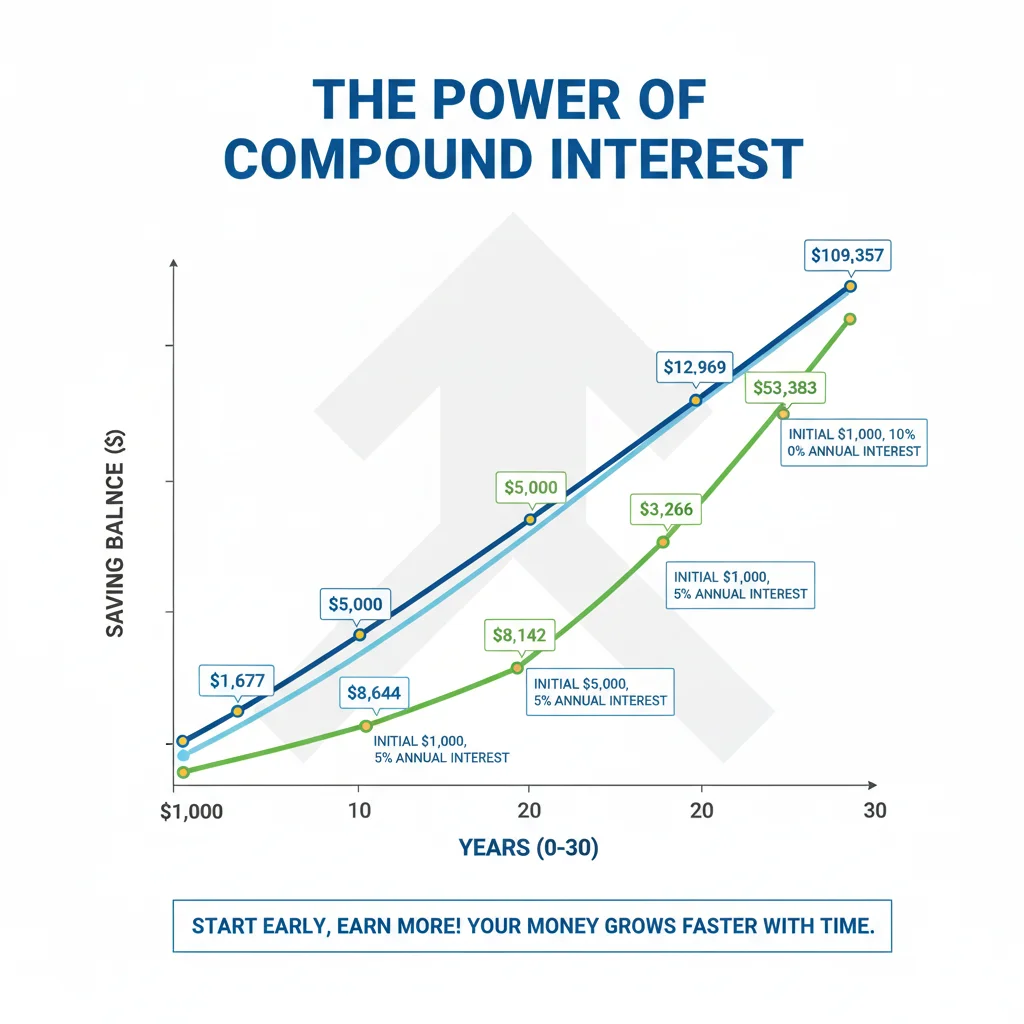
Strategies to Achieve 8% Annual Returns
To realistically target an 8% annual return for your sinking fund strategy, especially by 2026’s end, consider these approaches:
1. Asset Allocation Based on Timeline
- 1-2 Year Funds: Primarily HYSAs, short-term CDs, or very conservative short-term bond funds. Expect lower than 8% here, but prioritize capital preservation.
- 2-3 Year Funds: A mix of HYSAs/CDs and a small allocation (20-40%) to diversified stock index funds.
- 3-5 Year Funds: A more aggressive allocation (50-70%) to diversified stock index funds, with the remainder in HYSAs or bond funds. This offers the best chance at 8% while still providing some buffer.
2. Dollar-Cost Averaging
By automating your monthly contributions into investment funds, you naturally engage in dollar-cost averaging. This strategy involves investing a fixed amount of money regularly, regardless of market fluctuations. When prices are high, your fixed amount buys fewer shares; when prices are low, it buys more. Over time, this can lead to a lower average cost per share and reduce the impact of market volatility.
3. Reinvest Dividends and Interest
Ensure that any dividends from your stock funds or interest from your bond funds/HYSAs are automatically reinvested. This leverages the power of compounding, allowing your earnings to generate further earnings, significantly boosting your overall returns towards the 8% target.
4. Utilize Tax-Advantaged Accounts (Where Applicable)
If your sinking fund goal aligns with purposes allowed by certain tax-advantaged accounts, consider using them. For example:
- Health Savings Accounts (HSAs): If your sinking fund is for future medical expenses and you have a high-deductible health plan, an HSA offers a triple tax advantage (tax-deductible contributions, tax-free growth, tax-free withdrawals for qualified medical expenses). Many HSAs offer investment options that can easily achieve 8% returns.
- 529 Plans: For education-related sinking funds, 529 plans offer tax-free growth and withdrawals for qualified educational expenses. They often have diversified investment portfolios that can aim for higher returns.
Crucial Warning: Never invest money you cannot afford to lose, especially for short-term goals. If your timeline is truly rigid and short (e.g., a wedding in 18 months), preserving capital might be more important than chasing high returns. Always assess your personal risk tolerance and financial situation.
Managing Your Sinking Funds: Best Practices for Success
Once your sinking funds are established, effective management is key to ensuring you stay on track and achieve your financial targets by 2026. A robust sinking fund strategy isn’t just about setting it up; it’s about consistent maintenance.
1. Integrate Sinking Funds into Your Budget
Your sinking fund contributions should be a line item in your monthly budget, just like rent or utilities. This ensures they are prioritized and funded consistently. Use budgeting software or spreadsheets to track these allocations and monitor your progress. This makes your sinking fund strategy an integral part of your financial life, not an afterthought.
2. Keep Funds Separate (Physically or Virtually)
Whether you use separate physical envelopes (for small, cash-based funds), multiple sub-accounts in an online bank, or a robust budgeting app, keeping your sinking funds distinct from your checking account and emergency fund is vital. This visual separation prevents accidental spending and provides clarity on your progress towards each specific goal.
3. Monitor Progress Regularly
Set aside time each month or quarter to review the status of your sinking funds. Are you on track to meet your goals? Have any expenses changed? Is your investment portfolio performing as expected? Regular monitoring allows for timely adjustments.
4. Adjust Contributions as Needed
Life is unpredictable. You might receive a bonus, get a raise, or incur an unexpected expense that requires you to temporarily pause or reduce a sinking fund contribution. Be flexible but committed. If you fall behind, create a plan to catch up. If you have extra money, consider increasing contributions to accelerate your goals.
5. Avoid Raiding Your Sinking Funds
The biggest temptation is to borrow from one sinking fund to cover an expense from another, or worse, use it for non-designated purposes. Resist this urge! Each fund has a specific purpose. If you need money for something unexpected, that’s what your emergency fund is for. If you truly need to reallocate, do so intentionally and adjust your budget accordingly.
6. Understand the Tax Implications of Investments
If you’re investing your sinking funds in taxable brokerage accounts to achieve the 8% return, be mindful of capital gains taxes and taxes on dividends/interest. Keep good records for tax season. Utilizing tax-advantaged accounts (like HSAs or 529s if applicable) can help minimize your tax burden and boost your net returns.
7. Stay Disciplined and Patient
Building significant savings and achieving investment returns takes time and discipline. There will be market fluctuations if you’re investing, and there might be moments of temptation to divert funds. Stick to your sinking fund strategy, remember your goals, and celebrate milestones along the way. The reward of reaching your financial objectives by 2026 will be well worth the effort.

Common Pitfalls and How to Avoid Them in Your Sinking Fund Strategy
While a sinking fund strategy is highly effective, there are common mistakes that can hinder your progress. Being aware of these pitfalls allows you to navigate them successfully.
1. Underestimating Expenses or Timelines
Pitfall: Not accurately estimating the cost of a future expense or the time needed to save for it. This leads to insufficient funds when the expense arises.
Solution: Research thoroughly. Get quotes for home repairs, look up average vacation costs, and be realistic about how much you can truly save each month. It’s better to overestimate slightly than to underestimate.
2. Not Automating Contributions
Pitfall: Relying on manual transfers, which can lead to inconsistency or forgetting to save.
Solution: Automate, automate, automate! Set up recurring transfers from your checking account to your sinking fund accounts immediately after you get paid. This ensures your savings are prioritized.
3. Mixing Sinking Funds with Emergency Funds
Pitfall: Treating your sinking funds as an extension of your emergency fund, or vice-versa, leading to confusion and depletion of funds for their intended purpose.
Solution: Maintain distinct accounts for your emergency fund and your various sinking funds. An emergency fund is for true, unexpected emergencies (job loss, medical crisis). Sinking funds are for planned, albeit infrequent, expenses.
4. Chasing Unrealistic Returns for Short-Term Goals
Pitfall: Investing money for a short-term goal (e.g., 6-12 months) in high-risk investments in an attempt to hit an 8% return, exposing the capital to significant market volatility.
Solution: Align your investment strategy with your timeline and risk tolerance. For short-term goals, prioritize capital preservation over high returns. For longer-term goals (3+ years), a diversified portfolio of index funds might be appropriate for targeting 8%.
5. Lack of Regular Review and Adjustment
Pitfall: Setting up sinking funds and then forgetting about them, leading to outdated goals or insufficient funds due to changing circumstances.
Solution: Schedule regular reviews (monthly or quarterly) of your budget and sinking funds. Adjust contribution amounts, timelines, or even the goals themselves as your life and financial situation evolve.
6. Becoming Overwhelmed by Too Many Funds
Pitfall: Creating dozens of tiny sinking funds for every conceivable minor expense, making tracking cumbersome and discouraging.
Solution: Focus on significant, non-monthly expenses. Group smaller, related expenses if it makes sense (e.g., a general ‘home maintenance’ fund instead of separate ‘lightbulb fund’ and ‘plumbing fund’). Start with 3-5 major funds and expand as you get comfortable.
7. Not Celebrating Progress
Pitfall: Focusing solely on the struggle and missing the motivation that comes from acknowledging achievements.
Solution: Celebrate when you fully fund a sinking fund or reach a significant milestone. This positive reinforcement encourages continued discipline and commitment to your overall sinking fund strategy.
Conclusion: Your Path to Financial Empowerment by 2026
The journey to financial security and the achievement of significant life goals doesn’t happen by accident; it’s the result of intentional planning, consistent effort, and smart strategies. For US consumers, embracing a robust sinking fund strategy is a powerful way to transform abstract financial dreams into tangible realities.
By meticulously identifying your future expenses, setting clear targets, automating your contributions, and strategically investing your funds, you are not just saving money; you are building a resilient financial framework. The goal of achieving an 8% annual return by 2026’s end, while ambitious, is within reach through diversified investments tailored to your specific timelines and risk tolerance.
Remember, the power of the sinking fund lies in its ability to break down large, daunting financial goals into manageable, achievable steps. It removes the stress of unexpected bills, prevents reliance on debt, and ultimately empowers you to take full control of your financial destiny.
Start today. List your goals, calculate your contributions, automate your savings, and choose your investment vehicles wisely. By consistently applying this sinking fund strategy, you’ll not only meet your specific savings objectives but also cultivate lasting financial habits that will serve you well beyond 2026. Your future self will thank you for the foresight and discipline you apply today. Take the reins of your financial future and watch your wealth grow purposefully.