Zero-Based Budgeting 2026: Uncover Hidden Savings & Financial Freedom

Zero-Based Budgeting in 2026: How 3 Months of Tracking Can Reveal $500 in Hidden Savings (FINANCIAL IMPACT)
Are you tired of feeling like your money disappears without a trace? Do you wish you had a clearer picture of where every dollar goes? In an increasingly complex financial landscape, mastering your personal finances is more crucial than ever. For 2026, one of the most powerful strategies you can adopt is zero-based budgeting. This method isn’t just about cutting costs; it’s about giving every dollar a purpose, ensuring that at the end of each month, your income minus your expenses equals zero. The profound impact? Just three months of dedicated tracking can reveal over $500 in hidden savings, fundamentally transforming your financial outlook.
What Exactly is Zero-Based Budgeting?
At its core, zero-based budgeting (ZBB) is a budgeting method where all expenses must be justified for each new period. This means starting from a ‘zero base’ and requiring every function within an organization (or every dollar in your personal budget) to be analyzed for its needs and costs. In simpler terms for personal finance, it means you allocate every single dollar of your income to a specific category – savings, debt repayment, housing, food, entertainment, etc. – until your income minus your expenses equals zero. No dollar is left unassigned.
Unlike traditional budgeting, where you might simply adjust previous month’s spending, ZBB forces you to scrutinize every expense. This proactive approach helps identify unnecessary spending, reallocate funds to more important goals, and gain complete control over your money. It’s a dynamic and empowering way to manage your finances, especially relevant for the evolving economic climate of 2026.
Why Zero-Based Budgeting is Your Best Financial Friend in 2026
The year 2026 brings its own set of financial challenges and opportunities. Inflation, fluctuating interest rates, and the ever-present temptation of consumerism mean that passive money management simply won’t cut it. Zero-based budgeting 2026 offers a robust framework to navigate these waters successfully. Here’s why it’s particularly effective:
- Increased Awareness: It forces you to confront where your money truly goes. Many people are surprised to find how much they spend on forgotten subscriptions or small, daily purchases.
- Elimination of Waste: By justifying every expense, you naturally identify and cut out unnecessary spending. This is where those ‘hidden savings’ often reside.
- Goal Alignment: ZBB ensures that your spending aligns with your financial goals, whether it’s saving for a down payment, paying off debt, or investing for retirement.
- Flexibility: While it sounds rigid, ZBB is incredibly flexible. Each month, you start anew, allowing you to adapt your budget to changing income or expenses without being tied to past habits.
- Empowerment: Taking control of every dollar gives you a sense of empowerment and reduces financial stress.
The 3-Month Challenge: Uncovering $500+ in Hidden Savings
The true magic of zero-based budgeting often reveals itself within the first few months. We challenge you to commit to a three-month period of strict ZBB. Here’s how this commitment can reveal significant savings:
- Month 1: The Discovery Phase. This month is all about meticulous tracking. Every single expense, no matter how small, needs to be recorded and assigned a category. Don’t worry too much about cutting yet; just observe. You’ll likely be shocked at where your money is actually going. This raw data is invaluable.
- Month 2: The Optimization Phase. Armed with the insights from Month 1, you can now make informed decisions. Go through each category and ask: ‘Is this expense truly necessary? Can I reduce it? Is there a cheaper alternative?’ This is where you start actively reallocating funds. You might find you’re spending too much on eating out, unused subscriptions, or impulse buys.
- Month 3: The Refinement & Impact Phase. By Month 3, you’ll have a much clearer picture and a more optimized budget. You’ll be fine-tuning your allocations, seeing the tangible results of your efforts, and solidifying new, healthier spending habits. It’s during this phase that the cumulative effect of your adjustments often totals well over $500 in reallocated or saved funds.
This isn’t an arbitrary number. Many individuals who commit to ZBB report finding hundreds, if not thousands, of dollars in previously unaccounted-for spending within the first few months. The key is consistency and a willingness to be honest with yourself about your spending habits.
Getting Started with Zero-Based Budgeting in 2026: A Step-by-Step Guide
Implementing zero-based budgeting 2026 might seem daunting initially, but by breaking it down into manageable steps, you’ll find it incredibly achievable. Here’s your detailed guide:
Step 1: Calculate Your Monthly Income
The first and most crucial step is to know exactly how much money you have coming in. This includes all sources of income after taxes and deductions. If your income fluctuates, take an average of the last three to six months, or budget based on your lowest expected income to be conservative.
- Fixed Income: Salary, regular dividends, rental income.
- Variable Income: Freelance work, commissions, bonuses (if applicable, consider a conservative estimate).
This total income figure is what you will be allocating every single dollar of.
Step 2: List All Your Fixed Expenses
Fixed expenses are those that generally stay the same each month. These are typically non-negotiable and include:
- Rent/Mortgage
- Loan Payments (car, student, personal)
- Insurance Premiums (health, car, home)
- Subscription Services (Netflix, gym membership, software – scrutinize these!)
- Utilities (some might be variable, but many have a fixed component or average)
Be exhaustive. Even small, recurring charges add up.
Step 3: List All Your Variable Expenses
This is where the real work (and potential for savings) lies. Variable expenses change from month to month based on your consumption and choices. For your first month, estimate these categories generously to avoid overspending, then refine in subsequent months.
- Groceries
- Dining Out/Takeaway
- Transportation (gas, public transport, ride-sharing)
- Utilities (electricity, water – the variable part)
- Personal Care (toiletries, haircuts)
- Entertainment/Hobbies
- Clothing
- Miscellaneous (this is often a huge category for hidden spending – try to break it down as much as possible)
Remember, for zero-based budgeting 2026, the goal is to assign an amount to each of these, even if it’s an estimate that you adjust later.
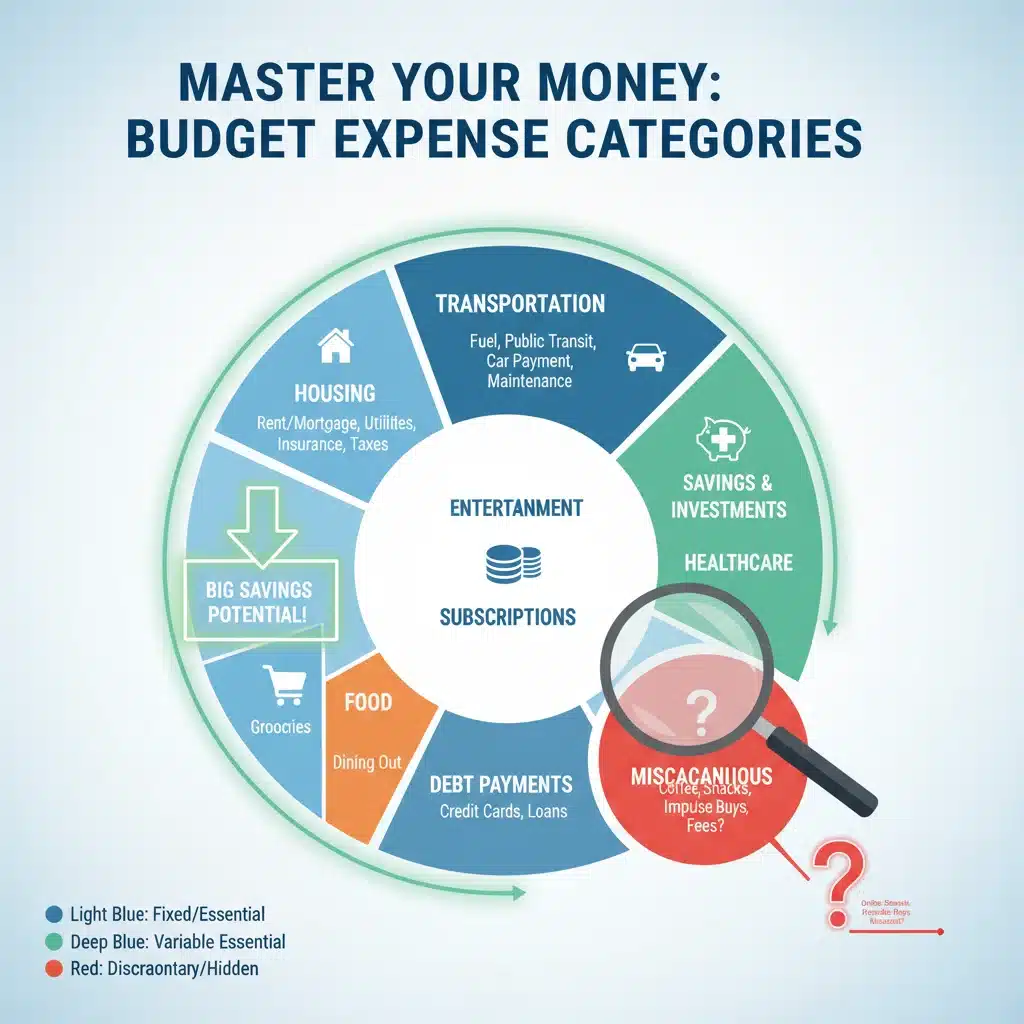
Step 4: Allocate Every Dollar Until You Reach Zero
Now, the core of zero-based budgeting: subtract your total expenses from your total income. If the result is not zero, you need to adjust. If you have money left over, assign it. This could go to:
- Savings (emergency fund, down payment, retirement)
- Debt Repayment (accelerating payments)
- Investments
- A ‘buffer’ category for unexpected small expenses (but keep it small and intentional)
If you have a deficit (expenses exceed income), you must go back and cut expenses. This is the tough but necessary part. Look for areas where you can reduce spending without significantly impacting your quality of life. This iterative process is what makes ZBB so effective in revealing hidden savings.
Step 5: Track Your Spending Religiously
This is where the three-month challenge comes into play. For the next three months, track every single penny you spend. Use a budgeting app, a spreadsheet, or even a pen and paper. The more diligent you are, the more accurate your picture of spending will be. Comparing your actual spending against your budgeted amounts is crucial for identifying discrepancies and making informed adjustments for the next month.
Many apps offer automatic categorization, but always double-check. Often, transactions are miscategorized, or you might prefer a more granular breakdown (e.g., ‘groceries’ vs. ‘coffee shop’ within your ‘food’ budget).
Step 6: Review and Adjust Monthly (The Iterative Process)
At the end of each month, review your budget. How did you do? Where did you overspend? Where did you underspend? Use these insights to adjust your budget for the following month. This continuous cycle of planning, tracking, and adjusting is what makes zero-based budgeting so powerful and sustainable.
Perhaps you budgeted $100 for entertainment but only spent $50. You can reallocate that extra $50 to savings or debt repayment next month. Conversely, if you consistently go over your grocery budget, you might need to increase that allocation or find ways to reduce your grocery bill.
Tools and Resources for Zero-Based Budgeting in 2026
While you can certainly manage a zero-based budget with just a spreadsheet, several tools can make the process easier and more efficient:
- Budgeting Apps:
- You Need A Budget (YNAB): Specifically designed for zero-based budgeting, YNAB is highly praised for its envelope system approach and robust tracking features. It has a learning curve but is incredibly powerful once mastered.
- Mint: A popular free option that connects to your bank accounts and automatically categorizes transactions. While not strictly zero-based, it can be adapted with careful category management.
- Personal Capital: Offers investment tracking alongside budgeting features, great for a holistic financial view.
- Spreadsheets: Google Sheets or Excel offer complete customization. You can create your own template or find many free zero-based budgeting templates online. This gives you maximum control but requires manual data entry or integration.
- Notebook and Pen: For those who prefer a tactile approach, a simple notebook can be highly effective. The act of writing down each expense can increase awareness.
Choose the tool that best fits your comfort level and commitment. The most important thing is to pick one and stick with it.
Common Pitfalls and How to Avoid Them
Even with the best intentions, implementing zero-based budgeting 2026 can present challenges. Being aware of these common pitfalls can help you stay on track:
- Getting Discouraged by the First Month: Your first month will likely be messy. You’ll miss tracking some expenses, or your estimates will be way off. Don’t give up! This is normal. Month 1 is for learning and data gathering.
- Being Too Restrictive: Don’t cut out everything you enjoy. A sustainable budget includes some ‘fun money.’ The goal is balance, not deprivation. If your budget is too tight, you’re more likely to abandon it.
- Not Tracking Every Expense: The ‘miscellaneous’ category can quickly become a black hole. Try to create specific categories for even small, infrequent expenses. Every dollar needs a job.
- Ignoring Irregular Expenses: Holiday gifts, car maintenance, annual subscriptions – these can derail a monthly budget if not planned for. Create a ‘sinking fund’ category where you save a small amount each month for these larger, less frequent expenses.
- Lack of Communication (for couples): If you share finances, both partners must be on board and actively participate in the budgeting process. Regular budget meetings are crucial.
Real-World Impact: Beyond the $500 Savings
While uncovering $500 in hidden savings within three months is a fantastic immediate benefit, the long-term impact of adopting zero-based budgeting extends far beyond that initial sum. Consider these broader financial impacts:
- Accelerated Debt Repayment: By freeing up extra cash, you can direct more funds towards high-interest debts, reducing your overall interest paid and becoming debt-free faster.
- Boosted Savings & Investments: The money you save can be channeled into your emergency fund, retirement accounts, or investment portfolios, significantly accelerating your wealth-building journey.
- Reduced Financial Stress: Knowing exactly where your money is going and having a plan for every dollar brings immense peace of mind. Financial anxiety often stems from a lack of control, which ZBB directly addresses.
- Achieving Major Financial Goals: Whether it’s buying a home, funding a child’s education, or taking that dream vacation, ZBB provides the clarity and control needed to make these large goals a reality.
- Improved Financial Literacy: The process of ZBB naturally enhances your understanding of personal finance, making you a more informed and capable money manager.

Success Stories with Zero-Based Budgeting
Many individuals and families have completely transformed their financial lives using zero-based budgeting. Take Sarah, a marketing professional in her late 20s. She felt her money was constantly tight despite a decent salary. After implementing ZBB for three months, she discovered she was spending nearly $200 a month on impulse online purchases and another $100 on unused streaming services. By reallocating these funds, she was able to increase her emergency fund contributions by $300 a month, reaching her savings goal six months ahead of schedule.
Or consider the Chen family, a couple with two young children. They used ZBB to identify areas where their grocery bill could be optimized and found they were spending excessively on convenience foods. By planning meals and cooking more at home, they saved over $150 a month, which they now direct towards a college fund for their children. These aren’t isolated incidents; the principles of ZBB consistently yield tangible results for those who commit to it.
Looking Ahead: Sustaining Zero-Based Budgeting Beyond 2026
While the focus here is on zero-based budgeting 2026 and the initial three-month impact, the true power of this method comes from its sustainability. Once you’ve completed your initial three-month challenge, don’t stop! Continue to review and adjust your budget monthly. Your financial situation and goals will evolve, and your budget should evolve with them.
Periodically, perhaps quarterly or semi-annually, conduct a deeper dive into your spending. Are there new subscriptions you’ve forgotten about? Have your needs changed in certain categories? This regular recalibration ensures that your budget remains a living, breathing document that accurately reflects your financial reality and aspirations.
Embrace the mindset that every dollar has a job. This isn’t just a budgeting technique; it’s a philosophy that promotes intentional spending and conscious financial decision-making. By making ZBB a permanent fixture in your financial toolkit, you’re not just saving $500; you’re building a foundation for lasting financial security and freedom.
Conclusion: Take Control of Your Finances with Zero-Based Budgeting
In conclusion, zero-based budgeting in 2026 offers a powerful, proactive approach to personal finance that can yield significant benefits. By committing to just three months of diligent tracking and allocation, you can uncover hundreds of dollars in hidden savings, gain unparalleled clarity into your spending habits, and set yourself on a path towards greater financial control and freedom.
It requires discipline and honesty, but the rewards are well worth the effort. Start today. Calculate your income, list your expenses, give every dollar a job, and track your spending. The financial peace of mind and the tangible savings you’ll discover will be invaluable. Don’t let your money manage you; take the reins and make every dollar work for your future.
Are you ready to take the 3-month zero-based budgeting challenge? Share your experiences and tips in the comments below!