Stopping Unwanted Calls: How the Updated TCPA Regulations of 2026 Empower Consumers to Block Robocalls and Telemarketing by 80%
Are you tired of your phone ringing off the hook with unsolicited calls? Do you dread answering an unknown number, only to be met with a pre-recorded message or a persistent telemarketer? If so, you’re not alone. The deluge of robocalls and telemarketing calls has become a significant nuisance for millions of consumers. However, there’s good news on the horizon. The updated TCPA Regulations 2026 are poised to bring a much-needed reprieve, empowering consumers to block a significant portion of these unwanted intrusions.
This comprehensive guide will delve into the intricacies of the updated Telephone Consumer Protection Act (TCPA) regulations, explaining what they mean for you, how they aim to curb unwanted calls, and the practical steps you can take to leverage these new protections. We’ll explore the historical context of the TCPA, the specific changes introduced in 2026, and how these amendments are expected to reduce robocalls and telemarketing by an estimated 80%. Prepare to reclaim your phone and your peace of mind!
The Persistent Problem of Unwanted Calls: A Pre-2026 Landscape
Before we dive into the solutions offered by the TCPA Regulations 2026, it’s crucial to understand the scope of the problem. For years, consumers have been inundated with calls that interrupt their daily lives, often at inconvenient times. These calls range from annoying robocalls attempting to sell extended car warranties to sophisticated telemarketing schemes designed to defraud unsuspecting individuals. The sheer volume has made it difficult for legitimate businesses to reach customers and for individuals to use their phones without constant interruption.
The rise of Voice over Internet Protocol (VoIP) technology and auto-dialers has made it incredibly cheap and easy for bad actors to make millions of calls daily. This technological advancement, while beneficial in many legitimate contexts, has been exploited by those seeking to bypass traditional communication barriers. Existing regulations, while effective to a degree, have often struggled to keep pace with the rapid evolution of these calling technologies and the increasingly sophisticated tactics employed by telemarketers and robocallers.
Consumers have attempted various strategies to combat this onslaught: blocking individual numbers, registering on the National Do Not Call Registry, and utilizing third-party call-blocking apps. While these methods offer some relief, they have often felt like a game of whack-a-mole, with new numbers and new tactics emerging almost daily. The frustration is palpable, and the need for more robust, systemic solutions has become undeniable. This is precisely where the updated TCPA Regulations 2026 step in, aiming to provide a more comprehensive and effective shield against these digital intrusions.
Understanding the TCPA: A Brief History and Its Core Principles
The Telephone Consumer Protection Act (TCPA) was enacted in 1991, primarily in response to a surge in telemarketing calls to residential telephone lines. Its original intent was to protect consumer privacy by restricting unsolicited telemarketing calls, faxes, and text messages. Key provisions of the original TCPA included:
- Restrictions on Auto-dialers: Prohibiting calls using an automatic telephone dialing system (ATDS) or an artificial or prerecorded voice to cell phones without prior express consent.
- Do Not Call Registry: Establishing the National Do Not Call Registry, allowing consumers to opt out of most telemarketing calls.
- Identification Requirements: Mandating that telemarketers identify themselves and the entity on whose behalf they are calling.
- Internal Do Not Call Lists: Requiring businesses to maintain their own internal do-not-call lists.
- Specific Calling Hours: Restricting telemarketing calls to certain hours of the day.
Over the years, the TCPA has been subject to various amendments and interpretations by the Federal Communications Commission (FCC) and the courts, adapting to new technologies and evolving calling practices. However, despite these efforts, loopholes and enforcement challenges have allowed unwanted calls to persist, leading to the necessity of more significant overhauls, culminating in the highly anticipated TCPA Regulations 2026.
The Act also provides a private right of action, allowing consumers to sue for damages ranging from $500 to $1,500 per violation, a powerful deterrent that has led to numerous class-action lawsuits. This enforcement mechanism underscores the seriousness with which the law views consumer protection against intrusive telemarketing. Understanding this foundation is critical to appreciating the enhanced protections that the 2026 updates aim to deliver.
Key Updates in the TCPA Regulations 2026: A Game Changer
The TCPA Regulations 2026 introduce several significant changes designed to strengthen consumer protections and significantly reduce the volume of unwanted calls. These updates address some of the most persistent challenges that have plagued consumers and regulators alike. Here are the pivotal amendments:
1. Stricter Definition of ‘Prior Express Written Consent’
One of the most impactful changes under the TCPA Regulations 2026 is the tightening of the definition of ‘prior express written consent.’ Previously, some companies interpreted implied consent broadly, often burying consent clauses in lengthy terms and conditions. The new regulations clarify that consent must be explicit, unambiguous, and obtained through a clear and conspicuous disclosure. Consumers must actively affirm their agreement to receive calls, texts, or faxes, and this consent cannot be a condition of purchase.
This means pre-checked boxes or obscure links will no longer suffice. For businesses, this necessitates a transparent and direct approach to obtaining consent, ensuring consumers fully understand what they are agreeing to. For consumers, it means greater control over who can contact them and how.
2. Enhanced Requirements for Lead Generators
Lead generation has been a major source of unwanted calls, with leads often sold multiple times to various telemarketers. The TCPA Regulations 2026 impose stricter requirements on lead generators, mandating that they disclose precisely which entities will contact the consumer. Furthermore, consent obtained by a lead generator will now be valid for a specific, limited set of companies clearly identified at the point of consent. This prevents a single consent from being resold or used by an endless list of unrelated businesses.
This change is expected to significantly reduce calls from companies with whom consumers have no direct relationship, cutting off a major avenue for spam calls.
3. Expanded Scope of ‘Artificial or Prerecorded Voice’
The definition of an ‘artificial or prerecorded voice’ has been expanded to include advanced voice synthesis technologies, including AI-generated voices. This closes a loophole where some callers argued that AI-generated voices were not ‘prerecorded’ in the traditional sense. Under the TCPA Regulations 2026, any synthesized voice, regardless of its origin, falls under the same restrictions as traditional prerecorded messages, requiring prior express consent for calls to mobile phones.
This update is crucial in an era where AI technology is rapidly advancing, ensuring that technological innovation doesn’t outpace consumer protection.
4. Stricter Enforcement Against Caller ID Spoofing
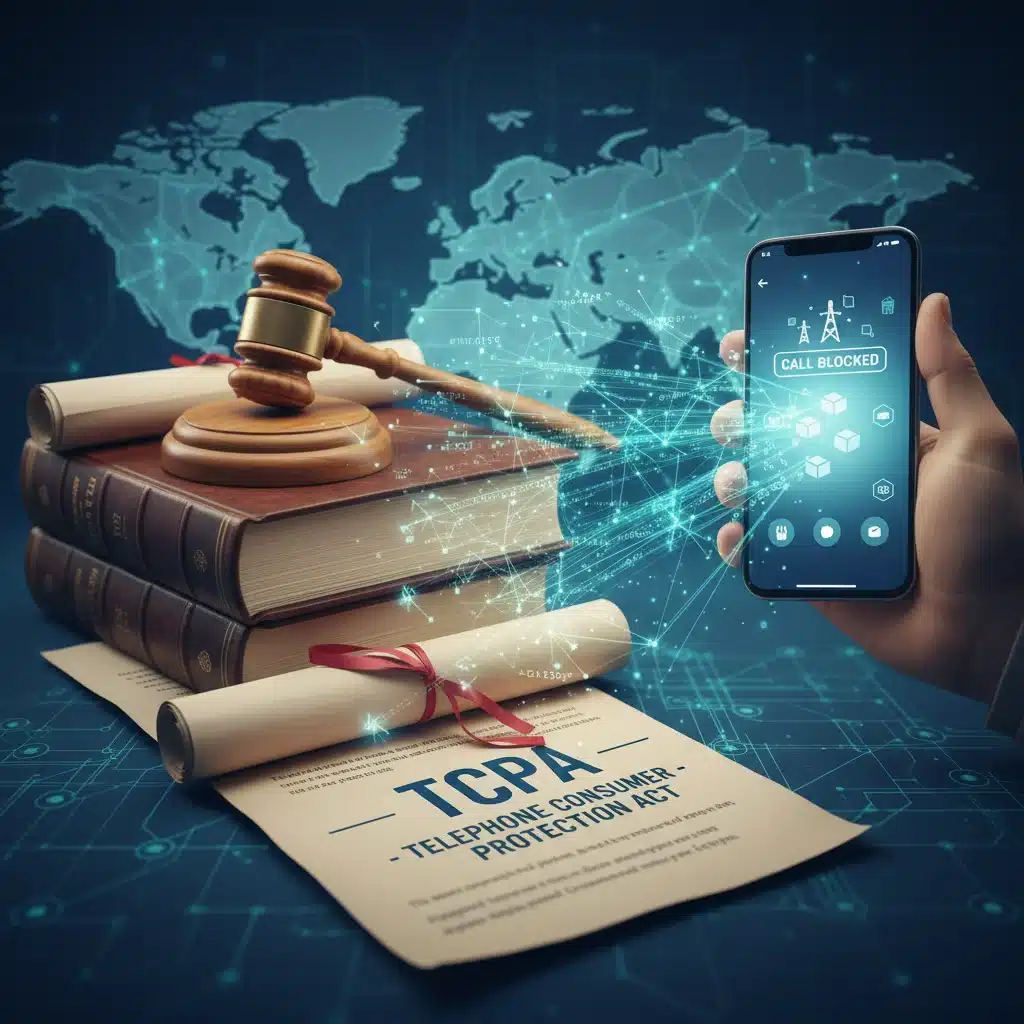
Caller ID spoofing, where callers intentionally falsify the information transmitted to a caller ID display, has been a major tool for robocallers to evade detection and trick consumers into answering. While the TRACED Act already addressed some aspects of spoofing, the TCPA Regulations 2026 bolster enforcement mechanisms, increasing penalties for intentional spoofing used in conjunction with TCPA violations. This includes improved collaboration with telecom carriers to identify and block spoofed calls at the network level, leveraging STIR/SHAKEN protocols more aggressively.
The aim is to make it far more difficult for malicious actors to hide their identities, thereby increasing accountability and reducing the effectiveness of deceptive calling tactics.
5. Enhanced Opt-Out Mechanisms
While the Do Not Call Registry remains a cornerstone, the TCPA Regulations 2026 mandate more robust and easily accessible opt-out mechanisms within every telemarketing call. This includes clear instructions on how to opt-out during a live call, and for prerecorded messages, a prominent, easy-to-use option to be removed from future calling lists immediately. Businesses will also face stricter timelines for processing opt-out requests.
This ensures that consumers have a clear and immediate path to stop unwanted communications, rather than having to navigate complex menus or call back another number.
The Expected Impact: Blocking 80% of Unwanted Calls
The combined effect of these updates in the TCPA Regulations 2026 is projected to have a profound impact on the volume of unwanted calls. Experts estimate that these changes could lead to an 80% reduction in robocalls and telemarketing calls that consumers receive. This significant reduction is anticipated due to several factors:
- Reduced Lead Generation Abuse: Stricter lead generation rules will cut off a major supply chain for many unwanted calls, as businesses will find it harder to obtain and use broadly defined consent.
- Increased Compliance Costs: The enhanced requirements for obtaining and tracking consent, coupled with stricter enforcement, will increase the compliance burden for legitimate businesses. This will deter less scrupulous callers who operate on razor-thin margins and are unwilling to invest in proper compliance.
- Technological Deterrents: Better caller ID authentication and increased penalties for spoofing will make it harder for illegal callers to operate anonymously, increasing their risk of being caught and penalized.
- Empowered Consumers: With clearer rights and easier opt-out mechanisms, consumers will be better equipped to stop unwanted calls themselves, further reducing the overall volume.
This 80% reduction isn’t just a number; it represents a tangible improvement in daily life for millions. Fewer interruptions, less frustration, and a greater sense of privacy are the real-world benefits that these regulations aim to deliver. It will allow consumers to trust their phones again, knowing that the calls they receive are more likely to be legitimate and wanted.
What Consumers Can Do: Leveraging the New TCPA Regulations 2026
While the TCPA Regulations 2026 place significant responsibility on businesses, consumers also have a vital role to play in maximizing these new protections. Here’s how you can leverage the updated rules:
1. Understand Your Consent: Read Before You Click
With the stricter consent requirements, pay close attention to any forms or agreements where you provide your phone number. Look for clear, explicit statements about how your number will be used and by whom. If you don’t see a clear disclosure or if it feels too broad, reconsider providing consent. Remember, under the TCPA Regulations 2026, your consent must be unambiguous.
2. Utilize the National Do Not Call Registry
Ensure your phone number(s) are registered on the National Do Not Call Registry (donotcall.gov). While the 2026 updates strengthen other aspects, this registry remains a foundational layer of protection against legitimate telemarketers. Renew your registration periodically if you change numbers or want to ensure continued protection.
3. Exercise Your Opt-Out Rights Immediately
If you receive an unwanted call, even after the new regulations are in effect, use the enhanced opt-out mechanisms. For live calls, clearly state, “Please remove me from your calling list.” For prerecorded messages, follow the explicit instructions to opt out. Under the TCPA Regulations 2026, companies are required to honor these requests promptly.
4. Report Violations
If you continue to receive unwanted calls after opting out, or if you encounter calls that clearly violate the new consent rules or involve spoofing, report them. You can file a complaint with the FCC (fcc.gov/complaints) or the Federal Trade Commission (FTC) (ftc.gov). Your reports are crucial for enforcement agencies to identify patterns of abuse and take action against violators. Keeping a log of dates, times, and caller IDs can be helpful.
5. Consider Call-Blocking Apps and Services
While the TCPA Regulations 2026 provide a robust legal framework, technology can offer an additional layer of defense. Many carriers offer call-blocking services, and third-party apps can help filter out known spam numbers. Use these in conjunction with the new regulations for comprehensive protection.
6. Be Wary of Unknown Callers
Even with enhanced regulations, some bad actors will persist. Remain cautious about answering calls from unknown numbers. If it’s important, they will likely leave a voicemail. Never give out personal or financial information over the phone to unsolicited callers.

Implications for Businesses: Navigating the New Landscape
The TCPA Regulations 2026 also have significant implications for businesses that engage in telemarketing or use automated calling systems. Compliance will be paramount to avoid hefty fines and legal action. Businesses must:
- Review Consent Acquisition Processes: Update all forms, websites, and scripts to ensure they meet the new, stricter standards for prior express written consent. This includes clear disclosures and active affirmation from consumers.
- Enhance Lead Generation Due Diligence: If using third-party lead generators, ensure they are fully compliant with the new rules, including specific disclosures of who will be calling. Businesses are ultimately responsible for calls made on their behalf.
- Train Staff: Ensure all telemarketing staff are thoroughly trained on the updated regulations, especially regarding consent requirements and immediate opt-out protocols.
- Implement Robust Opt-Out Systems: Develop efficient systems to process opt-out requests quickly and accurately, and ensure internal do-not-call lists are maintained and respected.
- Leverage STIR/SHAKEN: Work with telecom providers to ensure proper implementation of STIR/SHAKEN protocols to authenticate calls and reduce the likelihood of their legitimate calls being flagged as spam.
- Maintain Meticulous Records: Keep detailed records of all consent obtained, including the date, method, and specific disclosures made. This will be crucial in demonstrating compliance if challenged.
Non-compliance with the TCPA Regulations 2026 can result in severe penalties, including statutory damages of $500 per violation, which can be trebled to $1,500 for willful or knowing violations. For businesses making thousands or millions of calls, these fines can quickly escalate into multi-million dollar liabilities, making proactive compliance an economic imperative.
The Future of Telecommunications: A More Respectful Landscape
The TCPA Regulations 2026 mark a pivotal moment in the ongoing battle against unwanted calls. By addressing critical loopholes, strengthening consent requirements, and enhancing enforcement, these updates promise to reshape the telecommunications landscape into one that is far more respectful of consumer privacy and preference. The anticipated 80% reduction in robocalls and telemarketing is a testament to the comprehensive nature of these reforms.
For consumers, this means fewer interruptions, less frustration, and a greater sense of control over their personal communication channels. It allows them to engage with legitimate businesses more freely, without the constant fear of being ambushed by unwanted solicitations. For businesses, while compliance requires effort, it ultimately fosters greater trust with consumers, leading to more meaningful and productive interactions.
The journey towards a spam-free phone experience is continuous, but the TCPA Regulations 2026 represent a monumental leap forward. By understanding these changes and actively participating in their enforcement through reporting violations and asserting their rights, consumers can collectively help shape a future where their phones are tools of connection, not sources of constant annoyance.
Stay informed, stay vigilant, and get ready to enjoy a significantly quieter and more productive phone experience thanks to these vital updates.