The Envelope System 2026: Modern Cash Flow Budgeting Masterclass

The Envelope System in 2026: A Modern Take on a Classic Budgeting Strategy for Cash Flow Management (INSIDER KNOWLEDGE)
In an increasingly digital world, the idea of managing your money with physical envelopes might seem like a relic from a bygone era. Yet, the core principles of the envelope system budgeting remain as powerful and relevant as ever. In fact, for 2026 and beyond, this time-tested method is experiencing a significant resurgence, not just as a quaint budgeting trick, but as a sophisticated strategy for mastering cash flow management. This comprehensive guide will delve into how the classic envelope system has evolved, integrating seamlessly with modern financial tools to offer unparalleled control over your spending and savings.
Many people struggle with budgeting, often feeling overwhelmed by complex spreadsheets or disconnected from their digital transactions. The beauty of the envelope system budgeting lies in its tangible nature, its simplicity, and its immediate feedback loop. It forces you to confront your spending habits directly, making abstract financial concepts concrete. But what does a 2026 version of this system look like? It’s not just about stuffing cash into paper envelopes anymore; it’s about a dynamic, adaptable framework that leverages technology while retaining the psychological benefits of its traditional counterpart.
Whether you’re a seasoned financial guru or just starting your journey to financial freedom, understanding and implementing the modern envelope system can be a game-changer. We’ll explore its fundamental principles, examine how it integrates with digital platforms, and provide actionable insights to help you optimize your cash flow and achieve your financial aspirations. Get ready to transform your relationship with money, one envelope (or digital category) at a time.
What is the Envelope System Budgeting? A Timeless Principle Reimagined
At its heart, the envelope system budgeting is a zero-based budgeting method where you allocate specific amounts of money to different spending categories at the beginning of each budgeting period (typically a month or a paycheck cycle). Once the money in a particular envelope is gone, you stop spending in that category until the next period. This simple rule prevents overspending and ensures that every dollar has a job.
Historically, this meant physically withdrawing cash and dividing it into actual envelopes labeled for categories like ‘Groceries,’ ‘Entertainment,’ ‘Utilities,’ ‘Transportation,’ etc. This physical act of handling money creates a strong psychological barrier against impulsive purchases. You literally see your funds diminish, making you more mindful of each spending decision.
The Evolution: From Paper to Pixels
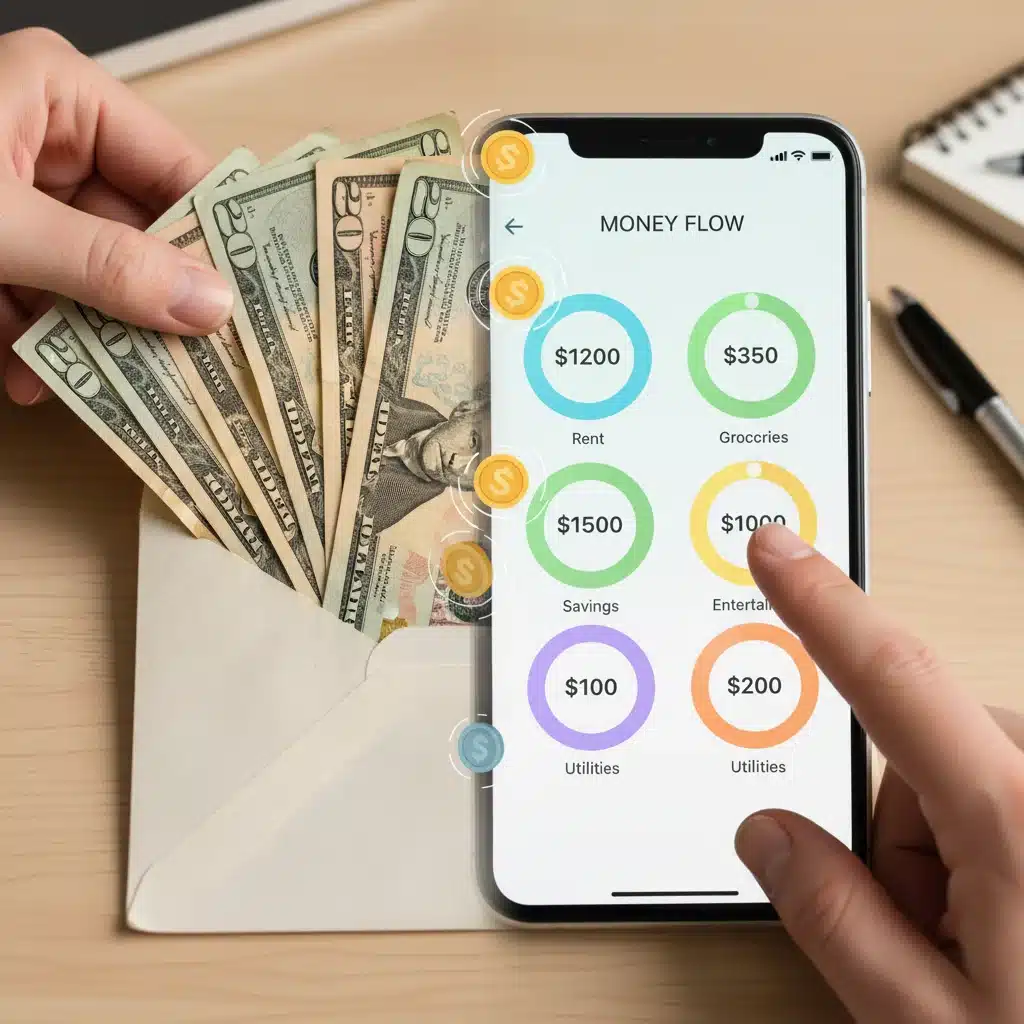
In 2026, while the traditional cash-based system still holds immense value for many, the envelope system has broadened its definition to include digital equivalents. This means:
- Digital Envelopes: Many banking apps and dedicated budgeting software now offer virtual ‘envelopes’ or ‘pots’ where you can digitally allocate funds. Transactions are then debited from the corresponding digital envelope.
- Hybrid Approaches: A popular strategy involves using cash for variable expenses (like groceries, dining out, entertainment) where overspending is common, and digital methods for fixed expenses (rent, utilities, loan payments) which are often automated.
- Prepaid Cards: Some savvy budgeters use reloadable prepaid debit cards, assigning each card to a specific spending category, effectively creating a plastic envelope system.
The core philosophy remains the same: pre-allocate, track, and stick to your limits. The method of execution, however, has become far more flexible and tailored to individual preferences and technological comfort levels.
Why the Envelope System Budgeting is More Relevant Than Ever in 2026
Despite the proliferation of contactless payments and digital currencies, the psychological benefits of the envelope system budgeting are incredibly potent and highly relevant for today’s financial landscape:
1. Enhanced Spending Awareness
When you use a credit card or a digital payment method, the act of spending often feels abstract. There’s no immediate, tangible consequence. The envelope system, whether physical or digital, makes spending concrete. Seeing your allocated funds decrease provides instant feedback, making you more conscious of each purchase. This heightened awareness is crucial in combating impulse buys and emotional spending, which are amplified by the ease of online shopping and one-click purchases.
2. Prevention of Overspending
This is arguably the greatest strength of the envelope system. By setting hard limits for each category, you physically (or digitally) cannot spend more than what’s available. If your ‘Entertainment’ envelope is empty, that’s it for the month. This simple mechanism acts as a powerful brake on runaway spending, preventing debt accumulation and ensuring you live within your means. In an economy where consumer debt is a significant concern, this preventative measure is invaluable.
3. Improved Cash Flow Management
Understanding where your money goes is the first step to effective cash flow management. The envelope system budgeting provides a clear, visual representation of your income and expenditures. You can quickly see which categories are draining your funds and adjust accordingly. This proactive approach allows you to reallocate resources before problems arise, ensuring you always have enough for essential expenses and savings goals.
4. Debt Reduction and Savings Acceleration
By preventing overspending, the envelope system naturally frees up money that can be directed towards debt repayment or savings. Many users find they can accelerate their debt reduction plans or reach savings goals much faster once they gain control over their discretionary spending. You can even create an ‘Extra Debt Payment’ or ‘Savings Goal’ envelope to ensure those funds are prioritized.
5. Reduced Financial Stress
Financial uncertainty is a major source of stress. When you know exactly where your money is allocated and that you won’t overspend, a significant portion of that stress dissipates. The clarity and control offered by the envelope system provide peace of mind, allowing you to make financial decisions with confidence rather than anxiety.
Implementing the Modern Envelope System Budgeting in 2026: A Step-by-Step Guide
Ready to take control of your finances? Here’s how to set up and maintain a successful envelope system budgeting plan for the modern age:
Step 1: Determine Your Income
Start by calculating your total take-home income for the budgeting period (usually monthly). This is the amount you have available to allocate. Be precise and realistic – only include money you are certain to receive.
Step 2: Identify Your Spending Categories
This is a crucial step. List all your expenses, both fixed (rent, mortgage, loan payments, subscriptions) and variable (groceries, dining out, entertainment, gas, clothing, personal care). Be as detailed as possible. Common categories include:
- Housing (Rent/Mortgage)
- Utilities (Electricity, Water, Internet, Gas)
- Transportation (Gas, Public Transport, Car Maintenance)
- Groceries
- Dining Out
- Entertainment
- Personal Care (Haircuts, toiletries)
- Clothing
- Debt Payments (Credit Cards, Personal Loans)
- Savings (Emergency Fund, Retirement, Specific Goals)
- Healthcare
- Miscellaneous/Buffer
Step 3: Assign a Budget Amount to Each Category (Zero-Based Budgeting)
Now, allocate a specific amount of your income to each category. This is where the ‘zero-based’ aspect comes in: every dollar of your income should be assigned a job until your income minus your expenses equals zero. Review your past spending to get a realistic idea of what you typically spend in each area. Be honest with yourself. If you consistently spend $400 on groceries, don’t budget $200 hoping to magically cut back overnight. Start realistically, then look for areas to trim.
Step 4: Choose Your Envelope System Method (Physical, Digital, or Hybrid)
This is where 2026 truly shines. Select the method that best suits your lifestyle and spending habits:
- Traditional Cash Envelopes: Ideal if you struggle with digital spending, prefer tangible money, or want to feel the direct impact of each purchase. Withdraw cash and divide it into physical envelopes.
- Digital Envelopes/Pots: Many modern banks (e.g., Ally Bank, Capital One 360) and budgeting apps (e.g., YNAB – You Need A Budget, Goodbudget, Simplifi) offer virtual sub-accounts or ‘pots’ that function like digital envelopes. You transfer funds into these categories.
- Hybrid Approach: A popular and often most effective method. Use cash for variable, high-risk spending categories (groceries, dining, entertainment) and digital for fixed expenses and larger, less frequent purchases. This combines the psychological benefit of cash with the convenience of digital payments.
- Prepaid Debit Cards: Purchase reloadable prepaid cards and assign each to a category. Load the budgeted amount onto the card. Once the card is empty, you’re done for that category.

Step 5: Track Your Spending Diligently
This is where the rubber meets the road. No matter which method you choose, consistent tracking is paramount. For physical envelopes, simply remove cash for each purchase. For digital systems, ensure your transactions are correctly categorized and debited from the right ‘envelope.’ Many apps automate this or make it very easy to assign transactions.
Step 6: Adjust and Adapt
Your first budget won’t be perfect. Life happens, and expenses fluctuate. At the end of each budgeting period, review your spending. Did you run out of money in one envelope too quickly? Did another have too much left over? Don’t be afraid to adjust your allocations for the next period. The envelope system budgeting is a dynamic tool, not a rigid prison. The goal is to find a balance that works for you.
Advanced Strategies for 2026 Envelope System Budgeting
Once you’ve mastered the basics, consider these advanced techniques to optimize your envelope system budgeting:
1. Sinking Funds: Saving for Irregular Expenses
The envelope system is excellent for monthly expenses, but what about those irregular, larger expenses like car maintenance, annual insurance premiums, holiday gifts, or a new appliance? This is where ‘sinking funds‘ come in. Create separate envelopes (physical or digital) for these future expenses. Each month, contribute a small amount to these envelopes so that when the expense arises, the money is already there, preventing financial shocks and debt.
2. The ‘Roll-Over’ Rule
What happens if you have money left in an envelope at the end of the month? You have a few options:
- Roll it over: Add the leftover amount to the next month’s allocation for that same category. This can be motivating if you underspend.
- Reallocate: Move the surplus to a different envelope that might be struggling, or direct it towards a savings goal or debt repayment.
- Treat yourself: Occasionally, if it’s a small amount from a discretionary category, you might decide to use it for a small treat, but be careful not to make this a habit.
Conversely, if an envelope runs out, resist the urge to ‘borrow’ from another envelope unless it’s a true emergency and you can reallocate funds responsibly. The discipline of the system is key.
3. Integrating with Digital Tools and Apps
For 2026, the power of the envelope system budgeting is amplified by technology. Consider using:
- Budgeting Apps: Apps like YNAB (You Need A Budget), Goodbudget, or EveryDollar are built around the envelope system concept, offering digital envelopes, transaction tracking, and reporting.
- Bank Sub-Accounts: Many online banks allow you to create multiple checking or savings accounts, which can serve as digital envelopes for different categories.
- Spreadsheets: For the more tech-savvy, a custom Excel or Google Sheets spreadsheet can be designed to mimic the envelope system, with formulas to track balances.
The key is to find a digital tool that resonates with you and that you’ll use consistently. Automation features, such as automatic categorization or alerts, can further streamline the process.
Overcoming Challenges with the Envelope System in 2026
While powerful, the envelope system budgeting isn’t without its challenges, especially in a world moving towards cashless transactions. Here’s how to address common hurdles:
1. The Cashless Dilemma
Many places no longer accept cash, or you simply prefer the convenience of cards. This is where the hybrid approach or purely digital envelope systems become invaluable. Use your debit card, but ensure you immediately categorize the transaction and deduct it from the correct digital envelope balance. Some apps even integrate directly with your bank to automatically pull transactions, requiring only your categorization.
2. Unexpected Expenses
An emergency fund is your first line of defense against unexpected costs. Beyond that, a ‘Miscellaneous’ or ‘Buffer’ envelope can absorb small, unforeseen expenses without derailing your entire budget. For larger surprises, you might need to temporarily reallocate funds from less critical envelopes or dip into your emergency fund, always with a plan to replenish it.
3. Staying Consistent and Motivated
Budgeting can feel tedious. To stay motivated:
- Set Clear Goals: Remind yourself why you’re budgeting (e.g., buying a house, paying off debt, saving for a dream vacation).
- Regular Reviews: Schedule weekly or bi-weekly check-ins to review your envelopes and progress.
- Celebrate Small Wins: Acknowledge when you stick to your budget or reach a mini-goal.
- Find an Accountability Partner: Share your goals with a trusted friend or family member.
4. Managing Joint Finances
For couples, the envelope system can be a fantastic tool for shared financial goals. Decide together on categories and allocations. You can have joint envelopes for shared expenses and individual envelopes for personal spending. Open communication and mutual agreement are key to making it work.
Real-World Success Stories (Anonymized)
To illustrate the effectiveness of the envelope system budgeting, let’s look at a couple of anonymized examples:
Case Study 1: The Digital Nomad’s Hybrid Approach
Sarah, a freelance graphic designer, struggled with inconsistent income and overspending on dining out and travel. She adopted a hybrid envelope system. For her fixed expenses (rent, software subscriptions), she used digital envelopes within her banking app. For variable expenses like groceries, personal care, and entertainment, she used physical cash envelopes. She found that physically seeing the cash diminish for her discretionary spending categories significantly curbed her impulse purchases. Within six months, she had built a three-month emergency fund and was consistently hitting her savings goals for international travel.
Case Study 2: The Young Family’s Debt Reduction Journey
Mark and Emily, a young couple with two children, were drowning in credit card debt. They decided to implement a strict, mostly cash-based envelope system for all variable household expenses. They created an ‘Extra Debt Payment’ envelope, and any money left over from other envelopes at the end of the month was immediately transferred to this envelope. The tangible nature of the cash made their financial situation very real. They were able to pay off $15,000 in credit card debt in just 18 months, attributing their success directly to the discipline and clarity provided by the envelope system.
Conclusion: Embrace the Modern Envelope System Budgeting for Financial Freedom
The envelope system budgeting is far from outdated. In 2026, it stands as a powerful, adaptable, and profoundly effective strategy for anyone looking to gain mastery over their cash flow and achieve financial peace. Whether you lean into the traditional tactile experience of cash or embrace the convenience of digital tools, the core principle remains: intentional allocation and disciplined spending.
By understanding your income, categorizing your expenses, assigning every dollar a purpose, and consistently tracking your spending, you can transform your financial habits. The psychological benefits of the envelope system – increased awareness, prevention of overspending, and reduced financial stress – are universal and timeless. As you navigate the complexities of modern personal finance, let the modern envelope system be your guiding light, empowering you to make informed decisions, build wealth, and live a life aligned with your financial values.
Start today. Choose your method, label your envelopes (physical or digital), and embark on your journey to financial empowerment. The future of your finances is in your hands, and with the modern envelope system, you have a proven tool to shape it.