
2026 Budgeting Hacks: 8 Uncommon Strategies to Find an Extra $200 Monthly (INSIDER KNOWLEDGE)
In an ever-evolving financial landscape, traditional budgeting advice often falls short of helping us achieve significant savings. As we look towards 2026, it’s time to move beyond the conventional and embrace a set of truly uncommon budgeting strategies. If your goal is to consistently find an extra $200 in your monthly budget, you’ve come to the right place. This article delves into insider knowledge and practical hacks designed to optimize your finances, reduce unnecessary spending, and supercharge your savings without feeling deprived. Forget drastic cuts; these strategies are about smart, subtle shifts that yield substantial results.
Many people struggle with budgeting not because they lack discipline, but because they’re using outdated or ineffective methods. The secret to unlocking significant savings often lies in identifying and addressing hidden expenses, leveraging technology, and adopting a proactive, rather than reactive, approach to your money. By implementing these eight uncommon budgeting strategies, you’ll not only find that extra $200 but also gain a deeper understanding and control over your financial future. Let’s explore how you can transform your financial habits for 2026 and beyond.
1. The ‘Reverse Budget’ Method: Paying Yourself First, Then Spending
Most budgeting methods start with tracking expenses and then allocating what’s left. The ‘Reverse Budget’ method flips this entirely. Instead of restricting spending categories, you prioritize savings and debt repayment first. The moment your paycheck hits, automatically transfer a set amount (e.g., $200, $500, or a percentage) to your savings, investment, or debt repayment accounts. What’s left is your ‘free-to-spend’ money for the rest of the month. This psychological shift is incredibly powerful. You’re no longer trying to ‘find’ money to save; you’re operating with a pre-saved budget. This is one of the most effective uncommon budgeting strategies because it eliminates decision fatigue and ensures your financial goals are met before discretionary spending even begins. For 2026, automate these transfers to make it truly seamless. Many banking apps allow you to set up recurring transfers, taking the effort out of saving.
The beauty of the Reverse Budget is its simplicity and effectiveness. It forces you to live within your means after you’ve already secured your financial future for that pay period. If you find yourself running short towards the end of the month, it’s a clear signal that your initial savings allocation might be too aggressive, or your spending habits need a closer look. However, for most, it provides a liberating feeling of financial control. You know your essential financial commitments are covered, allowing you to enjoy your remaining funds guilt-free. This approach cultivates a disciplined mindset without the constant stress of tracking every single penny, making it a sustainable long-term solution among uncommon budgeting strategies.
2. Subscription Purge & Negotiate: Beyond the Obvious Cuts
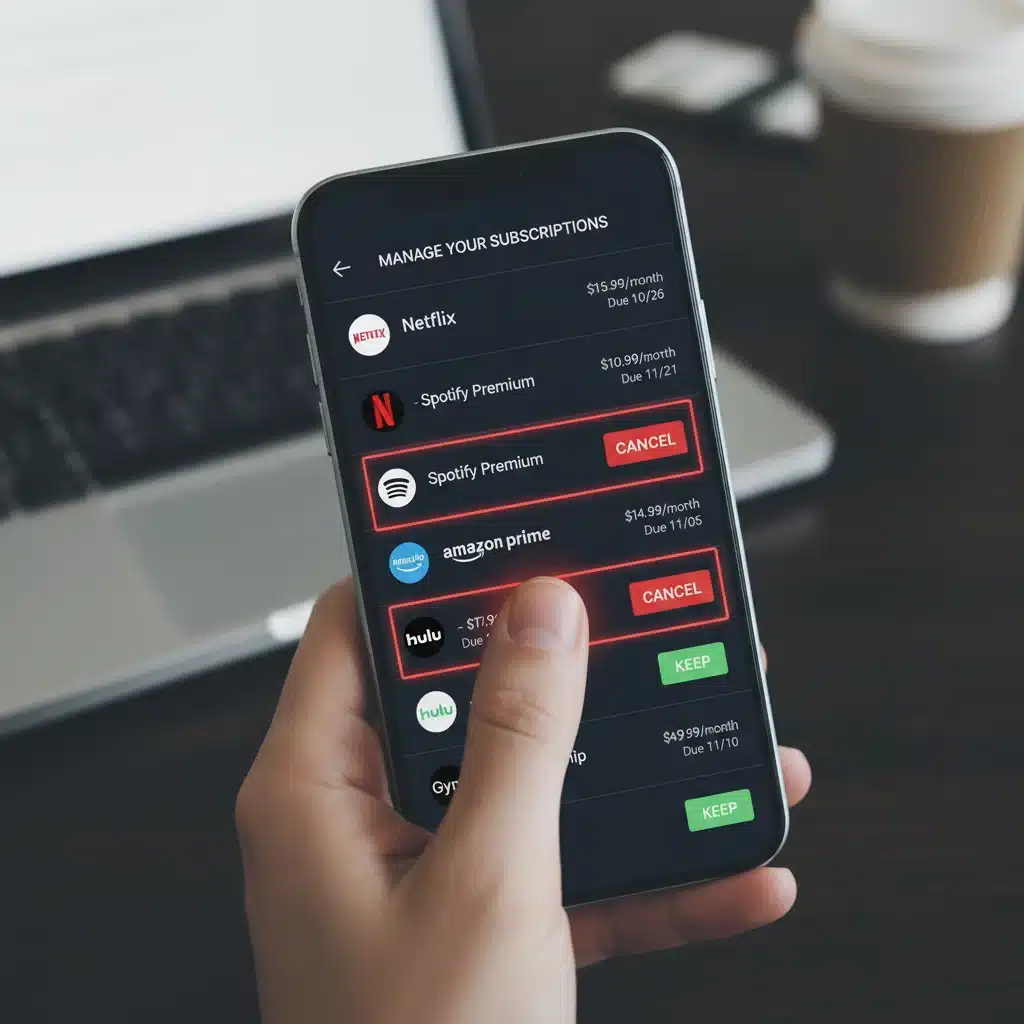
We all know about canceling unused subscriptions, but this strategy goes deeper. For 2026, it’s about a systematic purge and negotiation. First, conduct a thorough audit of ALL recurring charges on your bank statements for the past 12 months. You’ll likely uncover forgotten free trials that rolled into paid subscriptions, or services you rarely use. Second, for subscriptions you genuinely use, explore negotiation. Many streaming services, internet providers, and even gym memberships are willing to offer discounts or loyalty rates if you call and ask. Mention competitor pricing or express intent to cancel. You’d be surprised how often they’ll lower your monthly fee to retain you. This proactive approach to managing recurring expenses is a cornerstone of smart uncommon budgeting strategies.
Think about the cumulative effect of these small monthly charges. A $5 here, a $10 there – it quickly adds up to over $200 a month in overlooked expenses. Beyond negotiation, consider alternatives. Can you share a streaming service with a family member (legally, of course)? Are there free or cheaper alternatives for software you use? For example, open-source software can often replace expensive subscriptions. This isn’t just about cutting; it’s about optimizing value. A dedicated ‘subscription audit day’ once every quarter can easily net you significant savings, solidifying its place as a powerful tool among uncommon budgeting strategies. Don’t underestimate the power of a single phone call or a few minutes spent reviewing your digital footprint.
3. The ‘No-Spend Day’ Challenge (or Week): Resetting Spending Habits
This isn’t about extreme deprivation, but rather strategic pauses. Implement one or two ‘no-spend days’ each week, or even a ‘no-spend week’ once a month. On these days, you commit to spending absolutely no money beyond essential, pre-planned expenses (like rent or a pre-paid bill). No coffee runs, no impulse buys, no eating out. This challenge forces you to be resourceful with what you already have – food in the fridge, entertainment at home, etc. It not only saves money directly but also helps reset your spending habits, making you more mindful on other days. It’s a powerful mental hack and one of the most engaging uncommon budgeting strategies.
The ‘no-spend’ challenge provides a fantastic opportunity to evaluate your true needs versus wants. Often, we spend out of habit or convenience. By intentionally pausing, you gain perspective. You might discover that you don’t need that daily coffee, or that packing a lunch is easier and more satisfying than you thought. Furthermore, it encourages creativity. You might rediscover hobbies at home, spend more quality time with family, or simply enjoy the peace of not constantly consuming. Documenting your savings during these periods can be incredibly motivating, proving that even short-term discipline can yield significant results in your quest for uncommon budgeting strategies.
4. Optimize Your ‘Third Space’: Beyond Home and Work
Think about your ‘third space’ – the places you spend time outside of home and work (coffee shops, bars, co-working spaces, gyms, entertainment venues). These can be silent budget killers. For 2026, identify where you spend money in your ‘third space’ and look for free or cheaper alternatives. Instead of a $5 latte, make coffee at home and meet a friend in a park. Instead of an expensive gym, explore outdoor workouts or free community centers. Can you utilize your local library for books, movies, and even free Wi-Fi instead of paying for entertainment or internet outside your home? This is a clever way to implement uncommon budgeting strategies without feeling isolated.
This strategy isn’t about cutting out social interaction or self-care, but about being smart about where and how you engage. Many cities offer free events, concerts, or cultural activities. Exploring these can enrich your life without emptying your wallet. Public parks, hiking trails, and community gardens provide excellent opportunities for recreation and connection at no cost. By consciously choosing free or low-cost ‘third spaces,’ you can maintain a vibrant social life and pursue hobbies while significantly reducing discretionary spending. This nuanced approach to lifestyle choices is a hallmark of truly effective uncommon budgeting strategies.
5. The ‘Cash-Only for Discretionary Spending’ Rule
In our increasingly cashless society, it’s easy to lose track of spending when all transactions are digital. For 2026, try setting a weekly or bi-weekly cash budget for ALL discretionary spending – entertainment, dining out, impulse buys, etc. Once the cash is gone, it’s gone. This tactile experience of handing over physical money creates a stronger psychological barrier to spending than swiping a card. It makes you more aware of each purchase and encourages thoughtful decisions. This old-school method is a powerful new-age hack among uncommon budgeting strategies.
The envelope system is a classic example of this, but even a simpler ‘cash jar’ can work wonders. By physically seeing your discretionary funds diminish, you develop a more acute awareness of your spending pace. This can prevent those small, unnoticed purchases that slowly erode your budget. Furthermore, it removes the temptation of overspending on credit, helping you avoid unnecessary interest charges. For those struggling with impulse control, the ‘cash-only for discretionary spending’ rule is a game-changer, providing immediate feedback and fostering financial discipline. It’s a surprisingly effective strategy in an era dominated by digital payments, making it one of the most practical uncommon budgeting strategies.
6. ‘Barter & Share’ Economy Integration: Beyond Buying New
Embrace the growing ‘barter and share’ economy. Instead of buying new items or paying for services, consider trading skills or borrowing from your community. Need a specific tool for a DIY project? Ask a neighbor. Have a skill (e.g., gardening, graphic design, pet-sitting) you can trade for something you need? Platforms like Facebook groups or local community forums can facilitate this. This isn’t just about saving money; it’s about building community and reducing consumption. For 2026, explore local ‘Buy Nothing’ groups or skill-share networks. This is a highly effective, yet often overlooked, component of uncommon budgeting strategies.
The ‘barter and share’ economy extends beyond physical items. Think about services. Can you offer to babysit for a friend in exchange for them helping you with a home repair? Can you carpool to work with a colleague and split fuel costs, or take turns driving? This collaborative approach not only saves money but also fosters stronger community ties and reduces waste. It encourages a mindset of resourcefulness and mutual aid, moving away from a purely transactional view of goods and services. By actively participating in this economy, you can significantly reduce expenses in various categories, proving its worth among truly uncommon budgeting strategies.
7. The ‘Price-Drop Alert’ Automation for Big Purchases
For any significant purchase you anticipate making (electronics, appliances, furniture, travel), don’t just buy it when you think you need it. Set up automated price-drop alerts. Websites and browser extensions like Honey, CamelCamelCamel, or Google Shopping can track prices for specific items across various retailers and notify you when the price drops. This requires a bit of patience but can easily save you hundreds of dollars on a single item, freeing up significant funds in your monthly budget. This smart use of technology is a prime example of modern uncommon budgeting strategies.
This strategy is particularly effective for non-urgent purchases. By planning ahead and waiting for the right moment, you can leverage market fluctuations to your advantage. Imagine saving $50 on a new gadget, or $100 on an airline ticket simply by waiting a few weeks and letting technology do the work. Over the course of a year, these savings on larger items can easily accumulate to over $200 a month in saved potential spending. It’s a passive yet powerful way to ensure you’re always getting the best deal, making it an essential tool in your arsenal of uncommon budgeting strategies.
8. Gamify Your Savings: Make it a Challenge
Budgeting often feels like a chore, but what if it could be fun? Gamify your savings goals. Challenge yourself to save a specific amount each week or month, and reward yourself (non-monetarily or with a small, pre-budgeted treat) when you hit milestones. Use apps that turn saving into a game, or simply create your own system. For instance, the ’52-Week Money Challenge’ (saving an increasing amount each week) or a ‘Found Money’ challenge (putting every unexpected dollar into savings). This psychological trick makes budgeting engaging and sustainable, transforming it into one of the most enjoyable uncommon budgeting strategies.
Making saving a game taps into our innate desire for achievement and reward. Instead of viewing budgeting as restrictive, you start to see it as a series of mini-victories. Celebrate reaching a no-spend day, hitting your weekly savings target, or successfully negotiating a lower bill. These small wins build momentum and keep you motivated. You could even involve family members or friends in a friendly competition, fostering a supportive environment for financial growth. By injecting fun and challenge into your financial routine, you’ll find it much easier to stick to your goals and consistently find that extra $200, proving the efficacy of these uncommon budgeting strategies.
Conclusion: Embracing Uncommon Budgeting Strategies for 2026
Finding an extra $200 in your monthly budget for 2026 doesn’t have to be a struggle. By moving beyond conventional advice and embracing these eight uncommon budgeting strategies, you can create significant financial breathing room. From the psychological power of the ‘Reverse Budget’ to the community-driven ‘Barter & Share’ economy, each strategy offers a unique pathway to increased savings and greater financial control. Remember, consistency is key, and even small, smart changes can lead to substantial long-term benefits.
Start by implementing one or two of these strategies and gradually integrate more as you become comfortable. The goal isn’t just to save money, but to cultivate a healthier, more mindful relationship with your finances. By doing so, you’ll not only achieve your immediate goal of an extra $200 monthly but also lay a strong foundation for lasting financial well-being in 2026 and the years to come. Take control, think outside the box, and watch your savings grow!