Prioritize Debts 2026: Smart Strategies for Financial Freedom

How to Prioritize Debts in 2026: A Data-Driven Approach for Maximum Impact
The year 2026 is upon us, and with it comes a renewed opportunity to take control of our finances. For many, this means tackling debt head-on. But with multiple debts, varying interest rates, and different payment structures, knowing where to start can feel overwhelming. This comprehensive guide will delve into how to prioritize debts 2026 using data-driven strategies, ensuring you make the most impactful decisions on your journey to financial freedom.
Debt management isn’t just about making payments; it’s about making smart, strategic payments. The goal is not merely to reduce your debt, but to do so in the most efficient and psychologically rewarding way possible. In this article, we’ll explore the foundational principles of debt prioritization, examine popular methods like the debt avalanche and debt snowball, and discuss how to tailor these strategies to your unique financial situation. We’ll also look at the role of technology and financial planning in optimizing your debt repayment plan for the year ahead.
Understanding your debt landscape is the first crucial step. Before you can effectively prioritize debts 2026, you need a clear picture of what you owe, to whom, and under what terms. This includes knowing your interest rates, minimum payments, and total outstanding balances for each debt. This foundational data will be the bedrock upon which you build your personalized debt repayment strategy.
Let’s embark on this journey to financial empowerment, armed with knowledge and a clear roadmap for 2026.
The Foundation: Understanding Your Debt Portfolio
Before you can begin to prioritize debts 2026, you must first gather all the necessary information about your existing debts. Think of this as your financial inventory. This step is critical because it provides the raw data needed to make informed decisions.
List All Your Debts
Start by creating a comprehensive list of every debt you owe. This might include:
- Credit card balances
- Personal loans
- Student loans
- Car loans
- Medical bills
- Mortgage or home equity lines of credit (HELOCs)
- Payday loans
Gather Key Information for Each Debt
For each item on your list, collect the following essential details:
- Creditor Name: Who do you owe money to?
- Outstanding Balance: How much do you still owe?
- Interest Rate (APR): This is perhaps the most critical piece of information. Is it fixed or variable? Knowing this helps you understand the true cost of your debt over time.
- Minimum Payment: What is the smallest amount you must pay each month to avoid late fees and maintain good standing?
- Due Date: When is each payment due?
- Loan Term: For installment loans, how many months or years do you have left to pay it off?
Why This Data Matters for Prioritization
Having this information organized allows you to see the full scope of your debt. It helps you identify which debts are costing you the most (high interest rates) and which ones might be psychologically easier to tackle first (small balances). This data-driven approach is fundamental to effectively prioritize debts 2026 and build a solid repayment plan.
Many people shy away from confronting their debt head-on, but this initial data gathering phase is empowering. It transforms an abstract feeling of being indebted into concrete, manageable figures. Once you have this clarity, you’re ready to move on to the strategies for tackling these debts.
Debt Prioritization Strategies: Avalanche vs. Snowball
When it comes to deciding how to prioritize debts 2026, two popular and highly effective strategies stand out: the Debt Avalanche and the Debt Snowball. Both have their merits, and the best choice for you often depends on your personality and financial goals.
The Debt Avalanche Method: Maximizing Financial Efficiency
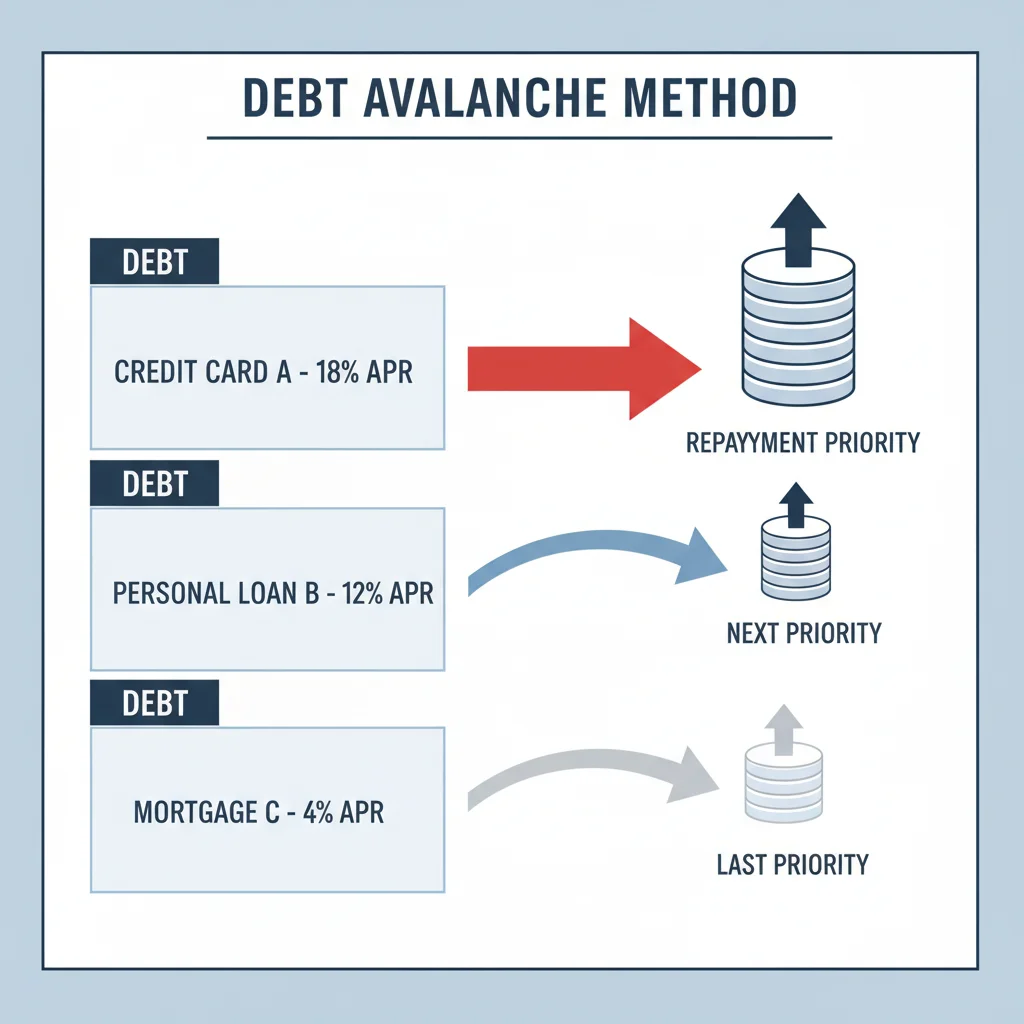
The Debt Avalanche method is a mathematically optimal strategy. It focuses on paying down debts with the highest interest rates first. Here’s how it works:
- List all your debts from highest interest rate to lowest interest rate.
- Make minimum payments on all debts except the one with the highest interest rate.
- Direct all extra money you can afford to pay towards the debt with the highest interest rate.
- Once that debt is paid off, take the money you were paying on it (the minimum payment plus any extra payments) and apply it to the debt with the next highest interest rate.
- Repeat this process until all your debts are paid off.
Pros of the Debt Avalanche:
- Saves the Most Money: By tackling high-interest debt first, you reduce the total amount of interest you pay over the life of your debts, leading to significant savings.
- Faster Debt-Free Date (Potentially): Mathematically, this method gets you out of debt faster than the snowball method, assuming consistent extra payments.
Cons of the Debt Avalanche:
- Less Immediate Gratification: If your highest interest debt is also a large balance, it might take a while to see it disappear, which can be demotivating for some.
This method is ideal for individuals who are highly disciplined and motivated by long-term financial gain. It’s a purely logical approach to prioritize debts 2026.
The Debt Snowball Method: Building Momentum and Motivation
The Debt Snowball method, popularized by financial guru Dave Ramsey, prioritizes psychological wins. It focuses on paying down debts with the smallest balances first, regardless of their interest rate. Here’s how it works:
- List all your debts from smallest outstanding balance to largest outstanding balance.
- Make minimum payments on all debts except the one with the smallest balance.
- Direct all extra money you can afford to pay towards the debt with the smallest balance.
- Once that debt is paid off, take the money you were paying on it (the minimum payment plus any extra payments) and apply it to the debt with the next smallest balance.
- Repeat this process until all your debts are paid off.
Pros of the Debt Snowball:
- Boosts Motivation: Paying off smaller debts quickly provides immediate wins, which can be incredibly motivating and keep you engaged in the process.
- Builds Momentum: Each debt paid off frees up more money to roll into the next debt, creating a ‘snowball’ effect.
Cons of the Debt Snowball:
- More Interest Paid: Because it doesn’t prioritize interest rates, you may end up paying more in total interest over time compared to the avalanche method.
- Slower Debt-Free Date (Potentially): Mathematically, it can take longer to become debt-free, especially if your smallest debts have low interest rates and your largest debts have high interest rates.
The Debt Snowball is perfect for those who need consistent psychological boosts to stay motivated or who have struggled with debt repayment in the past. It’s a behavioral approach to prioritize debts 2026.
Choosing the Right Strategy for You to Prioritize Debts 2026
Deciding between the Debt Avalanche and Debt Snowball methods largely depends on your personality and what motivates you. There’s no universally ‘better’ method; only the one that works best for you.
- Choose Debt Avalanche if: You are highly disciplined, motivated by numbers and saving money, and can stick to a plan even without immediate gratification. You understand that paying less interest means more money in your pocket in the long run.
- Choose Debt Snowball if: You need quick wins to stay motivated, have a history of struggling with debt repayment, or feel overwhelmed by large balances. The psychological boost of seeing debts disappear can be a powerful driver.
It’s also possible to combine aspects of both. For instance, you might start with a small ‘snowball’ to get an initial win, then switch to an ‘avalanche’ for the remaining, larger debts. The key is to pick a strategy and commit to it consistently to effectively prioritize debts 2026.
Beyond Avalanche and Snowball: Other Considerations for Prioritizing Debt
While the avalanche and snowball methods are excellent starting points, there are other factors and strategies to consider when you prioritize debts 2026 that can further optimize your repayment plan.
Consolidating Debt
Debt consolidation involves combining multiple debts into a single, new loan, often with a lower interest rate and a single monthly payment. This can simplify your repayment process and potentially save you money on interest.
- Personal Loans: A common way to consolidate high-interest credit card debt.
- Balance Transfer Credit Cards: These offer 0% APR for an introductory period, allowing you to pay down principal without accruing interest for a set time. Be wary of transfer fees and ensure you can pay off the balance before the promotional period ends.
- Home Equity Loans/Lines of Credit (HELOCs): If you own a home, you might be able to use your home equity to consolidate debt. However, this puts your home at risk if you default, so proceed with extreme caution.
Consolidation can be a powerful tool, but it’s not a magic bullet. If you don’t address the underlying spending habits that led to the debt, you could find yourself in a worse position with new debt on top of the consolidated amount.
Refinancing Loans
Refinancing involves taking out a new loan to replace an existing one, typically to secure a lower interest rate or more favorable terms. This is common with student loans and mortgages.
- Student Loan Refinancing: If you have good credit, you might qualify for a lower interest rate, which can significantly reduce your total cost of repayment.
- Mortgage Refinancing: Can lower your monthly payment or reduce the total interest paid over the life of the loan.
Always compare the new loan’s terms, fees, and interest rates carefully with your existing debt to ensure it’s a beneficial move for your goal to prioritize debts 2026.
Negotiating with Creditors
Don’t be afraid to contact your creditors, especially if you’re struggling to make payments. They might be willing to:
- Lower your interest rate: Especially for credit cards.
- Waive late fees: If you have a good payment history.
- Offer a payment plan: To make your monthly obligations more manageable.
A simple phone call can sometimes yield surprising results and provide much-needed breathing room in your budget, helping you to better prioritize debts 2026.
Creating Your Personalized Debt Repayment Plan for 2026
Once you’ve chosen a primary strategy (avalanche or snowball) and considered other options like consolidation or refinancing, it’s time to build a concrete, actionable plan for 2026. This plan should be detailed and realistic.
Step 1: Set a Realistic Budget
You can’t effectively pay down debt without knowing where your money is going. Create a detailed budget that tracks your income and expenses. Identify areas where you can cut back to free up more money for debt repayment. Every extra dollar you can allocate makes a difference.
Step 2: Automate Payments
Set up automatic minimum payments for all your debts. This ensures you never miss a payment, protecting your credit score and avoiding late fees. Then, set up an additional automatic payment for your chosen priority debt, sending the extra amount you’ve budgeted.
Step 3: Track Your Progress
Seeing your balances decrease is incredibly motivating. Use a spreadsheet, a budgeting app, or even a simple chart on your wall to visualize your progress. Regularly review your plan and make adjustments as needed. Life happens, and your budget and debt strategy may need to adapt.
Step 4: Celebrate Milestones
Paying off a debt, no matter how small, is a significant achievement. Acknowledge these milestones. It could be a small treat, a dinner out, or simply a moment to appreciate your hard work. Positive reinforcement helps maintain motivation on a long journey.
Remember, the goal is not just to prioritize debts 2026, but to eliminate them. This requires consistent effort and a well-thought-out plan.
The Role of Emergency Funds and Savings in Debt Repayment
It might seem counterintuitive to save money while aggressively paying off debt, but having an emergency fund is crucial. Unexpected expenses (car repairs, medical emergencies, job loss) can derail your debt repayment plan and force you to incur new debt.
Build a Starter Emergency Fund
Aim for at least $1,000 to $2,000 in a readily accessible savings account. This fund acts as a buffer against life’s curveballs. If an emergency arises, you can tap into this fund instead of resorting to high-interest credit cards, which would undo your hard work to prioritize debts 2026.
Balancing Saving and Debt Repayment
Once you have a starter emergency fund, you can focus more aggressively on debt. However, continue to contribute a small amount to your emergency fund regularly, aiming to eventually build it up to 3-6 months’ worth of living expenses. This provides true financial security.
For debts with very low interest rates (e.g., some student loans or mortgages), it might even make more sense to prioritize saving for retirement or other long-term goals, especially if your employer offers a matching contribution. The ‘opportunity cost’ of paying off a 2% loan instead of earning a 7% return in a retirement account is worth considering. This is where a truly data-driven approach to prioritize debts 2026 comes into play.
Leveraging Technology and Financial Tools in 2026
The digital age offers a plethora of tools to help you manage and prioritize debts 2026 more effectively. From budgeting apps to debt calculators, these resources can simplify complex financial tasks.
Budgeting Apps
Apps like Mint, YNAB (You Need A Budget), Personal Capital, and EveryDollar can help you:
- Track your spending in real-time.
- Categorize expenses automatically.
- Set and stick to a budget.
- Visualize your cash flow.
Debt Repayment Calculators
Many websites offer free debt calculators that allow you to input your debts and see how different repayment strategies (avalanche, snowball, extra payments) impact your debt-free date and total interest paid. These tools are invaluable for planning and visualizing your progress.
Credit Monitoring Services
Keeping an eye on your credit score and report is important. Services like Credit Karma, Experian, and other free tools allow you to monitor changes, identify potential errors, and understand how your debt repayment efforts are affecting your creditworthiness.
Financial Advisors
For complex financial situations or if you feel overwhelmed, consider consulting a certified financial planner. They can provide personalized advice, help you create a comprehensive plan, and guide you through various debt management options. They can offer an objective perspective on how to best prioritize debts 2026 given your entire financial picture.
Maintaining Momentum and Avoiding New Debt
The journey to becoming debt-free is not just about paying off old debts; it’s also about preventing new ones. As you work to prioritize debts 2026, adopt habits that foster long-term financial health.
Address the Root Causes of Debt
Take time to understand why you accumulated debt in the first place. Was it overspending, unexpected emergencies, job loss, or a lack of financial literacy? Addressing these underlying issues is crucial for sustainable financial freedom.
Live Below Your Means
This fundamental principle means spending less than you earn. It’s the cornerstone of building wealth and avoiding debt. Continuously look for ways to reduce expenses and increase income.
Avoid Lifestyle Creep
As your income increases, resist the urge to immediately upgrade your lifestyle to match it. Instead, direct that extra income towards debt repayment, savings, and investments. This discipline is key to staying ahead financially.
Be Mindful of Credit Card Usage
If credit cards were a primary source of your debt, rethink your approach to using them. Consider using cash or a debit card for everyday purchases, or only use credit cards for specific, budgeted expenses that you can pay off in full each month.

The Psychological Aspect of Debt Repayment
While numbers and strategies are important for how to prioritize debts 2026, the psychological aspect of debt repayment cannot be overstated. It’s a marathon, not a sprint, and maintaining a positive mindset is vital.
Stay Patient and Persistent
There will be setbacks. You might have an unexpected expense, or your motivation might wane. Don’t let these moments derail your entire plan. Reassess, adjust, and keep going. Consistency is more important than perfection.
Focus on Progress, Not Perfection
Every payment you make, every dollar you save, is progress. Celebrate these small victories. Don’t beat yourself up over minor deviations from your plan. The overall trajectory is what matters.
Seek Support
Talk to a trusted friend, family member, or join an online community of people on a similar journey. Sharing your experiences and receiving encouragement can provide a significant boost to your morale.
Visualize Your Debt-Free Future
Regularly remind yourself why you’re doing this. What will financial freedom look like for you? More travel? Less stress? Earlier retirement? Holding onto this vision can be a powerful motivator when the going gets tough.
Conclusion: Your Path to Financial Freedom in 2026 and Beyond
Effectively knowing how to prioritize debts 2026 is a critical step towards achieving lasting financial freedom. By meticulously understanding your debt portfolio, strategically applying methods like the debt avalanche or snowball, and leveraging modern financial tools, you can transform your financial landscape.
Remember, this isn’t just about paying off numbers; it’s about reclaiming control, reducing stress, and building a more secure future for yourself and your family. Start today by gathering your debt information, choosing a strategy that aligns with your personality, and committing to your plan. The year 2026 can be the year you take significant strides toward a debt-free life. With discipline, persistence, and a data-driven approach, your financial goals are well within reach.
Embrace the journey, celebrate your progress, and look forward to the peace of mind that comes with being free from the burden of debt. Your future financially secure self will thank you.