Credit Score Simulation Tools: Are They Accurate for 2026 Planning?

Credit Score Simulation Tools: Are They Accurate for 2026 Planning?
In an increasingly data-driven world, managing your financial health has become more accessible than ever. Among the myriad of tools available, credit score simulation tools stand out as powerful resources for individuals looking to understand and improve their financial standing. But as we look towards 2026 and beyond, a critical question arises: how accurate are these credit score simulation tools, and can we truly rely on them for our future financial planning? This comprehensive guide delves into the intricacies of credit score simulation, exploring their benefits, limitations, and offering practical advice on how to leverage them effectively to achieve your financial goals.
Understanding the Core Functionality of Credit Score Simulation Tools
Before assessing the accuracy of credit score simulation tools, it’s essential to grasp what they are and how they operate. Credit score simulators are digital applications, often provided by credit bureaus, financial institutions, or independent fintech companies, designed to predict how various financial actions might impact your credit score. These actions can range from making a large purchase, paying down debt, applying for new credit, or even missing a payment. The tools utilize complex algorithms that mimic the scoring models used by major credit bureaus (like FICO and VantageScore) to provide an educated estimate of future credit score changes.
The primary goal of these tools is to empower consumers with foresight. Instead of taking financial steps blindly and hoping for a positive outcome, a credit score simulation allows you to test different scenarios in a risk-free environment. This proactive approach can be invaluable for strategic financial planning, especially when preparing for significant life events such as buying a home, securing a car loan, or even renting an apartment.
How Credit Score Simulation Works: The Underlying Algorithms
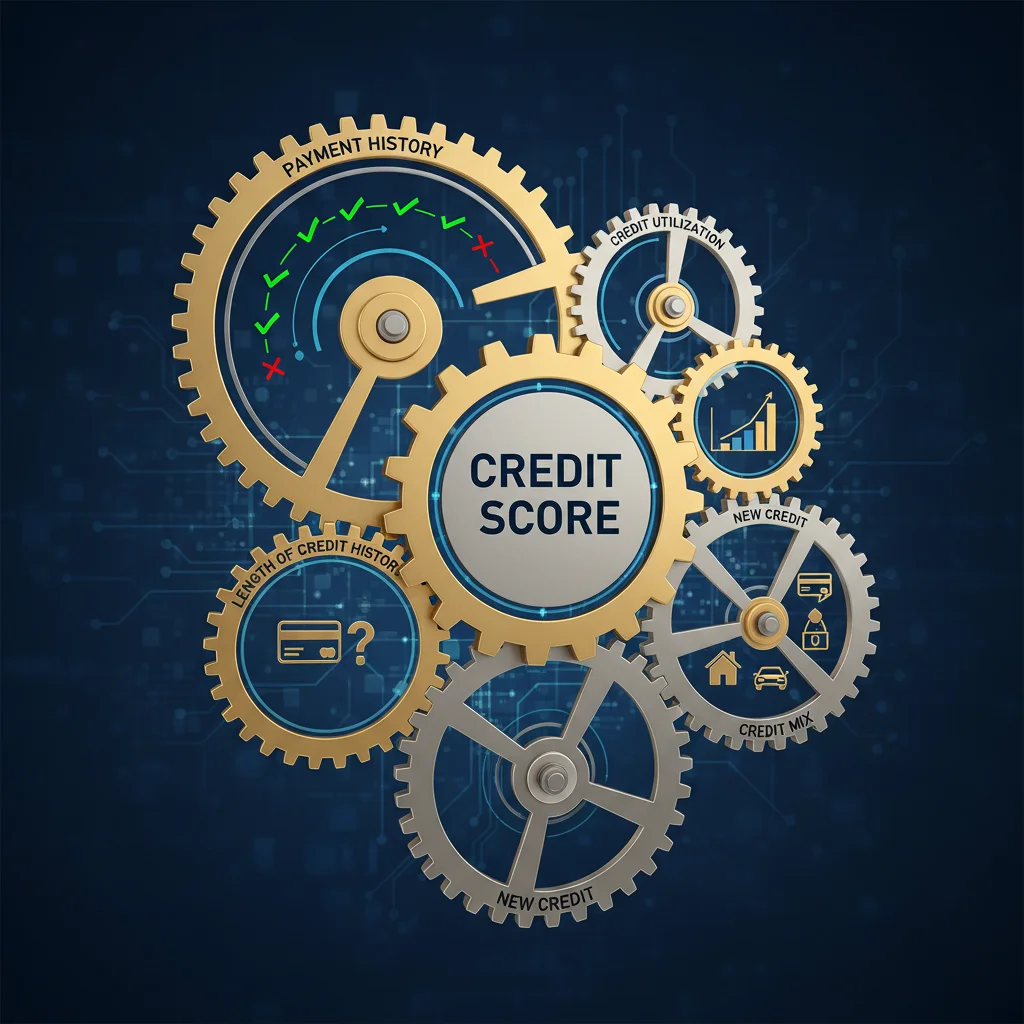
At the heart of every credit score simulation tool lies a sophisticated algorithm. These algorithms are built to reflect the complex weighting of different factors that contribute to your credit score. While the exact proprietary formulas of FICO and VantageScore are closely guarded secrets, the general categories of influence are well-known:
- Payment History (35%): This is the most significant factor, assessing whether you pay your bills on time.
- Amounts Owed (30%): This considers your credit utilization ratio (how much credit you’re using versus how much is available) and the total amount of debt.
- Length of Credit History (15%): The longer your accounts have been open and in good standing, the better.
- New Credit (10%): This looks at recent applications for credit and newly opened accounts.
- Credit Mix (10%): A healthy mix of different types of credit (e.g., installment loans, revolving credit) can be beneficial.
Credit score simulation tools take your current credit report data and apply these general weightings to the hypothetical actions you input. For instance, if you simulate paying off a credit card balance, the tool will adjust the ‘Amounts Owed’ factor, recalculate, and project the potential increase in your score. Conversely, simulating a missed payment would negatively impact the ‘Payment History’ and show a potential decrease.
The Promise of Credit Score Simulation: Benefits for 2026 Planning
For individuals aiming for specific financial milestones in 2026, credit score simulation tools offer several compelling benefits:
Strategic Decision-Making
One of the most significant advantages is the ability to make informed financial decisions. Whether you’re contemplating consolidating debt, opening a new credit card, or taking out a personal loan, these tools can provide a clearer picture of the potential consequences. This allows you to choose the path that optimizes your credit score, rather than inadvertently damaging it.
Proactive Credit Improvement
Credit score simulation tools are excellent for identifying specific actions you can take to improve your credit. Want to reach a ‘good’ or ‘excellent’ credit score by 2026? The simulator can help you experiment with strategies like reducing credit utilization, paying down specific debts, or maintaining a long history of on-time payments to see which actions yield the most significant positive impact.
Budgeting and Financial Goal Setting
By understanding how different financial behaviors affect your credit, you can integrate credit improvement into your broader budgeting and financial goal-setting for 2026. For example, if you know that reducing your credit card debt by a certain amount will boost your score, you can prioritize that in your monthly budget.
Reduced Financial Anxiety
Uncertainty can be a major source of financial stress. Credit score simulation tools offer a degree of predictability, helping to alleviate anxiety by providing a roadmap for credit improvement. Knowing what to expect can make the journey towards better financial health less daunting.
Assessing the Accuracy of Credit Score Simulation Tools for 2026
While the benefits are clear, the core question remains: how accurate are these credit score simulation tools, especially when planning for a future as specific as 2026? The answer, like many things in finance, is nuanced. They are generally good indicators but come with inherent limitations.
Factors Influencing Accuracy: What to Consider
Several factors determine the reliability of a credit score simulation:
- Scoring Model Differences: There isn’t just one credit score. FICO and VantageScore are the two dominant models, but even within FICO, there are numerous versions (e.g., FICO Score 8, FICO Score 9, industry-specific scores). Most simulators are based on a general model, which might not perfectly match the specific score a lender uses in 2026.
- Data Recency: The accuracy of the simulation heavily depends on the recency and completeness of the credit report data it uses. If the tool pulls older data, or if there are recent changes to your credit report not yet reflected, the simulation’s projection will be less precise.
- Complexity of Real-World Scenarios: Financial lives are complex. A simulator can project the impact of one or two actions, but it’s harder to account for a multitude of simultaneous events (e.g., opening a new card, taking out a loan, and having an old collection removed all at once).
- Future Economic Conditions: Credit scoring models can be adjusted over time to reflect changes in economic conditions and consumer behavior. A simulator today cannot perfectly predict how these models might evolve by 2026, especially if there are significant economic shifts.
- Proprietary Algorithms: As mentioned, the exact algorithms are proprietary. Simulators use approximations, which are generally very good, but not perfect replicas.

Are They ‘Accurate Enough’ for 2026 Planning?
For most practical purposes, credit score simulation tools are ‘accurate enough’ to provide valuable guidance for 2026 planning. They offer strong directional accuracy, meaning if a simulator predicts an action will increase your score, it almost certainly will, even if the exact number is off by a few points. Similarly, if it predicts a decrease, you can expect a negative impact. The key is to view them as predictive indicators rather than absolute guarantees.
Consider them as a weather forecast. A forecast might say there’s an 80% chance of rain and predict 1 inch of precipitation. It might actually rain 0.8 inches, or 1.2 inches, but the core message – it will likely rain – is correct. Similarly, a credit score simulator will give you a very good idea of the direction and approximate magnitude of change, which is incredibly useful for long-term planning.
Maximizing the Effectiveness of Credit Score Simulation for Your 2026 Goals
To get the most out of credit score simulation tools for your 2026 financial planning, follow these best practices:
1. Use Reputable Tools
Stick to simulators offered by major credit bureaus (like Experian, Equifax, TransUnion) or well-established financial institutions. These are more likely to use sophisticated algorithms that closely mirror actual scoring models.
2. Understand Which Score Model is Being Used
Be aware of whether the simulator is using a FICO or VantageScore model, and which version. This context will help you interpret the results, especially since different lenders use different scoring models.
3. Regularly Check Your Full Credit Report
Simulators are only as good as the data they feed on. Regularly pull your free annual credit reports from AnnualCreditReport.com to ensure accuracy and completeness. Correct any errors promptly, as these can skew simulation results and your actual score.
4. Test Multiple Scenarios
Don’t just run one simulation. Test various ‘what-if’ scenarios. What happens if you pay off the highest interest credit card first? What if you open a new line of credit? What if you delay a payment by a month? Exploring different outcomes will give you a more robust understanding of your options.
5. Focus on Trends and Direction, Not Just Exact Numbers
As discussed, the exact number might vary. Instead, focus on the direction of the change (up or down) and the general magnitude. Is the action projected to have a significant positive impact, or a minor one? This qualitative understanding is often more important for strategic planning.
6. Combine Simulation with Fundamental Credit Principles
No tool replaces sound financial habits. Continue to prioritize on-time payments, keep credit utilization low, and manage your debt responsibly. The simulator is a guide, not a magic bullet.
7. Account for Potential Delays
Remember that changes you make to your credit behavior won’t instantly reflect on your credit report or score. It can take 30-60 days for creditors to report updated information to the bureaus, and then for the scoring models to recalculate. Factor these delays into your 2026 planning.
Common Pitfalls to Avoid When Using Credit Score Simulation Tools
While highly beneficial, there are several common mistakes users make that can lead to misinterpretations:
Over-reliance on a Single Simulation
As mentioned, don’t just run one scenario. Your financial life is dynamic, and a single simulation provides only a snapshot. Explore a range of possibilities to build a more resilient financial plan.
Ignoring the ‘Soft Pull’ vs. ‘Hard Pull’ Distinction
Most credit score simulation tools perform a ‘soft pull’ of your credit report, which does not affect your score. However, applying for actual credit (e.g., a mortgage, car loan) results in a ‘hard pull,’ which can temporarily lower your score. Simulators can’t perfectly mimic the impact of multiple hard pulls in a short period, which is a real-world factor.
Disregarding Other Financial Goals
Improving your credit score is often one of several financial goals. Sometimes, an action that boosts your credit might not align with other critical objectives, such as building an emergency fund or investing for retirement. Ensure your credit strategy integrates with your broader financial plan.
Not Understanding the ‘Why’ Behind the Score Change
A simulator might tell you your score will go up by 20 points if you pay off a certain debt. But do you understand *why*? Is it because your credit utilization ratio improved significantly, or because you eliminated an account with a high balance? Understanding the underlying reasons helps you apply these principles more broadly.
The Future of Credit Scoring and Simulation Towards 2026
The landscape of credit scoring is constantly evolving. As we approach 2026, we can anticipate several trends that might influence both actual credit scores and the accuracy of simulation tools:
Alternative Data Sources
There’s a growing movement to incorporate alternative data (e.g., rent payments, utility bills, banking transactions) into credit scoring models, particularly for consumers with thin credit files. If widely adopted, simulation tools will need to adapt their algorithms to reflect these new data points.
Increased Personalization
Credit scoring may become even more personalized, with lenders using increasingly sophisticated AI and machine learning to assess risk. This could make generic simulation models slightly less precise for individual outcomes, though still directionally accurate.
Greater Emphasis on Financial Wellness
Beyond just a score, there’s a growing focus on overall financial wellness. Tools that integrate credit simulation with budgeting, savings, and investment planning will likely become more prevalent and powerful.
Regulatory Changes
Potential regulatory changes could impact how credit is reported and scored, which would necessitate updates to simulation tool algorithms. Staying informed about these developments is crucial.
Real-World Examples: How Credit Score Simulation Can Guide Your 2026
Let’s consider a few hypothetical scenarios for 2026 planning where credit score simulation proves invaluable:
Scenario 1: Buying a Home in 2026
Sarah wants to buy her first home by mid-2026. Her current FICO score is 680, which is ‘good’ but she aims for ‘very good’ (740+) to secure the best mortgage rates. Using a credit score simulation tool, she models several actions:
- Paying down her highest credit card balance by 50%: Projected +25 points.
- Opening a new credit card to diversify her credit mix: Projected -5 points initially due to hard inquiry, then gradual increase.
- Making all payments on time for the next 18 months: Projected +40 points over time.
Through simulation, Sarah realizes that aggressively paying down her credit card debt and consistently making on-time payments are the most impactful strategies. She prioritizes these, foregoing a new credit card application for now, and successfully reaches her target score by early 2026.
Scenario 2: Securing a Business Loan
David plans to expand his small business in late 2026 and needs a significant business loan. His personal credit score is a key factor. His current score is 710. He uses a simulator to see the impact of consolidating some personal debt versus opening a new personal loan to cover immediate business expenses.
- Consolidating debt into a lower-interest personal loan: Projected +15 points due to improved credit mix and potentially lower utilization.
- Opening another personal loan (without consolidation): Projected -10 points due to new debt and hard inquiry.
The simulation clearly shows that debt consolidation is the better path for his credit score, making him a more attractive candidate for a business loan.
Conclusion: Your Trustworthy Guide, Not a Crystal Ball
Credit score simulation tools are undeniably valuable assets for anyone engaged in financial planning for 2026 and beyond. While they may not offer 100% pinpoint accuracy due to the dynamic nature of credit scoring models and individual financial circumstances, their directional accuracy and ability to model various ‘what-if’ scenarios make them powerful educational and planning instruments. They serve as excellent guides, helping you understand the likely consequences of your financial actions and empowering you to make strategic choices that lead to a healthier credit profile. By combining the insights from these tools with sound financial principles and regular monitoring of your actual credit report, you can confidently navigate your financial journey towards 2026 with a strong and resilient credit score.
Embrace these tools as a critical component of your financial toolkit, allowing you to visualize your credit future and proactively work towards achieving your goals. The more informed you are, the better equipped you will be to unlock favorable interest rates, secure loans, and ultimately, achieve greater financial freedom.