Cooling-Off Rule 2026: Your Right to Cancel Sales Explained

In the dynamic landscape of consumer transactions, understanding your rights is paramount. One of the most significant consumer protections in many jurisdictions is the ‘Cooling-Off’ Rule. As we approach 2026, it’s crucial for both consumers and businesses to be aware of the nuances of this rule, ensuring fair practices and informed decisions. This comprehensive guide will delve deep into the Cooling-Off Rule 2026, explaining its purpose, scope, and how it empowers individuals to cancel certain sales without penalty. Whether you’re a consumer looking to protect your interests or a business aiming for compliance, this article provides essential insights into this vital consumer safeguard.
What is the Cooling-Off Rule 2026?
The Cooling-Off Rule 2026, often referred to as the ‘right to cancel’ rule, is a fundamental consumer protection mechanism designed to give buyers a period of time to reconsider a purchase made in certain circumstances. This rule is particularly relevant for sales that occur outside of a seller’s usual place of business, where consumers might feel pressured or lack the opportunity for thorough deliberation. The primary objective is to prevent impulse purchases or transactions made under duress, providing a safety net for consumers to reverse their decision without financial repercussions.
While the specifics can vary slightly by jurisdiction and the type of sale, the core principle of the Cooling-Off Rule 2026 remains consistent: it grants consumers a statutory right to cancel a contract within a specified timeframe, typically three business days, without giving a reason and without incurring penalties. This period allows consumers to conduct further research, consult with others, or simply have a change of heart, ensuring that their decision to purchase is truly voluntary and well-considered.
The significance of the Cooling-Off Rule 2026 cannot be overstated. In an increasingly complex marketplace, consumers are often faced with aggressive sales tactics, especially for high-value items or services. This rule acts as a crucial countermeasure, empowering individuals and fostering greater trust in consumer-business relationships. For businesses, understanding and adhering to the Cooling-Off Rule 2026 is not just about legal compliance; it’s about building a reputation for fairness and ethical conduct, which can ultimately lead to long-term customer loyalty.
Historical Context and Evolution
The concept of a ‘cooling-off’ period isn’t new. Its origins can be traced back to the need to protect consumers from door-to-door sales tactics, where salespeople often employed high-pressure techniques to secure immediate commitments. Over time, as consumer markets evolved, so did the scope of these protective regulations. The Cooling-Off Rule 2026 reflects decades of legislative efforts to adapt these protections to modern commercial practices, including online sales, telemarketing, and various service contracts.
Governments and regulatory bodies continually review and update these rules to address emerging challenges and ensure they remain effective in safeguarding consumer interests. The specific provisions of the Cooling-Off Rule 2026 are a result of these ongoing evaluations, aiming to strike a balance between consumer protection and the legitimate interests of businesses. This continuous evolution ensures that the rule remains relevant and responsive to the ever-changing dynamics of the marketplace, protecting consumers from new forms of exploitation while maintaining a fair environment for trade.
Transactions Covered by the Cooling-Off Rule 2026
Not all sales are subject to the Cooling-Off Rule 2026. The rule is specifically designed for certain types of transactions where consumers might be more vulnerable or lack sufficient time to make an informed decision. Understanding which sales are covered is vital for both consumers and businesses to ensure compliance and proper exercise of rights. Generally, the rule applies to sales made at the buyer’s home, at temporary business locations, or away from the seller’s usual place of business.
Door-to-Door Sales
One of the classic scenarios covered by the Cooling-Off Rule 2026 is door-to-door sales. These are sales initiated by a salesperson who comes to your home, often uninvited, to offer goods or services. The rationale here is that consumers might feel obligated or pressured to make a purchase in their own homes, making it difficult to decline. The rule gives them a window to reconsider after the salesperson has left.
Sales at Temporary Locations
This category includes sales made at places like trade shows, conventions, hotel meeting rooms, or other temporary venues. While these are public settings, the temporary nature of the sales environment can still create a sense of urgency or limit a consumer’s ability to compare prices or research the product/service thoroughly. The Cooling-Off Rule 2026 extends its protection to these situations, allowing consumers to cancel if they have second thoughts.
Certain Service Contracts
Beyond tangible goods, the Cooling-Off Rule 2026 also applies to specific service contracts, particularly those for home improvement, repair services, or certain educational programs, especially when these are solicited away from a permanent business establishment. The complexity and long-term commitment often associated with service contracts make the cooling-off period an essential safeguard.
Online and Distance Sales (Jurisdiction Dependent)
While often governed by separate distance selling regulations, in some jurisdictions, the principles of the Cooling-Off Rule 2026 have been integrated or expanded to cover online purchases, telemarketing sales, and other transactions where the consumer doesn’t physically interact with the seller or product before purchase. It’s important to check local regulations, as the application here can vary significantly.
Exemptions and Exclusions from the Cooling-Off Rule 2026
Just as important as knowing what the Cooling-Off Rule 2026 covers is understanding what it does not. Several types of sales and transactions are typically exempt from this rule, often because they fall under other specific consumer protection laws or because the nature of the transaction doesn’t present the same risks of high-pressure sales tactics. Being aware of these exemptions helps consumers set realistic expectations and businesses ensure accurate compliance.
Sales Made at a Seller’s Permanent Business Place
Generally, sales made at a retail store or any permanent place of business where the seller routinely conducts business are not covered by the Cooling-Off Rule 2026. The assumption is that consumers have the opportunity to browse, compare, and deliberate without undue pressure in such environments. For these transactions, return policies are typically at the discretion of the retailer, unless otherwise mandated by specific state or federal laws.
Real Estate, Insurance, and Securities Sales
Transactions involving real estate, insurance, or securities are typically exempt from the Cooling-Off Rule 2026. These industries are heavily regulated by their own specific laws and often have their own unique cancellation or rescission periods, which are designed to address the complexities and high stakes involved in such purchases. Consumers engaging in these types of transactions should familiarize themselves with the specific regulations pertaining to those sectors.
Emergency Home Repairs
Sales for emergency home repairs, where immediate action is necessary to prevent damage to property, are often excluded. The rationale is that delaying such services for a cooling-off period could lead to greater harm. However, this exemption usually comes with strict conditions to prevent abuse, ensuring that only genuine emergencies qualify.
Sales of Goods Under a Certain Value
Some jurisdictions may exclude sales where the total purchase price is below a specified threshold. This is often to avoid overburdening businesses with administrative requirements for very low-value transactions. The exact monetary limit can vary, so it’s important to consult local regulations for the Cooling-Off Rule 2026.
Custom-Made or Perishable Goods
Items that are custom-made to the consumer’s specifications or perishable goods (like certain foods or flowers) are frequently exempt. The nature of these products makes them unsuitable for return or resale, and thus, a cooling-off period would be impractical for the seller. However, this exemption typically only applies if the goods cannot be returned in a resalable condition.
Vehicle Sales (Often Separate Regulations)
While some aspects of vehicle sales might touch upon consumer protection, the sale of automobiles is often governed by its own set of specific state laws, which may or may not include a cooling-off period. It’s a common misconception that all car sales come with a right to cancel; in many places, they do not, unless explicitly stated in the contract or required by specific local statutes. Consumers should always verify the cancellation terms before purchasing a vehicle.
Exercising Your Rights Under the Cooling-Off Rule 2026
Knowing you have rights under the Cooling-Off Rule 2026 is one thing; effectively exercising them is another. The process for canceling a sale is generally straightforward, but it requires attention to detail and adherence to specific steps to ensure your cancellation is valid and recognized by the seller. Failure to follow the correct procedure could jeopardize your right to a refund or contract termination.
Understand the Cancellation Period
The first and most critical step is to be aware of the exact cancellation period. For most transactions covered by the Cooling-Off Rule 2026, this is typically three business days, but it can sometimes be longer depending on the jurisdiction or the type of product/service. The clock usually starts the day after you sign the contract or receive a copy of the contract and the required cancellation forms. Weekends and holidays often don’t count towards the business day calculation, but always confirm the specific rules applicable to your situation.
Written Notice is Key
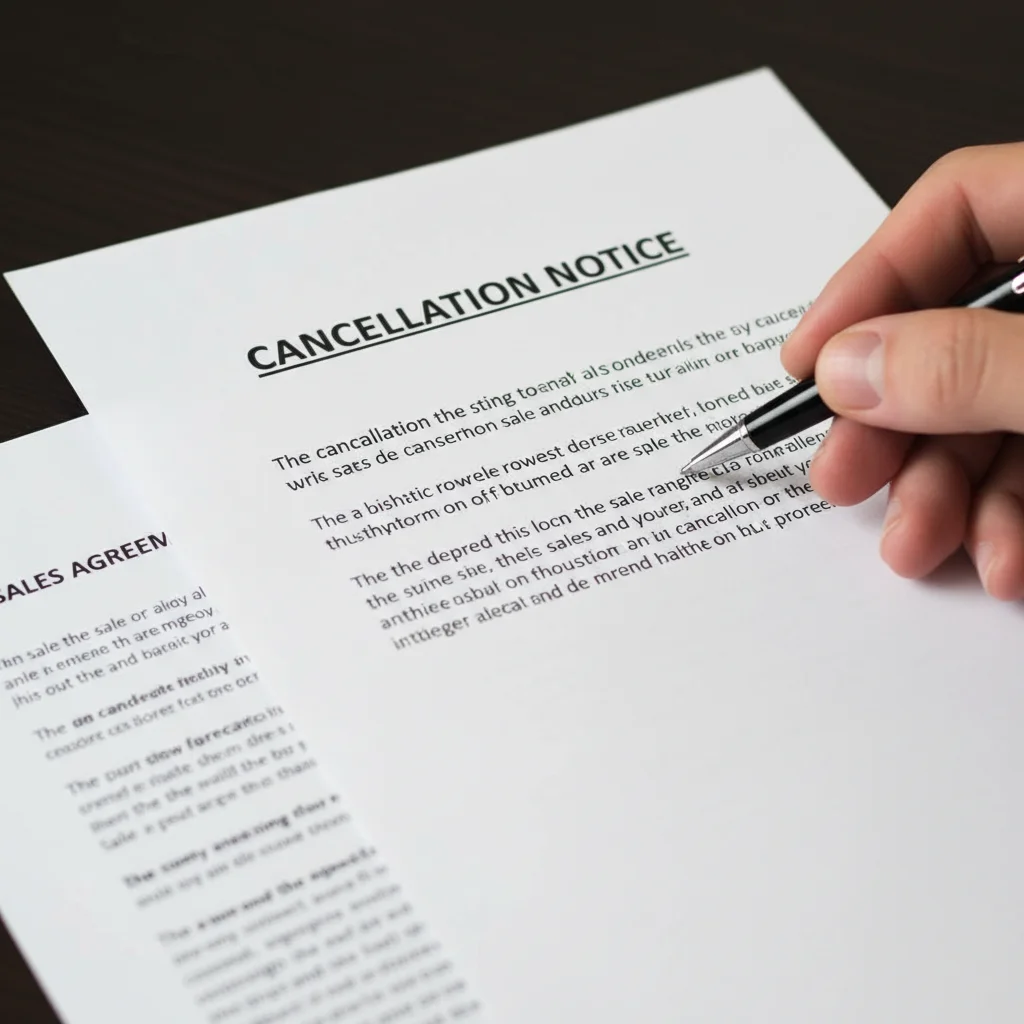
To cancel a sale under the Cooling-Off Rule 2026, you must provide written notice to the seller. Oral cancellations are generally not sufficient and can be difficult to prove. The seller is required to provide you with a cancellation form at the time of sale. If they don’t, or if you lose it, you can write your own letter. This letter should clearly state your intention to cancel the contract, include your name, address, and contact information, the date of the sale, a description of the goods or services, and the contract amount.
Methods of Delivery
How you send your cancellation notice is as important as the notice itself. Always use a method that provides proof of mailing and delivery. Options include:
- Certified Mail with a Return Receipt: This provides a record that the notice was sent and received.
- Registered Mail: Similar to certified mail, offering a secure way to send important documents.
- Courier Service: Services like FedEx or UPS also provide tracking and delivery confirmation.
- Hand Delivery with a Signed Receipt: If you deliver it in person, make sure to get a signed and dated copy from the seller acknowledging receipt.
Sending the notice by regular mail, email, or fax without confirmation is generally not recommended, as it can be difficult to prove that the seller received it within the Cooling-Off Rule 2026 timeframe.
Returning Goods
If you received goods as part of the sale, you generally have an obligation to return them to the seller. The seller should provide instructions on how and where to return the items. You might be responsible for the cost of returning the goods, but this varies. The goods must typically be returned in substantially the same condition as when you received them. The seller then has a specified period (e.g., 10 business days) to refund your money once they receive the cancellation notice and/or the returned goods.
Retain All Documentation
Keep copies of everything: the original contract, the cancellation notice you sent, proof of mailing/delivery, and any correspondence with the seller. This documentation is crucial if there are any disputes regarding your cancellation under the Cooling-Off Rule 2026.
Business Compliance with the Cooling-Off Rule 2026
For businesses, understanding and adhering to the Cooling-Off Rule 2026 is not just a legal obligation but also a critical aspect of maintaining a positive reputation and avoiding costly legal disputes. Non-compliance can lead to significant penalties, including fines, consumer lawsuits, and damage to brand image. Proactive compliance ensures smooth operations and builds consumer trust.
Providing Proper Notice and Forms
Businesses covered by the Cooling-Off Rule 2026 are legally required to inform consumers of their right to cancel. This involves providing a clear, conspicuous written notice of the right to cancel at the time of sale. This notice must include:
- A full explanation of the consumer’s right to cancel.
- The deadline for cancellation.
- The seller’s name and address.
- Two copies of a cancellation form, one for the consumer to keep and one to send back.
Failure to provide this information can extend the cancellation period indefinitely until the consumer is properly informed.
Honoring Cancellations and Refunds
Upon receiving a valid cancellation notice within the specified period, businesses must promptly honor the cancellation. This includes:
- Refunding all money paid by the consumer, including any down payments, within a certain number of business days (e.g., 10 days).
- Canceling and returning any negotiable instruments signed by the buyer (e.g., promissory notes).
- Terminating any security interest created in the transaction.
- Notifying the consumer whether any goods left with them will be picked up or if the consumer is responsible for returning them.
Delaying or refusing to issue a refund for a valid cancellation under the Cooling-Off Rule 2026 can result in severe legal repercussions.
Handling Returned Goods
Businesses must also have a clear process for handling returned goods. If the seller is obligated to pick up the goods, they must do so within a reasonable timeframe (e.g., 20 calendar days) after receiving the cancellation notice. If the consumer is responsible for returning the goods, the business should provide clear instructions. It’s important for businesses to inspect returned items to ensure they are in the expected condition, but they generally cannot charge for ordinary wear and tear.
Training Sales Staff
Effective compliance with the Cooling-Off Rule 2026 starts with well-trained sales staff. Employees involved in sales covered by the rule must fully understand its provisions, the types of sales it applies to, and the correct procedures for informing consumers and processing cancellations. Regular training and clear internal policies can prevent errors and ensure consistent compliance.
Record Keeping
Maintaining meticulous records of all sales, cancellation notices, and refund transactions is crucial for businesses. This documentation serves as proof of compliance and can be vital in resolving any disputes that may arise. Good record-keeping practices are an integral part of responsible business operations under the Cooling-Off Rule 2026.
The Future Outlook for the Cooling-Off Rule 2026 and Beyond
The Cooling-Off Rule 2026, like all consumer protection laws, is not static. It evolves in response to technological advancements, new sales practices, and changing consumer behaviors. As we look beyond 2026, it’s reasonable to anticipate further adaptations to ensure the rule remains effective in safeguarding consumer interests in an ever-changing marketplace.
Impact of Digitalization
The increasing prevalence of online sales, digital contracts, and subscription services poses ongoing challenges and opportunities for the Cooling-Off Rule 2026. Regulators are continuously evaluating how to apply the principles of the rule to virtual transactions, ensuring that consumers have similar protections when making purchases online as they do in person. This might involve clearer digital notices, simplified online cancellation processes, or expanded definitions of ‘distance sales.’
Global Harmonization Efforts
With global commerce becoming more common, there’s a growing interest in harmonizing consumer protection laws across different countries and regions. While complete uniformity is unlikely, efforts to align key principles of rules like the Cooling-Off Rule 2026 could benefit both consumers and international businesses by creating a more predictable legal environment. This could reduce confusion for consumers making cross-border purchases and simplify compliance for businesses operating internationally.
Focus on Transparency and Education
Beyond legislative changes, there’s a continuous push for greater transparency from businesses and enhanced consumer education. The effectiveness of the Cooling-Off Rule 2026 relies heavily on consumers being aware of their rights and how to exercise them. Future initiatives may focus on clearer disclosures, more accessible information campaigns, and educational programs to empower consumers to make informed decisions and protect themselves.
Adapting to New Business Models
The emergence of new business models, such as direct-to-consumer sales via social media, peer-to-peer marketplaces, and innovative service delivery platforms, will necessitate ongoing review of the Cooling-Off Rule 2026. Regulators will need to assess whether existing protections are adequate or if new provisions are required to address specific risks associated with these evolving commercial landscapes.
Ultimately, the goal remains the same: to create a fair and equitable marketplace where consumers can confidently engage in transactions, knowing they have a safety net for certain purchases. The Cooling-Off Rule 2026 is a cornerstone of this vision, and its continued evolution will play a vital role in shaping consumer protection for years to come.
Conclusion
The Cooling-Off Rule 2026 stands as a testament to the enduring commitment to consumer protection. It provides a crucial safeguard, empowering individuals to cancel certain sales within a specified period, thereby mitigating the risks associated with high-pressure tactics or impulsive decisions. For consumers, understanding the scope of this rule, knowing which transactions are covered, and following the correct procedures for cancellation are essential steps in protecting their financial interests and ensuring peace of mind.
For businesses, compliance with the Cooling-Off Rule 2026 is not merely a legal requirement; it’s an opportunity to build trust, foster positive customer relationships, and uphold ethical business practices. By providing clear disclosures, honoring cancellation requests promptly, and maintaining transparent processes, businesses can demonstrate their commitment to fairness and consumer satisfaction.
As the marketplace continues to evolve with new technologies and sales strategies, the principles underlying the Cooling-Off Rule 2026 will undoubtedly adapt. Staying informed about these changes, both as a consumer and a business, is paramount. This rule is more than just a legal formality; it’s a fundamental pillar of consumer confidence, ensuring that the act of purchasing remains a deliberate and protected choice. By embracing the spirit and letter of the Cooling-Off Rule 2026, we contribute to a healthier, more trustworthy commercial environment for everyone.