Mastering Debt-to-Income Ratio: Your 2026 Financial Health Blueprint

Mastering Your Debt-to-Income Ratio: A 2026 Blueprint for Financial Health
In the dynamic landscape of personal finance, certain metrics stand out as paramount indicators of your financial well-being. Among these, the Debt-to-Income Ratio (DTI) is undeniably one of the most critical. As we look towards 2026, understanding, calculating, and optimizing your DTI will be more important than ever for securing loans, managing debt, and achieving overall financial stability. This comprehensive guide will demystify the Debt-to-Income Ratio, explain its profound impact on your financial future, and provide actionable strategies to improve it, ensuring you are well-positioned for success in the coming years.
Many individuals overlook the significance of their Debt-to-Income Ratio until they are faced with a major financial decision, such as applying for a mortgage, a car loan, or even a personal loan. However, by proactively managing this ratio, you can unlock better interest rates, higher loan approval chances, and a clearer path to financial freedom. Let’s delve into what the Debt-to-Income Ratio truly means and why it should be a cornerstone of your 2026 financial planning.
What Exactly is the Debt-to-Income Ratio?
At its core, your Debt-to-Income Ratio is a personal finance measure that compares how much you owe each month to how much you earn. It is expressed as a percentage and is a key indicator lenders use to assess your ability to manage monthly payments and repay debts. A lower DTI signifies a good balance between debt and income, indicating that you have more money available to cover your monthly expenses after making your debt payments. Conversely, a high DTI suggests you might be overextended, which can make it challenging to obtain new credit or secure favorable loan terms.
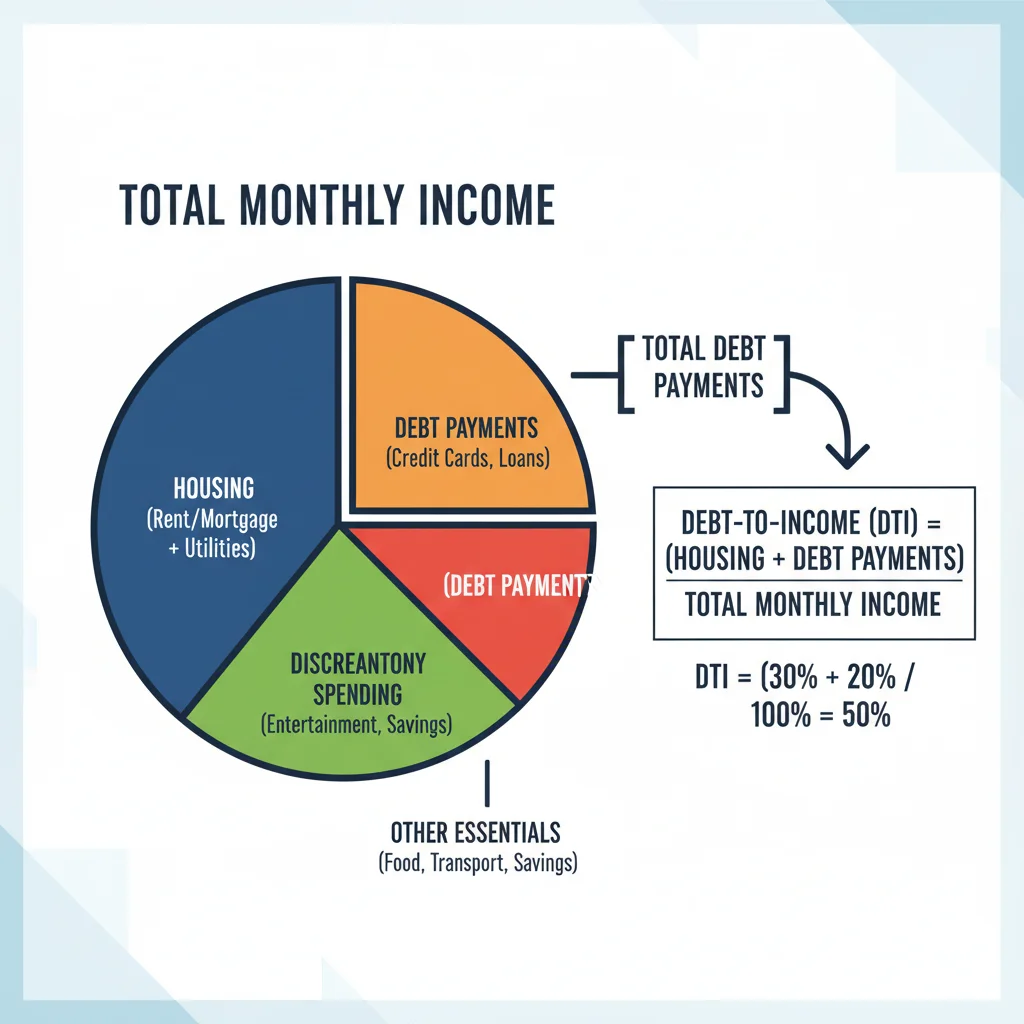
The calculation itself is straightforward: you divide your total monthly debt payments by your gross monthly income. Gross monthly income is the amount of money you earn before taxes and other deductions are taken out. Debt payments typically include things like mortgage or rent payments, car loan payments, student loan payments, minimum credit card payments, and any other recurring debt obligations.
Why is Your Debt-to-Income Ratio So Important?
The importance of your Debt-to-Income Ratio cannot be overstated, especially when it comes to borrowing money. Lenders use DTI as a primary risk assessment tool. A high DTI suggests that a significant portion of your income is already committed to debt repayment, leaving less room for additional debt. This makes you a higher risk in the eyes of lenders, potentially leading to loan denials or less favorable interest rates.
For instance, for a conventional mortgage, many lenders prefer a DTI of 36% or less, though some may go up to 43% or even 50% in certain circumstances, particularly for FHA loans. For other types of loans, such as personal loans or auto loans, the acceptable DTI can vary but generally follows the same principle: lower is better. Understanding this threshold is crucial as you plan for significant purchases in 2026.
Calculating Your Debt-to-Income Ratio for 2026
Let’s break down the simple steps to calculate your Debt-to-Income Ratio. This calculation is a vital first step in taking control of your financial health for 2026.
Step 1: Calculate Your Gross Monthly Income
Your gross monthly income is your total income before taxes, deductions, and other expenses are subtracted. This includes your salary, wages, tips, commissions, bonuses, and any other regular income sources. If you’re self-employed, use your average monthly income after business expenses but before personal taxes.
For example, if your annual salary is $72,000, your gross monthly income would be $72,000 / 12 = $6,000.
Step 2: Calculate Your Total Monthly Debt Payments
This step requires a detailed look at all your recurring monthly debt obligations. Be thorough to ensure an accurate DTI. Here’s what to include:
- Housing Payments: Your monthly mortgage payment (principal, interest, property taxes, and homeowner’s insurance) or your monthly rent payment.
- Car Loan Payments: The full monthly payment for any vehicle loans.
- Student Loan Payments: Your minimum monthly payment for all student loans, regardless of whether they are federal or private.
- Credit Card Minimum Payments: The minimum payment due on all your credit cards, even if you typically pay more.
- Other Installment Loans: Personal loans, boat loans, RV loans, or any other fixed payment loans.
- Alimony or Child Support: If you are legally obligated to make these payments, they are considered debt for DTI calculation purposes.
What NOT to include: Regular monthly expenses like utilities, groceries, insurance premiums (other than homeowner’s insurance included in mortgage), transportation costs, or entertainment expenses are generally not included in the DTI calculation, as they are not considered debt payments.
Let’s say your monthly debt payments are:
- Mortgage: $1,500
- Car Loan: $300
- Student Loans: $200
- Credit Card Minimums: $100
- Total Monthly Debt Payments: $2,100
Step 3: Perform the Calculation
Now, divide your total monthly debt payments by your gross monthly income and multiply by 100 to get a percentage.
Using our example:
($2,100 / $6,000) * 100 = 35%
So, your Debt-to-Income Ratio would be 35%.
Understanding Your Debt-to-Income Ratio: What’s a Good DTI for 2026?
While a lower DTI is always preferable, what constitutes a ‘good’ ratio can depend on the type of loan you’re seeking and the lender’s specific guidelines. However, there are general benchmarks that are widely accepted across the financial industry.
- Below 20%: Excellent. This is an ideal DTI. It indicates you have a significant amount of discretionary income, making you a highly attractive borrower. You’re likely to receive the best interest rates and loan terms.
- 20% – 35%: Good. This is generally considered a healthy range. You’re managing your debts well, and lenders will typically view you favorably for most types of loans, including mortgages.
- 36% – 43%: Acceptable. Many lenders, especially for FHA loans or certain conventional mortgages, may still approve loans within this range. However, you might face stricter underwriting requirements or slightly higher interest rates. This is often the upper limit for conventional mortgage approval.
- Above 43%: High Risk. A DTI above 43% generally indicates that a significant portion of your income is already allocated to debt. This makes it difficult to qualify for new loans, especially mortgages, as lenders perceive a higher risk of default. It suggests you might be stretched thin financially.
- Above 50%: Very High Risk. While some specialized programs might exist, it’s extremely challenging to get approved for most loans with a DTI this high. This level often signals a need for significant debt restructuring and financial intervention.
It’s also important to distinguish between two types of DTI: the Front-End Ratio and the Back-End Ratio.
- Front-End Ratio (Housing Ratio): This only considers your housing expenses (mortgage/rent, property taxes, insurance) as a percentage of your gross monthly income. Lenders typically look for a front-end ratio of no more than 28% for conventional mortgages.
- Back-End Ratio (Total DTI): This is the DTI we’ve been discussing, which includes all monthly debt payments. This is the more commonly cited and crucial ratio.
For 2026, staying within the ‘Good’ or ‘Excellent’ range for your Debt-to-Income Ratio will provide you with the most financial flexibility and opportunities.
The Impact of Your Debt-to-Income Ratio on Your Financial Future
Your DTI isn’t just a number; it’s a powerful predictor of your financial health and a gateway to various financial opportunities. Let’s explore its multifaceted impact:
1. Loan Approval and Interest Rates
This is perhaps the most direct impact. A low Debt-to-Income Ratio signals to lenders that you have sufficient income to comfortably handle additional debt. This increases your chances of loan approval and often qualifies you for lower interest rates, saving you thousands of dollars over the life of a loan. Conversely, a high DTI can lead to loan denials, or if approved, higher interest rates to compensate for the increased risk.
2. Mortgage Qualification
For many, a mortgage is the largest financial commitment they will ever make. Your DTI is a cornerstone of mortgage underwriting. Lenders scrutinize this ratio to ensure you can afford the monthly mortgage payments along with your other existing debts. If your DTI is too high, even with a good credit score, you might not qualify for the mortgage amount you desire or any mortgage at all.
3. Financial Stress and Budgeting
Beyond lender assessments, your DTI provides a realistic snapshot of your personal financial situation. A high DTI can indicate that too much of your income is tied up in debt payments, leaving little for savings, emergencies, or discretionary spending. This can lead to financial stress, difficulty building wealth, and a reduced quality of life. A healthy DTI promotes better budgeting and reduces financial strain.
4. Credit Score Relationship (Indirect)
While DTI is not directly factored into your credit score (like FICO or VantageScore), it is indirectly related. High debt payments, often reflected in a high DTI, can lead to higher credit utilization (the amount of credit you’re using compared to your total available credit), which *does* negatively impact your credit score. Managing your DTI effectively often goes hand-in-hand with maintaining a good credit score.
5. Future Financial Planning and Wealth Building
A low Debt-to-Income Ratio frees up more of your income for investment, savings, and wealth-building activities. It allows you to contribute more to retirement accounts, build an emergency fund, and invest in assets that grow over time. For 2026 and beyond, a strong DTI is a foundation for achieving long-term financial goals.
Strategies to Optimize Your Debt-to-Income Ratio for 2026
Improving your Debt-to-Income Ratio requires a two-pronged approach: increasing your income and decreasing your debt. Let’s explore actionable strategies for both.
A. Strategies to Decrease Your Debt Payments
1. Pay Down High-Interest Debt
Focus on aggressively paying down debts with the highest interest rates first, such as credit card balances. Not only does this reduce your overall debt faster, but it also frees up more of your income that was previously going towards interest payments. The ‘debt avalanche’ method is highly effective here.
2. Consolidate Debt
Consider debt consolidation, especially if you have multiple high-interest debts. This could involve a personal loan with a lower interest rate, a balance transfer credit card (be wary of introductory periods), or a home equity loan if you own a home. Consolidating can simplify payments and potentially reduce your total monthly debt obligation.
3. Refinance Loans
If interest rates have dropped or your credit score has improved, consider refinancing existing loans like auto loans or student loans. A lower interest rate can significantly reduce your monthly payment, thereby lowering your DTI. Research current rates and talk to lenders about refinance options for 2026.
4. Avoid Taking on New Debt
While working to improve your DTI, it’s crucial to resist the temptation to take on new debt. Every new loan or credit card balance will directly increase your monthly debt payments, making it harder to reach your target DTI.
5. Negotiate with Creditors
If you’re struggling to make payments, don’t hesitate to contact your creditors. They may be willing to work with you on a payment plan, reduce your interest rate, or even offer a temporary hardship program. Any reduction in your minimum monthly payment will positively impact your DTI.
6. Consider Selling Unused Assets
If you have assets you no longer need, such as an extra car, an RV, or expensive gadgets, selling them can provide a lump sum to pay down debt quickly. This can be a fast way to reduce your debt burden and improve your Debt-to-Income Ratio.
B. Strategies to Increase Your Income
1. Seek a Raise or Promotion
One of the most direct ways to improve your DTI is to increase your gross monthly income. If you’ve been excelling at your job, consider negotiating for a raise or pursuing a promotion. Prepare by researching market rates for your position and highlighting your achievements.
2. Take on a Side Hustle
In the gig economy, there are countless opportunities to earn extra income. Whether it’s freelancing, driving for a ride-sharing service, delivering food, or selling crafts online, a side hustle can significantly boost your monthly income and positively impact your Debt-to-Income Ratio.
3. Monetize a Hobby or Skill
Do you have a hobby or skill that others would pay for? This could be anything from tutoring, graphic design, web development, pet sitting, or even teaching a language. Turning a passion into a source of income can be rewarding both financially and personally.
4. Rent Out a Spare Room or Property
If you have a spare bedroom, an in-law suite, or an investment property, consider renting it out. Rental income can be a substantial boost to your gross monthly income, directly improving your DTI.
5. Sell Unused Items
Similar to selling assets to pay down debt, selling items you no longer use can also be viewed as a temporary income boost if the funds are directly used to reduce debt. While not a recurring income, it can provide a quick infusion of cash to tackle a specific debt.

Advanced Tips for DTI Management in 2026
Beyond the basic strategies, there are more nuanced approaches to consider as you fine-tune your Debt-to-Income Ratio for 2026.
Understanding the "Two-Tiered" DTI
Some lenders, particularly for mortgages, look at two DTI ratios: the front-end (housing expenses only) and the back-end (total debt). While our focus has been on the back-end, being mindful of both is crucial. If your housing payment alone consumes too much of your income, it can be a red flag, even if your overall DTI is acceptable.
The Role of "Future Debt" in DTI Calculations
When applying for a loan, especially a mortgage, lenders will often consider not just your current debts but also any new debt you might be taking on. For instance, if you’re applying for a mortgage, the proposed new mortgage payment will be factored into your DTI calculation. This is why it’s essential to aim for a DTI that allows room for the new debt without pushing you into a high-risk category.
Student Loan Considerations
Student loans often have income-driven repayment (IDR) plans that can lower your monthly payment. While this can reduce your DTI, be aware that it might extend the loan term and increase the total interest paid. Weigh the pros and cons carefully, especially if your goal is primarily DTI improvement for a short-term need like a mortgage.
Impact of Co-signed Loans
If you have co-signed a loan for someone else, that debt can appear on your credit report and be factored into your DTI, even if you’re not making the payments. If possible, ensure the primary borrower is making payments on time and consider having your name removed from the loan once they’ve established sufficient credit.
Annual Review of Your DTI
Make it a habit to calculate your Debt-to-Income Ratio at least once a year, or whenever you experience a significant change in income or debt. This proactive approach allows you to monitor your financial health and make adjustments as needed, keeping you on track for your 2026 financial goals.
Common Misconceptions About Debt-to-Income Ratio
To truly master your DTI, it’s important to dispel some common myths:
Myth 1: DTI is the Same as Your Credit Score
While related, DTI and credit score are distinct. Your credit score is a numerical representation of your creditworthiness based on your credit history, payment behavior, and credit utilization. DTI is a ratio of your debt payments to your income. Both are important, but they measure different aspects of your financial health.
Myth 2: Only Large Debts Affect Your DTI
Every recurring monthly debt payment contributes to your DTI. Even small credit card minimums or personal loan payments add up and can collectively push your ratio higher than you’d expect. It’s the sum of all monthly debt obligations that matters.
Myth 3: A High Income Guarantees a Low DTI
While a high income certainly helps, it doesn’t automatically mean a low DTI. If someone with a high income also has very high debt payments (e.g., multiple luxury car loans, large mortgage, significant student loans, and high credit card balances), their DTI could still be high. It’s the ratio that counts, not just the absolute income figure.
Myth 4: DTI is Only Important When Applying for a Mortgage
While critically important for mortgages, DTI is also considered for auto loans, personal loans, and sometimes even for renting an apartment. Lenders for all types of credit use it to gauge your repayment capacity. Regularly monitoring your DTI is a good practice for overall financial health, regardless of immediate borrowing needs.
The Future of DTI: What to Expect in 2026 and Beyond
As financial technologies evolve and economic conditions shift, the emphasis on metrics like the Debt-to-Income Ratio remains constant. In 2026, we can expect lenders to continue relying heavily on DTI, possibly with more sophisticated data analytics to assess risk. The trend towards personalized financial products may also mean that while general DTI guidelines persist, individual circumstances and overall financial behavior will be increasingly factored into lending decisions.
Moreover, as remote work continues to expand, income stability and diversification might become more significant considerations alongside DTI. Individuals with multiple income streams or highly stable remote positions might find their DTI viewed more favorably, even if it’s slightly higher than traditional benchmarks.
The rise of AI and machine learning in finance could also lead to more dynamic DTI assessments, potentially allowing for real-time adjustments based on spending patterns and income fluctuations. This underscores the importance of consistent financial management and an ongoing understanding of your DTI.
Conclusion: Your Path to Financial Empowerment in 2026
Your Debt-to-Income Ratio is far more than a simple calculation; it’s a powerful lens through which lenders view your financial stability and a vital indicator of your personal financial health. By understanding how to calculate it, recognizing what constitutes a healthy ratio, and actively implementing strategies to improve it, you are taking significant steps towards financial empowerment.
For 2026, make it a priority to regularly assess your DTI. Whether your goal is to buy a home, purchase a new car, consolidate debt, or simply gain greater control over your finances, optimizing your Debt-to-Income Ratio will open doors to better opportunities and a more secure financial future. Start today by calculating your current DTI, identifying areas for improvement, and committing to the strategies outlined in this guide. Your financial well-being in 2026 and beyond depends on it.