
Navigating Bankruptcy in 2026: A Step-by-Step Guide to Chapter 7 and Chapter 13 Decisions
In an ever-evolving economic landscape, facing overwhelming debt can feel like an insurmountable challenge. For many, the prospect of bankruptcy, while daunting, offers a legitimate path to financial relief and a fresh start. As we look towards bankruptcy filings 2026, it’s crucial to understand the distinct differences between Chapter 7 and Chapter 13, their implications, and how to make an informed decision that aligns with your specific financial situation. This comprehensive guide will walk you through the essential steps, eligibility requirements, and long-term considerations for both types of bankruptcy, ensuring you are well-equipped to navigate this complex process.
The decision to file for bankruptcy is rarely taken lightly. It’s often the culmination of years of financial struggle, unexpected life events, or a combination of factors that have led to unsustainable debt levels. While bankruptcy carries a stigma, it is a legal right designed to help individuals and businesses overcome financial hardship. Understanding the legal framework, particularly as it stands for bankruptcy filings 2026, is the first step toward reclaiming your financial future.
This article aims to demystify the process, providing clarity on when Chapter 7 might be appropriate versus Chapter 13, what to expect during the filing process, and how these decisions can impact your life moving forward. We’ll delve into the eligibility criteria, the role of legal counsel, and the critical factors you need to consider before making such a significant financial decision.
Understanding the Basics of Bankruptcy Filings in 2026
Before diving into the specifics of Chapter 7 and Chapter 13, it’s important to grasp the fundamental principles of bankruptcy law as they apply to bankruptcy filings 2026. Bankruptcy is a legal procedure for individuals or businesses who cannot repay their outstanding debts. The process is governed by federal law, specifically Title 11 of the U.S. Code, and is handled in federal bankruptcy courts. The primary goals of bankruptcy are to provide a fresh start for debtors and to ensure fair treatment for creditors.
The Purpose of Bankruptcy
The core purpose of bankruptcy is twofold: to relieve honest but unfortunate debtors from their debts and to provide an orderly process for distributing a debtor’s assets among creditors. This relief can come in the form of a discharge (eliminating the legal obligation to pay certain debts) or a reorganization of debts into a manageable payment plan. The specific path depends on the type of bankruptcy filed.
Key Terms to Know
- Debtor: The individual or entity filing for bankruptcy.
- Creditor: A person or entity to whom the debtor owes money.
- Estate: All of the debtor’s legal or equitable interests in property at the time of the bankruptcy filing.
- Trustee: An individual appointed by the U.S. Trustee to administer the bankruptcy estate. The trustee’s role varies significantly between Chapter 7 and Chapter 13 cases.
- Discharge: A court order that permanently releases the debtor from personal liability for certain debts.
- Automatic Stay: An injunction that automatically stops lawsuits, foreclosures, garnishments, and other collection activities against the debtor the moment a bankruptcy petition is filed.
Staying informed about these terms and the general framework is crucial for anyone considering bankruptcy filings 2026. The legal landscape, while generally stable, can see minor adjustments, making it vital to consult with a qualified professional.
Chapter 7 Bankruptcy: The Liquidation Option for 2026
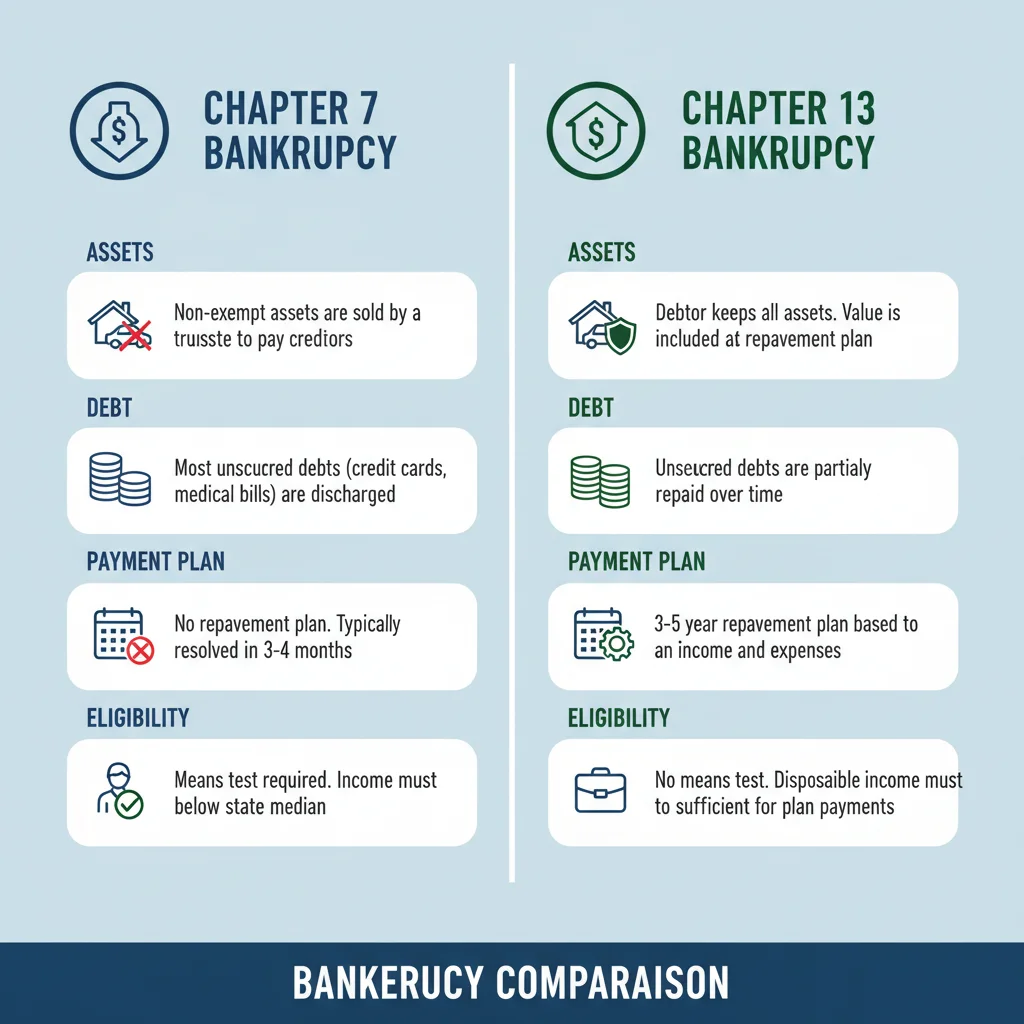
Chapter 7 bankruptcy, often referred to as ‘liquidation bankruptcy,’ is designed for individuals who have limited income and few assets, and who cannot realistically repay their debts. In a Chapter 7 case, a court-appointed trustee sells off certain non-exempt assets to pay creditors. However, most Chapter 7 cases filed by individuals are ‘no-asset’ cases, meaning the debtor’s property is primarily exempt, and there is nothing for the trustee to liquidate.
Eligibility for Chapter 7 in 2026
To qualify for Chapter 7, debtors must pass the ‘means test.’ This test evaluates your income and expenses to determine if your income is low enough to qualify for Chapter 7. The means test compares your average current monthly income over the past six months to the median income for a household of your size in your state. If your income is below the median, you generally qualify. If it’s above, a more detailed calculation involving your disposable income is performed to see if you can afford to pay back a portion of your debts.
Another crucial eligibility factor is prior bankruptcy filings. You generally cannot receive a Chapter 7 discharge if you received a Chapter 7 discharge in a case filed within the last eight years or a Chapter 13 discharge in a case filed within the last six years (with some exceptions).
The Chapter 7 Process for Bankruptcy Filings 2026
- Credit Counseling: Before filing, you must complete an approved credit counseling course within 180 days.
- Petition Filing: You file a petition with the bankruptcy court, along with schedules listing your assets, liabilities, income, expenses, and other financial information.
- Automatic Stay: Upon filing, an automatic stay goes into effect, halting most collection activities.
- Meeting of Creditors (341 Meeting): Approximately 20-40 days after filing, you will attend a meeting with your trustee and any creditors who choose to appear. The trustee will ask you questions under oath about your financial situation.
- Financial Management Course: Before your debts can be discharged, you must complete a debtor education course.
- Discharge: If everything goes smoothly, most of your unsecured debts (like credit card debt, medical bills, and personal loans) will be discharged approximately 60-90 days after the 341 meeting.
Advantages of Chapter 7
- Quick Relief: It’s generally the fastest form of bankruptcy, often concluding within 4-6 months.
- Debt Discharge: Most unsecured debts are eliminated, providing a clean slate.
- No Repayment Plan: Unlike Chapter 13, there’s no ongoing repayment plan.
Disadvantages of Chapter 7
- Asset Liquidation: While rare for most individuals, non-exempt assets can be sold.
- Not All Debts Discharged: Certain debts, like most student loans, recent taxes, child support, and alimony, are typically not dischargeable.
- Credit Impact: Chapter 7 remains on your credit report for 10 years.
For those considering bankruptcy filings 2026 and seeking a swift resolution to overwhelming unsecured debt, Chapter 7 can be a powerful tool, provided they meet the eligibility requirements.
Chapter 13 Bankruptcy: The Reorganization Option for 2026
Chapter 13 bankruptcy, known as ‘reorganization bankruptcy,’ is designed for individuals with regular income who can afford to repay some or all of their debts over time through a court-approved repayment plan. This chapter is often chosen by debtors who don’t qualify for Chapter 7, want to protect non-exempt assets, or need to catch up on mortgage or car payments.
Eligibility for Chapter 13 in 2026
To be eligible for Chapter 13, you must have a stable source of income to fund your repayment plan. There are also limits on the amount of secured and unsecured debt you can have. As of 2024 (these figures are adjusted periodically, so it’s essential to check for bankruptcy filings 2026), unsecured debts must be less than $465,275, and secured debts must be less than $1,395,875. These limits are subject to change, so consulting current legal resources or an attorney is vital.
The Chapter 13 Process for Bankruptcy Filings 2026
- Credit Counseling: Similar to Chapter 7, you must complete an approved credit counseling course.
- Petition and Plan Filing: You file a petition and a proposed repayment plan with the court. The plan details how you will repay your creditors over three to five years.
- Automatic Stay: The automatic stay takes effect, protecting you from collection actions.
- Meeting of Creditors (341 Meeting): You’ll attend a meeting with your trustee and creditors.
- Confirmation Hearing: The bankruptcy judge reviews your proposed plan to ensure it meets legal requirements and is feasible. Once confirmed, you must adhere to the plan.
- Repayment Plan: You make regular payments to the Chapter 13 trustee, who then distributes the funds to your creditors.
- Financial Management Course: Before discharge, you must complete a debtor education course.
- Discharge: Upon successful completion of your repayment plan, remaining dischargeable debts are eliminated.
Advantages of Chapter 13
- Asset Protection: You can keep all your property, including non-exempt assets, as long as you make your plan payments.
- Stop Foreclosure/Repossession: Chapter 13 can stop foreclosure proceedings and vehicle repossessions, allowing you to catch up on missed payments over time.
- Cram Down: In some cases, you can reduce the principal balance on secured debts (like car loans) to the market value of the collateral.
- Discharge of More Debts: Chapter 13 can discharge some debts not dischargeable in Chapter 7 (e.g., certain types of divorce debt).
- Co-Signer Protection: Chapter 13 offers protection for co-signers on consumer debts.
Disadvantages of Chapter 13
- Longer Process: The repayment plan lasts 3-5 years.
- Ongoing Payments: You are committed to making regular payments for several years.
- Credit Impact: Chapter 13 remains on your credit report for 7 years.
- Complexity: The process can be more complex than Chapter 7 due to the detailed repayment plan.
Chapter 13 is a powerful tool for those with higher income or significant assets they wish to protect, offering a structured path to debt repayment and eventual discharge, particularly relevant for bankruptcy filings 2026 where asset protection is a priority.
Deciding Between Chapter 7 and Chapter 13 for Your 2026 Bankruptcy Filing
The choice between Chapter 7 and Chapter 13 is a critical one, dependent on your unique financial circumstances, goals, and eligibility. There’s no one-size-fits-all answer, and what works for one individual may not be suitable for another.
Key Factors to Consider
- Income Level: Your income is a primary determinant. If your income is below the state median and you pass the means test, Chapter 7 might be an option. If your income is higher but you still can’t pay your debts, Chapter 13 might be more appropriate.
- Assets: Do you have significant non-exempt assets you wish to protect, such as equity in a home or valuable investments? Chapter 13 allows you to keep all your property, whereas Chapter 7 could lead to the liquidation of non-exempt assets.
- Type of Debt: Are your debts primarily unsecured (credit cards, medical bills) or secured (mortgage, car loan)? Chapter 13 is often better for catching up on secured debts and preventing foreclosure or repossession.
- Dischargeable Debts: While both chapters discharge many common debts, Chapter 13 can sometimes discharge debts not covered by Chapter 7.
- Prior Filings: Your bankruptcy history can affect your eligibility for either chapter.
- Long-Term Goals: Are you looking for a quick discharge of debt, or do you need a structured plan to manage payments and protect assets over a longer period?
When Chapter 7 Might Be Your Best Option
Consider Chapter 7 if:
- You have primarily unsecured debts.
- Your income is below the state median, and you pass the means test.
- You have few or no non-exempt assets.
- You are looking for a relatively quick resolution to your debt problems.
- You don’t have the regular income to fund a Chapter 13 repayment plan.
When Chapter 13 Might Be Your Best Option
Consider Chapter 13 if:
- You have a stable, regular income that allows you to make monthly payments.
- You want to save your home from foreclosure or your car from repossession.
- You have significant non-exempt assets you wish to protect.
- You don’t qualify for Chapter 7 under the means test.
- You have certain types of non-dischargeable debts (in Chapter 7) that can be managed or discharged in Chapter 13.
- You have co-signers on debts you want to protect.
Making this decision for your bankruptcy filings 2026 requires a thorough review of your financial situation and a clear understanding of your objectives. This is where professional guidance becomes indispensable.
The Role of a Bankruptcy Attorney in 2026 Filings
Navigating the complexities of bankruptcy law, especially with potential updates relevant to bankruptcy filings 2026, is challenging without expert legal assistance. A qualified bankruptcy attorney can provide invaluable guidance throughout the entire process, from initial consultation to discharge.
How an Attorney Can Help
- Eligibility Assessment: An attorney can accurately assess your eligibility for Chapter 7 or Chapter 13 based on your income, assets, and debts, including performing the means test.
- Document Preparation: Bankruptcy petitions and schedules are detailed and require precise financial information. An attorney ensures all documents are correctly prepared and filed, avoiding common errors that can delay or derail your case.
- Strategic Advice: They can advise you on the best course of action, considering your long-term financial goals, asset protection, and debt discharge options.
- Creditor Communication: Your attorney can handle communications with creditors and the bankruptcy trustee on your behalf.
- Representation in Court: They will represent you at the Meeting of Creditors (341 meeting) and any other necessary court hearings.
- Post-Bankruptcy Guidance: An attorney can offer advice on rebuilding your credit and managing your finances after bankruptcy.
While it’s possible to file for bankruptcy without an attorney (pro se), it is generally not recommended due to the intricate legal requirements and potential pitfalls. The cost of an attorney is often outweighed by the benefits of a smooth, successful bankruptcy process and the peace of mind that comes with professional representation.

Life After Bankruptcy: Rebuilding Your Financial Future in 2026
Filing for bankruptcy is not the end of your financial journey; it’s a new beginning. While your credit score will take a hit, there are concrete steps you can take to rebuild your credit and secure your financial future after bankruptcy filings 2026.
Steps to Rebuild Credit
- Obtain a Secured Credit Card: These cards require a deposit, which acts as your credit limit. They are an excellent way to demonstrate responsible credit use.
- Apply for a Credit Builder Loan: Some financial institutions offer loans specifically designed to help people build credit. The loan amount is held in a savings account while you make payments, which are reported to credit bureaus.
- Monitor Your Credit Report: Regularly check your credit reports for accuracy. You are entitled to a free report from each of the three major credit bureaus annually.
- Pay Bills on Time: Consistency is key. Make sure all your new financial obligations are paid promptly.
- Keep Debt Levels Low: Maintain a low credit utilization ratio (the amount of credit you use compared to your total available credit).
- Budgeting and Financial Planning: Develop a realistic budget and stick to it. Consider working with a financial advisor to create a long-term financial plan.
The Long-Term Impact
While bankruptcy remains on your credit report for 7 to 10 years, its impact diminishes over time. Many individuals are able to obtain new credit, purchase homes, and secure auto loans within a few years of discharge, especially if they diligently work to re-establish good credit habits. The fresh start provided by bankruptcy allows you to shed overwhelming debt and focus on building a more stable financial foundation.
Common Misconceptions About Bankruptcy Filings in 2026
Despite its legal framework and protections, bankruptcy is often surrounded by myths and misunderstandings that can deter individuals from exploring it as a viable option. Addressing these misconceptions is crucial for anyone considering bankruptcy filings 2026.
Myth 1: You Lose Everything You Own
Reality: This is one of the biggest fears, but it’s largely untrue. Bankruptcy laws include ‘exemptions’ that protect certain types of property, such as your primary residence (up to a certain value), a car, household goods, retirement accounts, and tools of your trade. Most Chapter 7 cases are ‘no-asset’ cases where debtors lose no property. In Chapter 13, you keep all your assets as long as you make your plan payments.
Myth 2: You Can Never Get Credit Again
Reality: While your credit score will drop, you can and will get credit again. Lenders often offer secured credit cards and subprime loans shortly after bankruptcy. By responsibly managing new credit, you can rebuild your credit score over time. Many people find they have better access to credit post-bankruptcy because they are no longer burdened by overwhelming debt.
Myth 3: Bankruptcy is a Moral Failure
Reality: Bankruptcy is a legal tool designed to help individuals overcome financial setbacks, often caused by circumstances beyond their control (e.g., job loss, medical emergencies, divorce). It’s a provision in federal law, not a judgment of character. Many successful individuals and businesses have filed for bankruptcy and gone on to thrive.
Myth 4: You Can File for Bankruptcy Multiple Times Without Issue
Reality: There are restrictions on how frequently you can receive a bankruptcy discharge. As mentioned, for Chapter 7, you generally must wait eight years from the filing date of a previous Chapter 7 to receive another discharge. For Chapter 13, the waiting periods are shorter, but still exist. These rules encourage responsible financial management.
Myth 5: Everyone Will Know You Filed for Bankruptcy
Reality: While bankruptcy filings are public record, they are not widely publicized. Unless you are a prominent public figure or your case involves significant assets or notoriety, it’s unlikely that anyone outside of your creditors and the court will be aware of your filing. The impact on your social or professional life is often minimal.
Understanding these truths can help alleviate some of the anxiety associated with considering bankruptcy filings 2026 and empower you to make a more objective decision.
Preparing for Your Bankruptcy Filing in 2026
If you’ve decided that bankruptcy is the right path for you, thorough preparation is key to a smooth process. This involves gathering documents, understanding your finances, and making informed decisions about your property.
Essential Documents to Gather
- Income Records: Pay stubs, tax returns (for the last two years), profit and loss statements (if self-employed).
- Debt Statements: Credit card statements, loan agreements (mortgage, auto, personal), medical bills, collection notices.
- Asset Information: Deeds to property, vehicle titles, bank statements, investment account statements, insurance policies, retirement account statements.
- Living Expenses: Utility bills, rent/mortgage payments, food expenses, transportation costs.
- Legal Documents: Divorce decrees, child support orders, lawsuits.
Understanding Your Exemptions
Exemptions protect certain property from being sold by the bankruptcy trustee. States have their own exemption laws, and some states allow debtors to choose between state and federal exemptions. An attorney can help you understand which exemptions apply to your situation and how to maximize them to protect your assets during bankruptcy filings 2026.
Pre-Filing Considerations
- Avoid New Debts: Do not incur significant new debts, especially luxury purchases, shortly before filing, as this can be seen as fraudulent.
- Don’t Transfer Assets: Avoid transferring assets to friends or family members before filing, as this can be reversed by the trustee and lead to legal issues.
- Credit Counseling: Remember to complete your mandatory credit counseling course.
Being well-prepared will streamline the bankruptcy process and help ensure a favorable outcome for your bankruptcy filings 2026.
Conclusion: Taking Control of Your Financial Future in 2026
The decision to pursue bankruptcy filings 2026 is a significant one, but it can be a powerful tool for individuals and families struggling under the weight of insurmountable debt. Whether Chapter 7 offers the swift relief of debt discharge or Chapter 13 provides a structured path to reorganization and asset protection, understanding your options is the first step toward a healthier financial future.
This guide has aimed to demystify the process, highlighting the eligibility requirements, procedural steps, and long-term implications of both Chapter 7 and Chapter 13. Remember, seeking professional legal advice from an experienced bankruptcy attorney is paramount. They can help you navigate the complexities of bankruptcy law, ensure compliance with all requirements, and advocate for your best interests.
Bankruptcy is not an admission of failure but rather a strategic financial decision to gain a fresh start. By taking proactive steps, educating yourself on the process, and enlisting the right support, you can successfully navigate bankruptcy filings 2026 and embark on a path toward renewed financial stability and peace of mind.
Don’t let the fear or stigma of bankruptcy prevent you from exploring a viable solution to your debt problems. Empower yourself with knowledge, seek expert guidance, and take control of your financial destiny today.