Reporting Financial Misconduct: A 2026 Guide to Filing Complaints with Federal Agencies and Achieving Resolution Within 90 Days
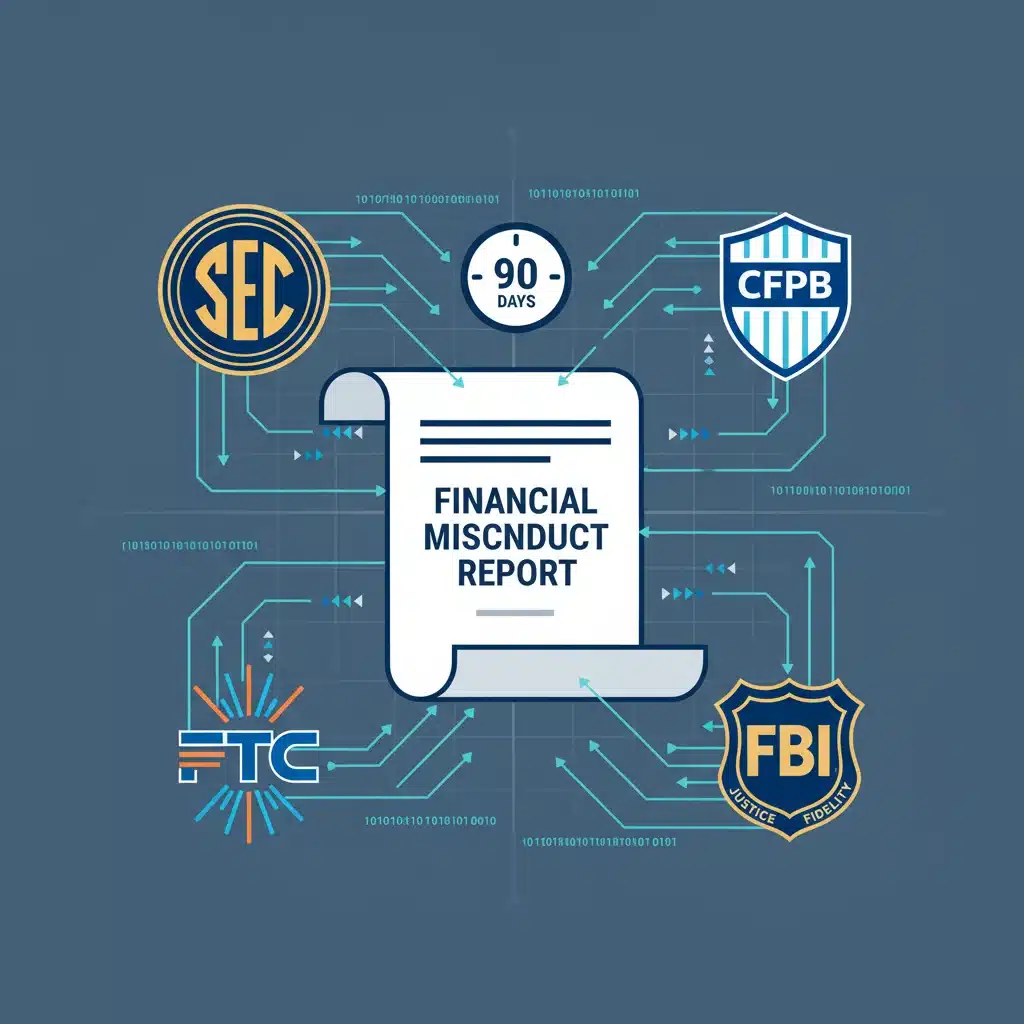
Reporting Financial Misconduct: A 2026 Guide to Filing Complaints with Federal Agencies and Achieving Resolution Within 90 Days
In an increasingly complex financial landscape, instances of misconduct can unfortunately arise, impacting individuals, businesses, and the broader economy. Recognizing and knowing how to effectively report financial misconduct is not just a civic duty; it’s a critical step towards maintaining market integrity, protecting consumers, and ensuring accountability. This comprehensive 2026 guide will equip you with the knowledge and tools necessary to navigate the intricate process of filing complaints with federal agencies and, crucially, how to strategically pursue a resolution within a targeted 90-day timeframe.
The financial world is dynamic, and so are the regulations and mechanisms designed to police it. As we move further into 2026, understanding the updated protocols, the specific mandates of various federal bodies, and the most efficient pathways for reporting becomes paramount. Whether you’ve encountered fraud, embezzlement, insider trading, unfair lending practices, or other illicit financial activities, this article will serve as your definitive roadmap.
Understanding What Constitutes Financial Misconduct
Before you embark on the journey to report financial misconduct, it’s essential to have a clear understanding of what falls under this broad umbrella. Financial misconduct encompasses a wide array of illicit or unethical actions within the financial sector. These actions can violate laws, regulations, or ethical standards, often leading to financial harm for individuals, investors, or the market as a whole.
Common Types of Financial Misconduct Include:
- Fraud: Intentional deception for personal gain, such as investment fraud (Ponzi schemes, pyramid schemes), mortgage fraud, insurance fraud, or credit card fraud.
- Embezzlement: The misappropriation of funds or assets entrusted to an individual’s care, often by employees or fiduciaries.
- Insider Trading: The illegal practice of trading on the stock exchange to one’s own advantage through having access to confidential information.
- Market Manipulation: Actions taken to artificially inflate or deflate the price of a security, often through deceptive practices.
- Money Laundering: The process of concealing the origins of illegally obtained money, typically by means of transfers involving foreign banks or legitimate businesses.
- Predatory Lending: Unfair, deceptive, or fraudulent practices by lenders during the loan origination process.
- Unfair or Deceptive Practices: Broadly defined actions by financial institutions that mislead consumers or exploit their vulnerabilities.
- Breach of Fiduciary Duty: When an individual or entity entrusted with acting in another’s best interest fails to do so, causing harm.
Identifying the specific type of misconduct you’ve witnessed or experienced is the first critical step, as it will often dictate which federal agency is best equipped to handle your complaint. Accurate categorization helps streamline the reporting process and increases the likelihood of a swift and effective response when you report financial misconduct.
The Importance of Timely and Accurate Reporting
Delaying the reporting of financial misconduct can have significant consequences. Evidence can be lost, perpetrators can continue their illicit activities, and the financial harm can escalate. Timely reporting not only helps to mitigate ongoing damage but also strengthens the case against the wrongdoers. Furthermore, providing accurate and detailed information is crucial. Vague or unsubstantiated claims can prolong investigations or even lead to a dismissal of your complaint.
Key Elements of a Strong Complaint:
- Who: Identify all individuals and entities involved.
- What: Clearly describe the nature of the misconduct.
- When: Provide specific dates and timelines of events.
- Where: Indicate locations or platforms where the misconduct occurred.
- How: Explain the methods used to perpetrate the misconduct.
- Why: If known, explain the motivation or intended outcome.
- Evidence: Crucially, gather and present all supporting documentation (emails, contracts, bank statements, transaction records, communications, etc.).
The more organized and thorough your initial submission, the faster federal agencies can act. This foundation is essential for aiming to achieve resolution within 90 days when you report financial misconduct.
Identifying the Right Federal Agencies for Your Complaint
The United States has a robust network of federal agencies tasked with overseeing different facets of the financial industry and enforcing various laws. Knowing which agency to approach is paramount to ensuring your complaint is directed to the appropriate authority. Here’s a breakdown of key federal agencies and their respective jurisdictions:
1. Securities and Exchange Commission (SEC)
Jurisdiction: The SEC protects investors, maintains fair, orderly, and efficient markets, and facilitates capital formation. They investigate securities fraud, insider trading, market manipulation, and other violations of federal securities laws.
When to Contact: If your complaint involves publicly traded companies, investment advisors, brokers, stock exchanges, or any activity related to the buying and selling of securities.
How to File: The SEC offers an online complaint form through its Tips, Complaints, and Referrals (TCR) system. You can choose to submit anonymously or provide your contact information. Providing details and evidence is critical.
2. Consumer Financial Protection Bureau (CFPB)
Jurisdiction: The CFPB protects consumers in the financial marketplace. They handle complaints related to mortgages, credit cards, bank accounts, student loans, auto loans, credit reporting, debt collection, and other consumer financial products and services.
When to Contact: If your complaint involves unfair, deceptive, or abusive practices by financial institutions that directly impact you as a consumer.
How to File: The CFPB has a user-friendly online complaint submission portal. They forward complaints to the relevant company and work to get a response, often facilitating a resolution.
3. Federal Trade Commission (FTC)
Jurisdiction: The FTC protects consumers from deceptive and unfair business practices and enforces antitrust laws. While the CFPB focuses on financial products, the FTC handles a broader range of consumer fraud, including identity theft, scams, and deceptive advertising across various industries, including those with financial implications.
When to Contact: If your complaint involves identity theft, scams (e.g., phishing, lottery scams), deceptive marketing, or other broad consumer fraud issues that may have a financial component.
How to File: Complaints can be filed online via the FTC’s ReportFraud.ftc.gov portal. This portal is also a good starting point if you’re unsure which agency to contact.
4. Financial Crimes Enforcement Network (FinCEN)
Jurisdiction: FinCEN’s mission is to safeguard the financial system from illicit use, combat money laundering, and promote national security. While individuals typically don’t file direct complaints with FinCEN, they are the central agency for collecting and analyzing suspicious activity reports (SARs) from financial institutions.
When to Contact: If you are a financial institution and detect suspicious activity, you file a SAR with FinCEN. As an individual, if you have information related to money laundering or terrorist financing, you might report it to the FBI or IRS, who then coordinate with FinCEN.
5. Federal Bureau of Investigation (FBI)
Jurisdiction: The FBI is the primary federal investigative agency responsible for enforcing federal laws. They investigate major financial crimes, including corporate fraud, public corruption, significant embezzlement, and complex fraud schemes.
When to Contact: If your complaint involves significant criminal activity, large-scale fraud, or matters that pose a threat to national security or public safety. The FBI often works in conjunction with other agencies.
How to File: You can contact your local FBI field office or submit a tip online. For cyber-related financial crimes, the Internet Crime Complaint Center (IC3), a partnership between the FBI and the National White Collar Crime Center (NW3C), is the appropriate channel.
6. Internal Revenue Service (IRS)
Jurisdiction: The IRS is responsible for collecting taxes and enforcing tax laws. They investigate tax fraud, tax evasion, and other tax-related financial misconduct.
When to Contact: If your complaint involves tax fraud, illegal tax schemes, or individuals or businesses intentionally misrepresenting their income or assets to avoid taxes.
How to File: The IRS offers Form 3949-A, Information Referral, or you can contact their Criminal Investigation division directly.
In some cases, multiple agencies might have jurisdiction, or your complaint might involve different types of misconduct. When in doubt, start with the agency whose mandate most closely aligns with the core of your issue. Many agencies also collaborate, so reporting to one can sometimes trigger involvement from others. This targeted approach is key to efficiently report financial misconduct.

Strategies for Achieving Resolution Within 90 Days
While no agency can guarantee a specific timeframe for resolution, proactive steps can significantly increase your chances of seeing progress and potentially a resolution within 90 days. This requires a strategic approach from the moment you decide to report financial misconduct.
1. Prepare Thoroughly Before Filing
- Organize Evidence: Before you even touch a complaint form, compile all relevant documents, communications, and data. Create a chronological timeline of events.
- Summarize Clearly: Write a concise summary of your complaint, highlighting the key facts, involved parties, and the financial harm suffered. This summary can be invaluable when filling out forms or communicating with investigators.
- Identify Specific Violations: If possible, research and identify specific laws or regulations that you believe were violated. While not mandatory, this demonstrates a higher level of preparation and can guide the agency.
2. Choose the Correct Agency (and Consider Multiple)
- Targeted Filing: As discussed, direct your complaint to the agency with primary jurisdiction. This prevents delays associated with referrals between agencies.
- Cross-Filing (Strategic): If your complaint clearly falls under the purview of multiple agencies (e.g., a bank committing fraud that also impacts consumer protection), consider filing with both relevant agencies simultaneously. Ensure your submissions are consistent.
3. Follow Up Systematically
- Reference Numbers: Always obtain and keep a record of your complaint reference number.
- Scheduled Check-ins: After filing, give the agency a reasonable amount of time (e.g., 2-4 weeks) before your first follow-up. Subsequent follow-ups can be monthly. Be polite but persistent.
- Provide Additional Information: If new evidence surfaces or you remember crucial details, proactively submit them to the agency, referencing your complaint number.
4. Document Everything
- Keep Records: Maintain a detailed log of all communications with agencies, including dates, times, names of individuals you spoke with, and summaries of conversations.
- Emails for Communication: Whenever possible, communicate in writing (email) to create a paper trail.
5. Understand Whistleblower Protections and Rewards
Many federal agencies offer whistleblower programs that protect individuals who report financial misconduct from retaliation and, in some cases, provide monetary awards. Understanding these protections can encourage reporting and provide additional incentive.
- SEC Whistleblower Program: Offers awards to individuals who provide original information that leads to successful enforcement actions with monetary sanctions exceeding $1 million. Whistleblowers are also protected from employer retaliation.
- CFTC Whistleblower Program: Similar to the SEC, the Commodity Futures Trading Commission (CFTC) provides monetary awards and anti-retaliation protections for whistleblowers who report violations of the Commodity Exchange Act.
- IRS Whistleblower Program: Provides awards to individuals who provide information that leads to the collection of taxes, penalties, and interest from non-compliant taxpayers.
If your situation qualifies, engaging with these programs can significantly impact the outcome and your personal security. Often, these programs have dedicated offices to guide you through the process, which can help expedite the investigation.
6. Consider Legal Counsel
For complex cases, especially those involving significant financial loss, intricate fraud schemes, or potential whistleblower claims, consulting with an attorney specializing in financial law or whistleblower cases can be invaluable. An attorney can:
- Help you determine the best agency to approach.
- Assist in compiling and presenting evidence effectively.
- Navigate the legal complexities and communicate with agencies on your behalf.
- Advise on whistleblower protections and potential awards.
- Help manage expectations regarding the 90-day resolution target.
While this might incur costs, the expertise can dramatically improve your chances of a favorable and timely resolution when you report financial misconduct.
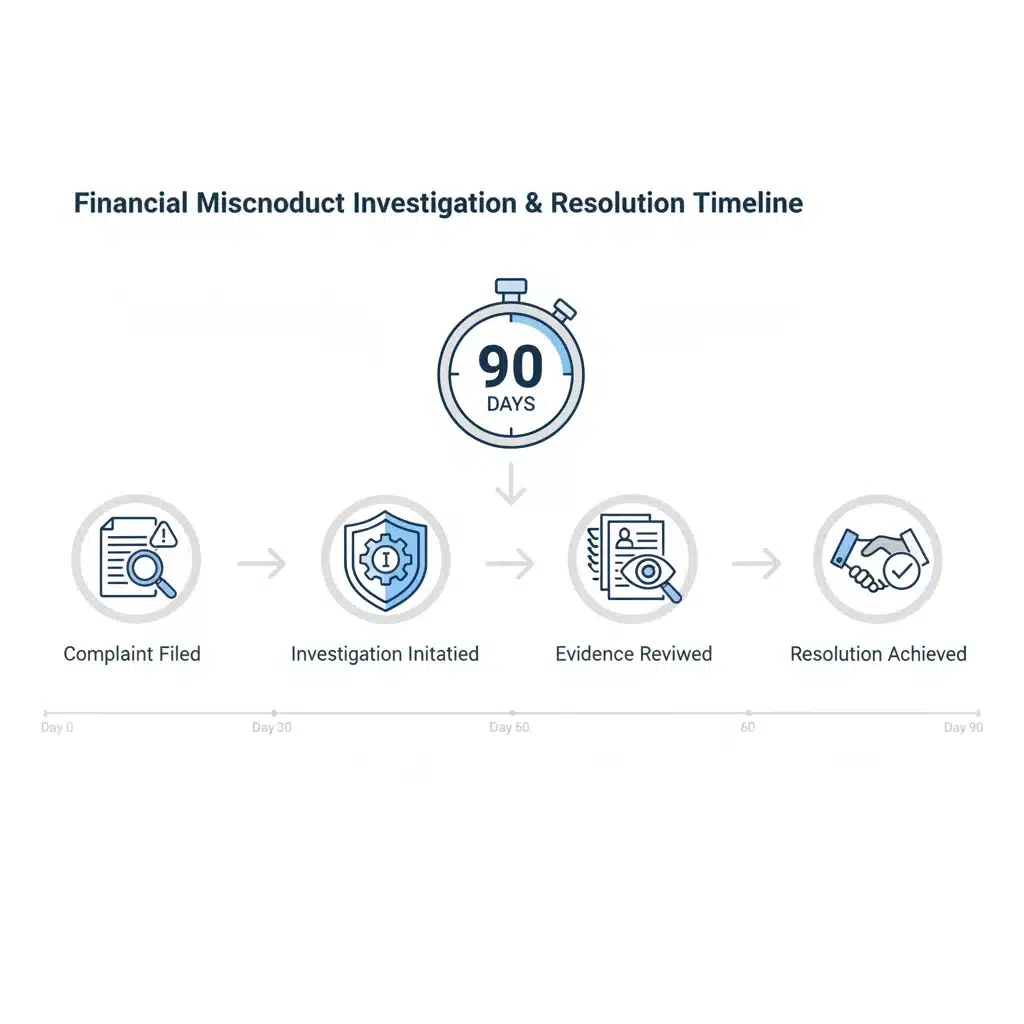
The 90-Day Resolution Goal: A Realistic Perspective
Setting a 90-day target for resolution is ambitious but achievable for certain types of complaints, particularly those that are well-documented, clearly fall within an agency’s jurisdiction, and involve readily verifiable facts. For instance, a clear case of unauthorized bank transactions reported to the CFPB with undeniable evidence might see quicker action than a complex, multi-jurisdictional securities fraud scheme.
Factors Influencing Resolution Time:
- Complexity of the Case: Simple, clear-cut cases resolve faster.
- Quality of Evidence: Strong, irrefutable evidence accelerates the process.
- Agency Workload: Agencies can be backlogged, impacting response times.
- Cooperation of Parties: The willingness of the accused party to cooperate (or lack thereof) can speed up or slow down resolution.
- Type of Resolution Sought: A refund might be quicker than a full-scale criminal prosecution.
While 90 days is a goal, the primary objective should always be a thorough and just resolution. Even if a full investigation takes longer, significant progress, such as an acknowledgment of your complaint, an initiated investigation, or initial contact with the accused party, within 90 days can be considered a positive step towards resolution. Your persistent and organized approach significantly contributes to moving the process forward.
After Filing: What to Expect
Once you report financial misconduct, the process typically follows several stages:
- Acknowledgement: Most agencies will send an automated or personalized acknowledgment of your complaint, often with a reference number.
- Initial Review/Assessment: An agency representative will review your submission to determine if it falls within their jurisdiction and if there’s sufficient information to proceed.
- Investigation: If the complaint is deemed credible and actionable, an investigation will be initiated. This may involve gathering more evidence, interviewing witnesses, and contacting the party against whom the complaint was filed.
- Resolution/Action: Depending on the findings, the agency may take various actions, including:
- Facilitating a settlement or mediation between parties.
- Issuing warnings or cease-and-desist orders.
- Imposing fines or penalties.
- Referring the case for civil litigation or criminal prosecution.
- Closing the case if insufficient evidence is found or no violation occurred.
- Communication: Agencies typically communicate updates, though the frequency can vary. Some resolutions might be confidential, especially in whistleblower cases or ongoing criminal investigations.
It’s important to manage expectations. Not every complaint leads to a full-scale investigation or a favorable outcome, but every valid report contributes to a safer financial environment. Your role in providing accurate and timely information remains crucial throughout this process.
Conclusion: Empowering Yourself to Combat Financial Misconduct
The ability to effectively report financial misconduct is a powerful tool in safeguarding our financial systems and protecting ourselves and our communities. By understanding what constitutes misconduct, identifying the correct federal agencies, preparing a thorough complaint, and strategically following up, you significantly increase the chances of a timely and impactful resolution.
As we navigate 2026 and beyond, staying informed about the evolving landscape of financial regulations and reporting mechanisms is more important than ever. While a 90-day resolution is an ambitious goal, a well-executed reporting strategy can certainly accelerate the process and bring about the accountability and justice that victims of financial misconduct deserve. Be diligent, be persistent, and play your part in fostering a more transparent and ethical financial world.